
Chapter 1: Upstream Marketing, An Overview
From Upstream Marketing: Unlock Growth Using the Combined Principles of Insight, Identity, and Innovation by Tim Koelzer and Kristin Kurth (Greenleaf Book Group Press, 2021)
Chapter summary. Chapter 1 introduces upstream marketing and the framework that organizes the rest of the book. It explains why most organizations look for growth in the wrong places, how upstream marketing differs from downstream marketing, and what a study of seven profile companies (Amazon, Apple, Google, Nike, Southwest Airlines, Starbucks, and The Walt Disney Company) reveals: the strongest brands and businesses are built upstream through the combined principles of insight, identity, and innovation. The chapter lays out the four framing questions and six best practices, the reasons upstream marketing is hard and worth it, and the book’s central idea: begin with the end in sight.
Download the full chapter (PDF) | Download the chapter slides (PDF) | Get all nine chapters
Looking for growth in the wrong places
The chapter opens with an old story: a man searches for his car keys under a streetlight, even though he dropped them across the street, because “the light is much better here.” Most organizations search for growth the same way. They expect an ad campaign, a refreshed website, more content, or a new digital funnel to drive sustainable growth.
Many leaders see their playing field as largely fixed and overemphasize downstream marketing. Some have surrendered the foundational principles of marketing to the digital era and rely too heavily on push tactics. The book’s purpose is to change that perspective and provide the principles, tools, and techniques to redefine the playing field. The principles apply to any organization, regardless of industry, size, or geography.
From a best practices study to a framework
The ideas trace back to a 1997 best practices study Tim worked on before founding EquiBrand, for a global apparel manufacturer that wanted a standard approach to growth and innovation. The team studied six companies: First Union, Gillette, IBM, Nike, Gap, and Disney. At the time, Nike had little beyond athletic footwear; a year earlier it had signed a 21-year-old Tiger Woods to a $40 million, five-year contract despite a limited presence in golf. At Nike’s Portland campus, employees were out on soccer fields and running tracks, experiencing the category firsthand, a vivid example of seeing the business through the consumer’s eyes.
The team hoped to find a single innovation process to replicate. Instead, it found a common set of principles across very different companies, which proved more useful. Piloted with the client’s divisions, the principles-based approach produced deep consumer insight and numerous new product launches, with results the book describes as far exceeding the cost of the study. Since then, the digital economy has changed how companies plan, innovate, and talk to customers: agile planning, design thinking, and minimum viable products have replaced rigid strategy cycles and stage gates, and communication has become interactive rather than one-way. For the book, EquiBrand revisited the work through a systematic review of seven profile companies chosen for consistent growth over time, alongside its own client cases.
Upstream vs. downstream marketing
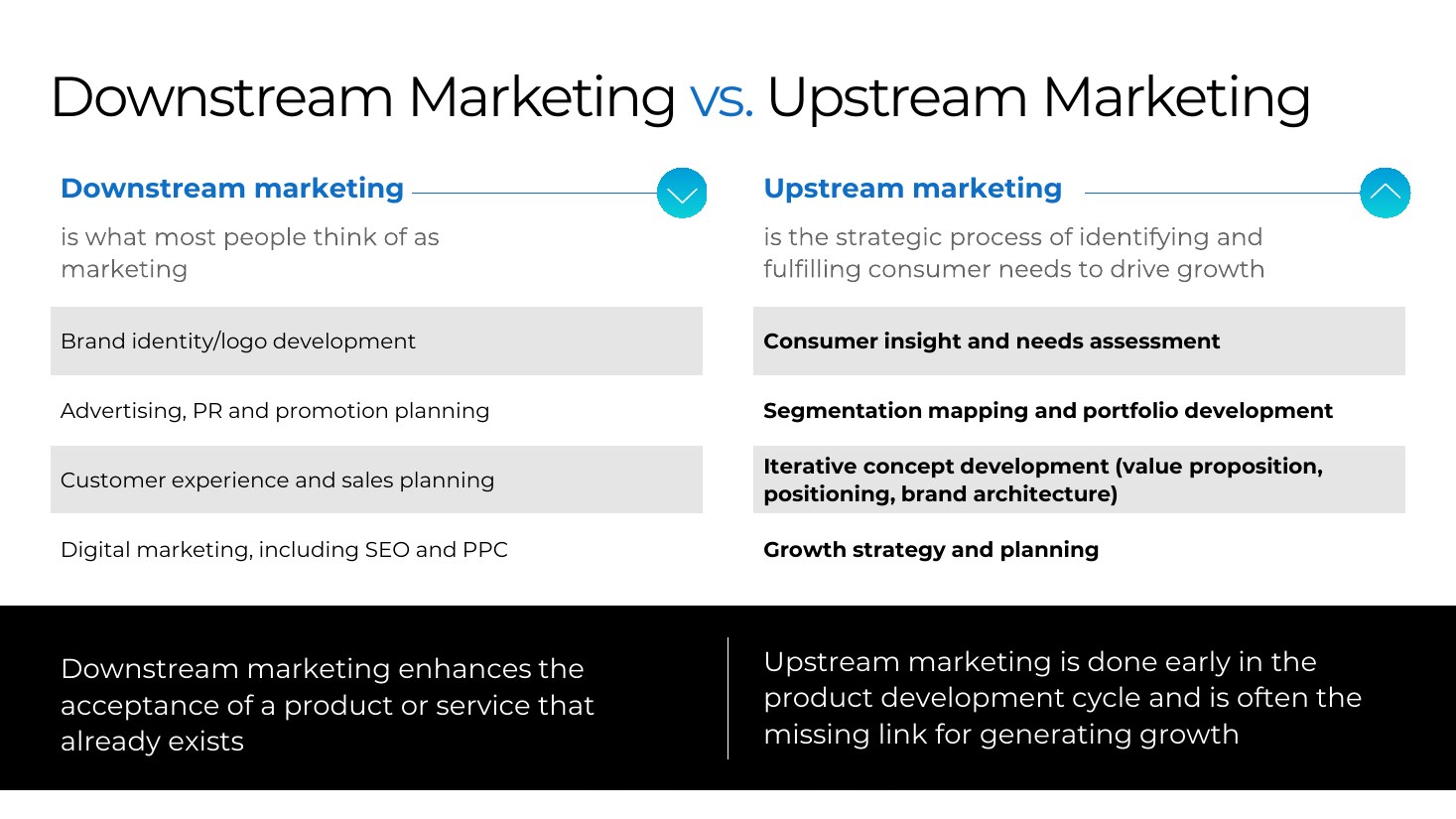
The book builds on Ram Charan’s description. Downstream marketing is what most people picture as marketing: advertising, promotion, communications, and brand building that increase acceptance of a product or service that already exists. Upstream marketing is the strategic process of identifying and fulfilling customer needs: segmenting the market, choosing which segments to focus on, and understanding what competitive advantage and price point it will take to win, early in development.
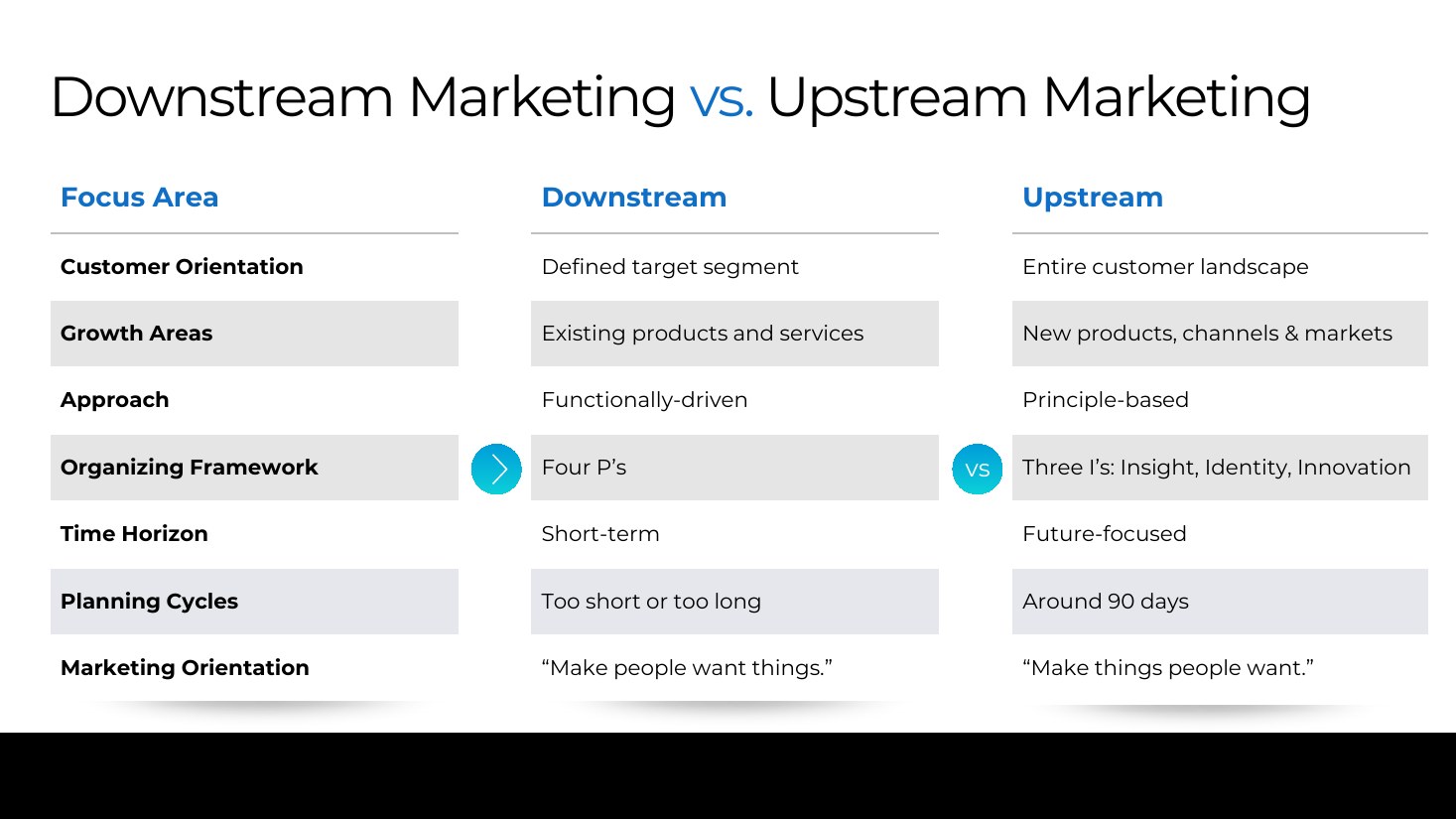
The two are parts of the same stream, and they need to be aligned. Upstream comes first and flows into downstream. For a fuller comparison, see upstream vs. downstream marketing.
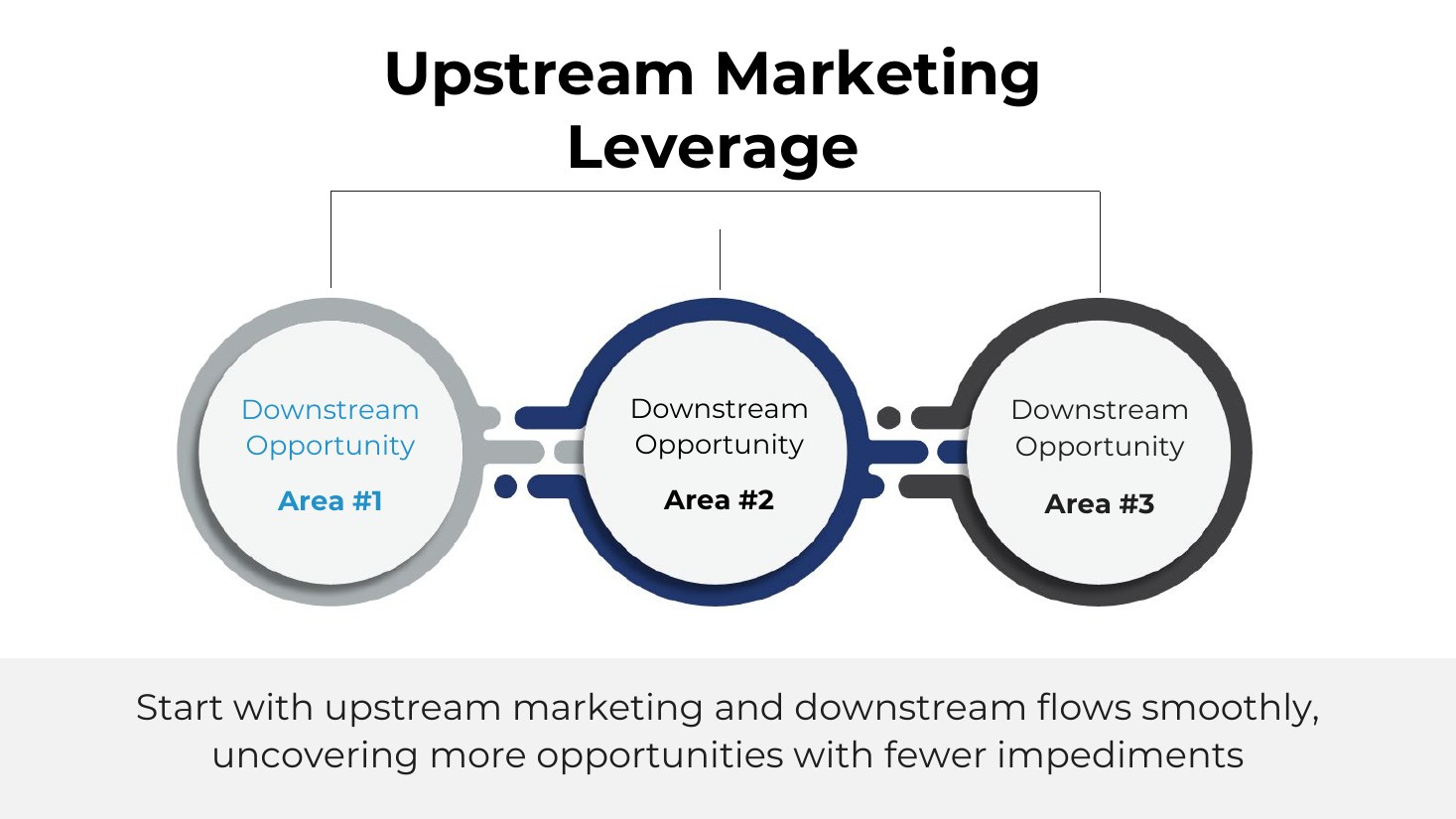
Starting upstream creates leverage: a single upstream focus opens several downstream opportunities, and downstream work flows more smoothly.
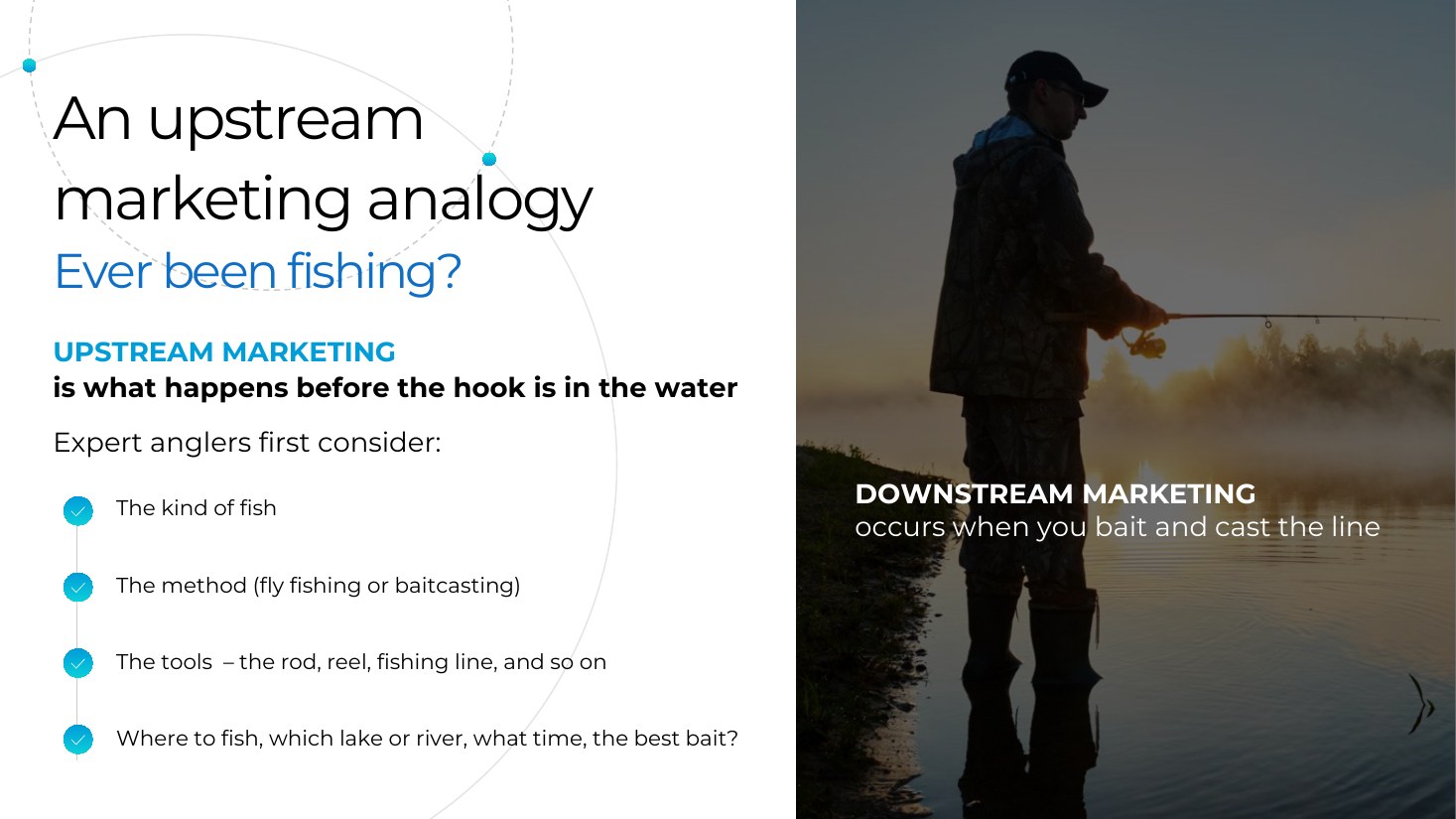
The book’s analogy is fishing. Upstream marketing is everything that happens before the hook is in the water: the kind of fish, the method, the tools, which lake or river, where in it, at what time, and with what bait. Good anglers think through the five W’s before they cast.
Insight + identity + innovation
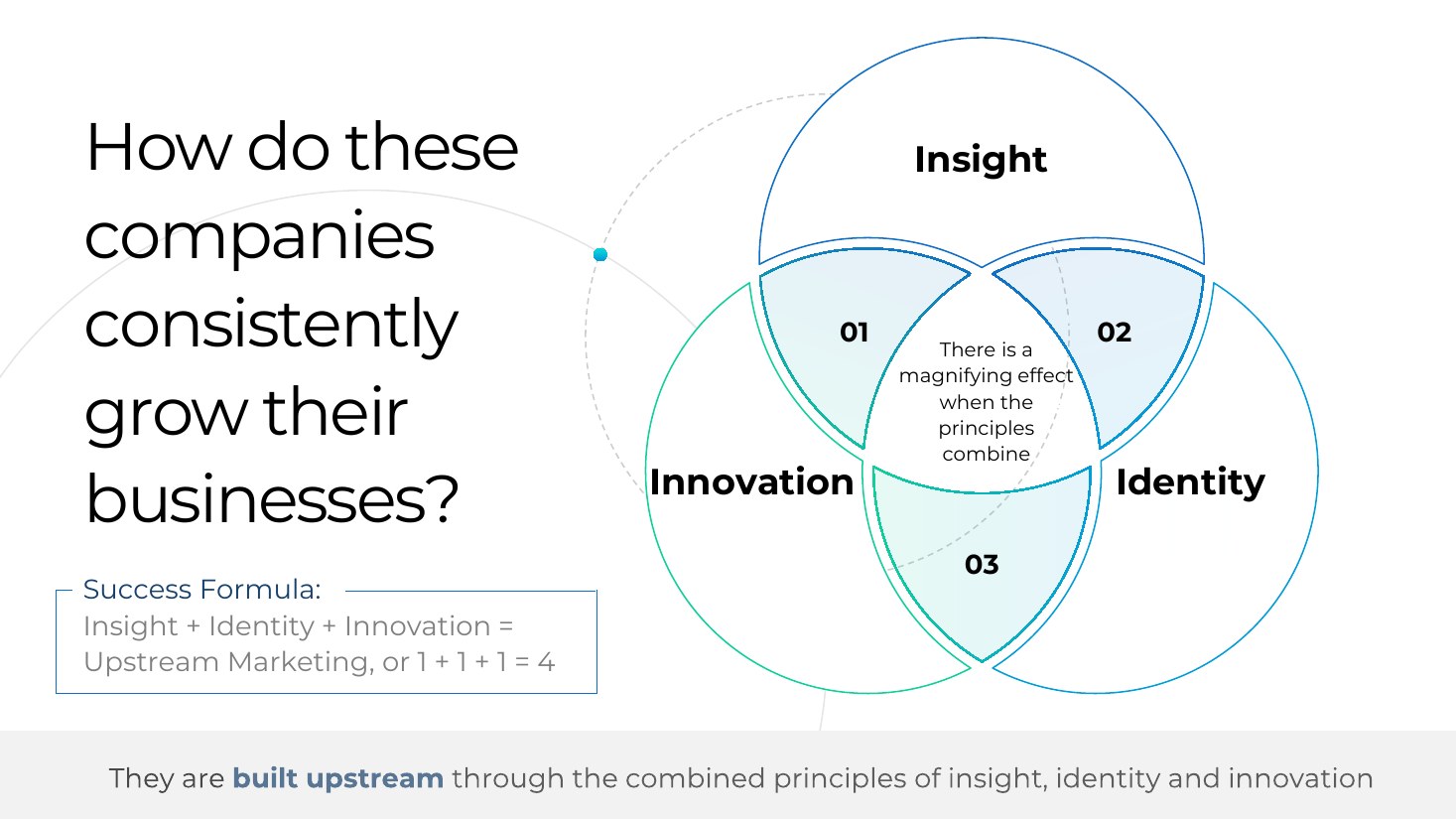
Across the profile companies, the headline that emerged was this: the strongest brands and businesses are built upstream through the combined principles of insight, identity, and innovation.
- Insight: gaining internal clarity and deep customer understanding as the basis for growth.
- Identity: building strong value propositions and brands that deliver on customer needs and align with company operations.
- Innovation: a continual stream of creative solutions to meet evolving needs and expand the business.
The book’s formula is Insight + Identity + Innovation = Upstream Marketing, or 1 + 1 + 1 = 4: each principle reinforces the others. Insight isn’t confined to the research department, identity reaches well beyond the marketing department, and innovation is more than an occasional brainstorm.
The upstream marketing framework
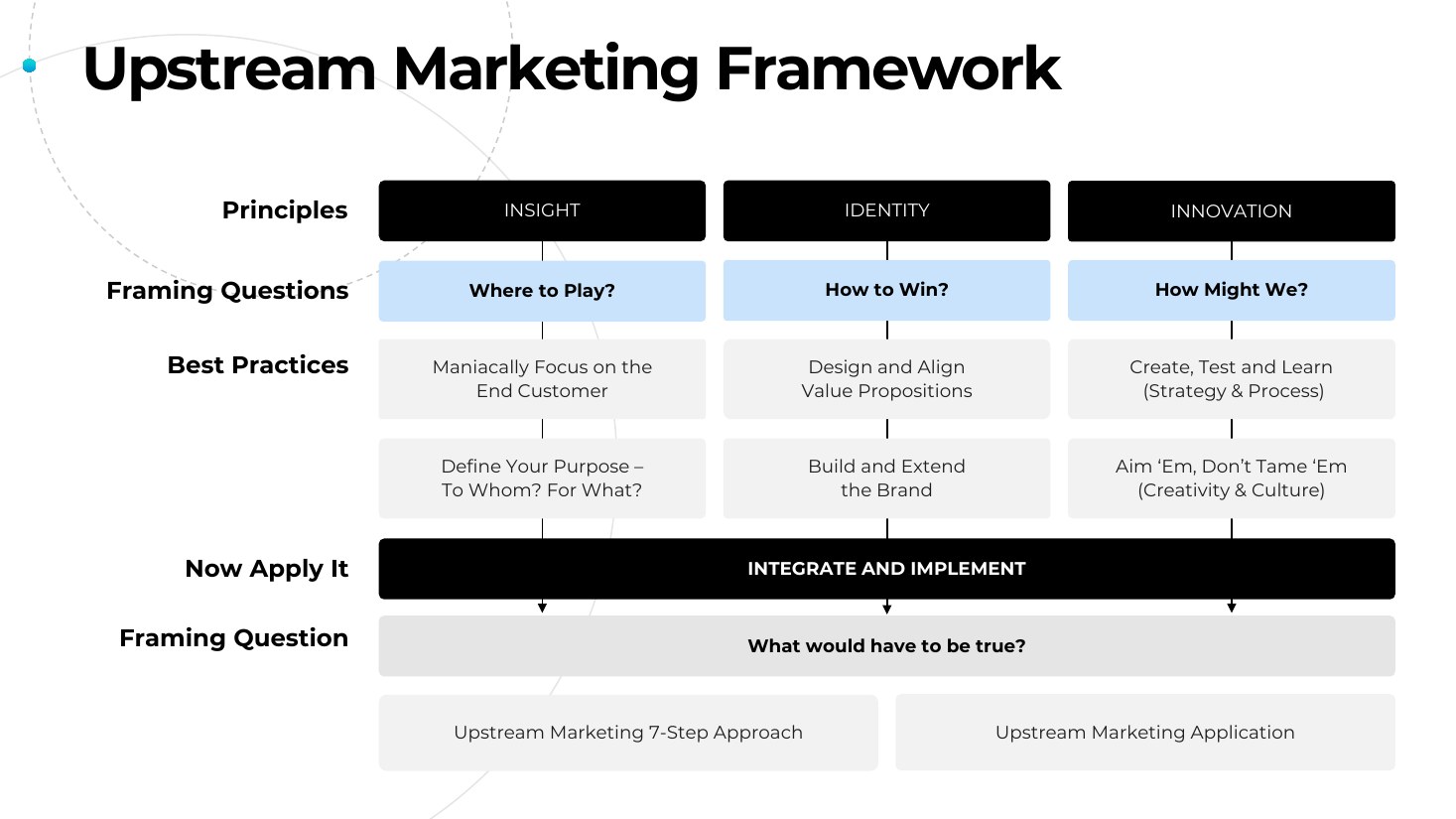
The framework is a structured way to answer four framing questions, with insight, identity, and innovation as its first principles. Each principle has two best practices, and underneath them is a process to integrate and execute. The components overlap; the order matters less than applying them together.
Four framing questions
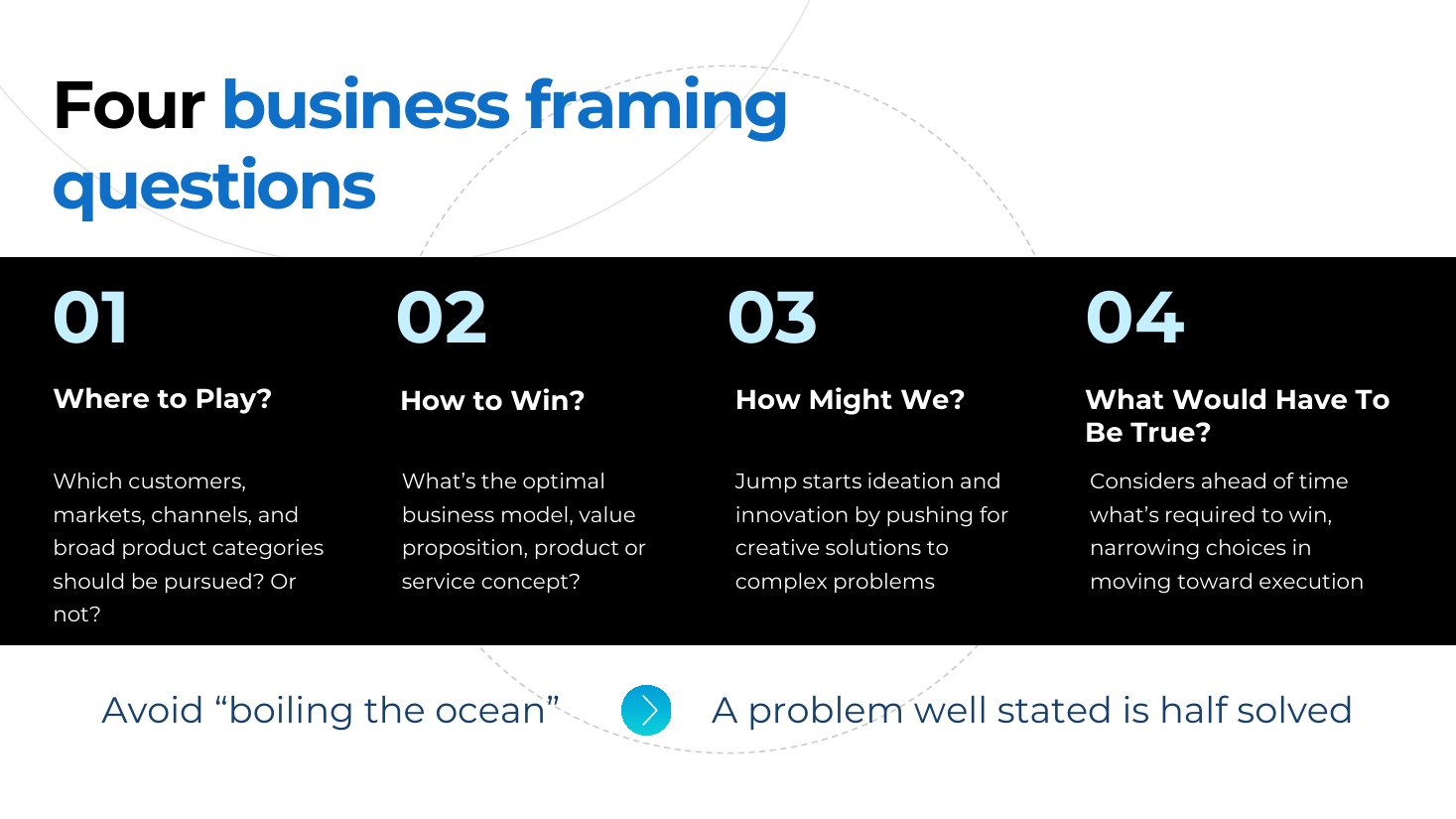
A problem well stated is half solved, while a vague one leads to “boiling the ocean.” The framing questions keep growth work focused:
- Where to play? To whom and for what: which customers, markets, channels, and categories to pursue, and which not to.
- How to win? The business model, value proposition, product, or service concept for the chosen opportunity. If where to play picks the fishing pond, how to win picks the bait.
- How might we? A prompt for creative solutions to complex problems, central to the design sprint process.
- What would have to be true? The link to downstream execution: what must be true about acceptance, channels, sales, and economics, tested with small experiments before the next big bet.
Six best practices
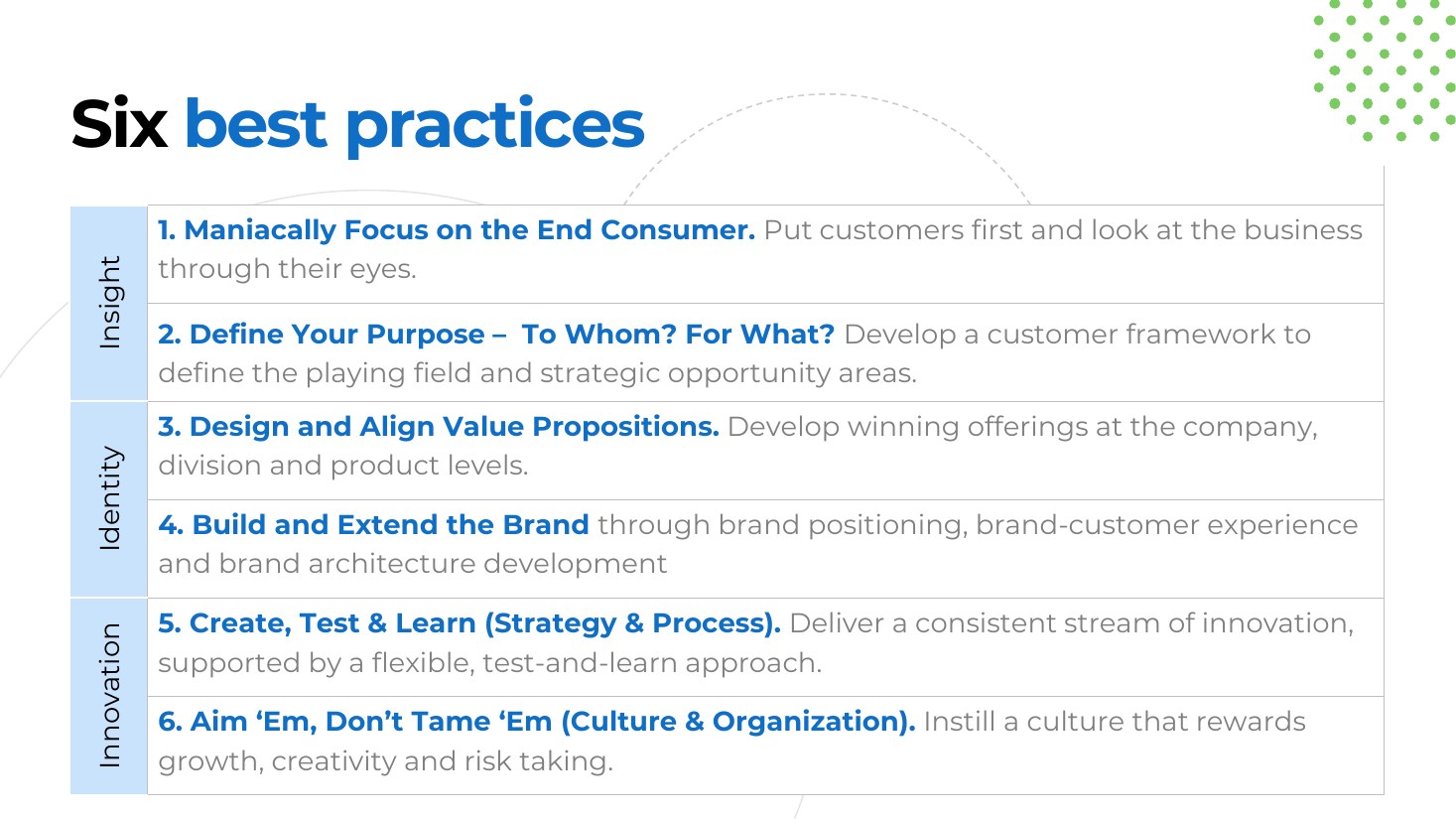
Each principle has two best practices, one per chapter:
- Insight: Maniacally Focus on the End Customer (Chapter 2) and Define Your Purpose: To Whom? For What? (Chapter 3).
- Identity: Design and Align Value Propositions (Chapter 4) and Build and Extend the Brand (Chapter 5).
- Innovation: Create, Test, and Learn (Chapter 6) and Aim ‘Em, Don’t Tame ‘Em (Chapter 7).
Chapter 8 and Chapter 9 apply the framework through a seven-step approach and real-world cases.
Why upstream marketing?
The main reason is business performance: new revenue and profit streams well beyond the original business. Imagine if Apple had defined itself as a desktop computer maker, Amazon as an online bookstore, or Disney as an animation studio. When the book was written, Disney’s studio entertainment business accounted for only about 15 percent of company revenues. Most companies don’t make that leap. A McKinsey & Company study cited in the book found that 84 percent of global executives see innovation as extremely important to their growth strategies, yet 94 percent are dissatisfied with their organization’s innovation performance. Many companies apply upstream principles when they start, then lose them as day-to-day firefighting takes over and marketing shifts from strategic to tactical.
The chapter is candid about why so few companies do it well:
- It’s hard: a set of principles, questions, and practices that must work as a system.
- It takes time, and the payoff isn’t immediate.
- It lacks tangibility compared with an ad campaign or website.
- Its success is harder to measure in the short term.
- Many organizations aren’t set up for it, whether for lack of resources or because strategy groups sit in silos.
And why it is worth it: customer obsession focuses the organization; upstream work expands the playing field into uncontested space; it rewards being roughly right rather than precisely wrong; new tools such as rapid prototyping make it faster and cheaper; customers accept products that improve over versions; and it joins strategy and execution instead of handing work between silos.
Begin with the end in sight
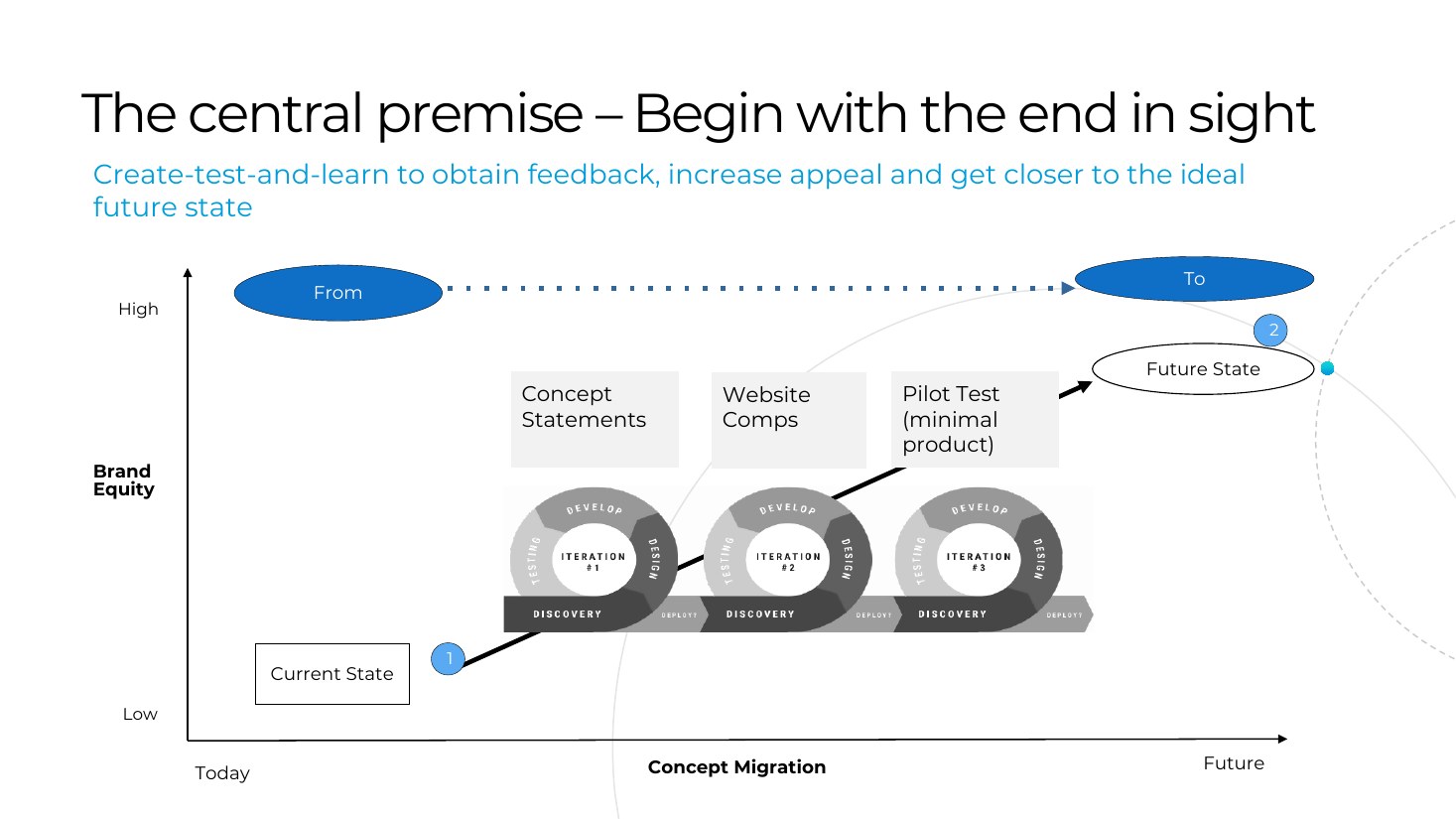
A theme that runs through the whole book is to begin with the end in sight. It adapts Stephen Covey’s “begin with the end in mind” with a twist: create something tangible and testable that represents the end goal, such as a concept board, business narrative, draft proposal, or prototype. Ideas get created three times: mentally, as a testable concept, and as the real thing.
That is why Disney builds storyboards and models, Amazon requires six-page narratives instead of slides, and Nike tests prototypes with professional athletes. Most innovations fail because the end state wasn’t defined at the beginning. If you can’t express an idea clearly ahead of time, you may not have an idea.
How the book is organized
- Principle 1, Insight: Chapter 2 and Chapter 3.
- Principle 2, Identity: Chapter 4 and Chapter 5, on value propositions and brand strategy.
- Principle 3, Innovation: Chapter 6 and Chapter 7, on strategy and process, and on creativity and culture.
- Now apply it: Chapter 8, the seven-step approach, and Chapter 9, applications and cases.
Key takeaway
The root cause of moderate or stalled growth is an overreliance on downstream marketing. Downstream is needed, but it isn’t enough. Going upstream, through insight, identity, and innovation applied together, offers the path to sustainable brand and business growth.
Questions to consider
- Does the C-suite view the business playing field as largely fixed, or is it open to redefining the landscape?
- Does your organization understand the critical differences between upstream and downstream marketing?
- Are adequate resources being allocated to upstream marketing?
Put this chapter to work
- The book and methodology: Upstream Marketing
- The three principles: 3 Guiding Principles of Upstream Marketing
- How EquiBrand applies it: EquiBrand’s strategic planning process
- Next step for leadership teams: Start the Growth Assessment
Frequently asked questions
What is the difference between upstream and downstream marketing?
Downstream marketing increases acceptance of products that already exist, through advertising, promotion, and communications. Upstream marketing comes first: identifying and fulfilling customer needs by choosing segments, defining how to win, and shaping offerings early in development.
What are the four framing questions of upstream marketing?
Where to play? How to win? How might we? And what would have to be true? Together they move a team from choosing opportunities to designing offerings, generating solutions, and testing what must be true before investing.
What are the six upstream marketing best practices?
Maniacally focus on the end customer; define your purpose (to whom, for what); design and align value propositions; build and extend the brand; create, test, and learn; and aim ’em, don’t tame ’em, the creativity and culture practice.
What does “begin with the end in sight” mean?
Envision the future state, express it as something tangible and testable such as a concept, narrative, or prototype, and iterate it with customers and colleagues before full investment.
Get all nine chapters
Want the whole framework? Enter your name and email and we’ll send you all nine chapters of Upstream Marketing, each with its slide deck, in one email.
"*" indicates required fields
All chapters | Chapter 2: Maniacally Focus on the End Customer →





Follow EquiBrand