
Chapter 4: Design and Align Value Propositions
From Upstream Marketing: Unlock Growth Using the Combined Principles of Insight, Identity, and Innovation by Tim Koelzer and Kristin Kurth (Greenleaf Book Group Press, 2021)
Chapter summary. Chapter 4 opens the identity principle. Mission, vision, and values guide an organization, but they don’t drive revenue; customers buy offerings. The chapter introduces the value proposition as the missing link between customer needs and the organization, lays out a three-part framework of customer needs, value planks, and value elements, and shows it at work at Amazon, Southwest, Starbucks, and Nike. It closes with what makes a value proposition strong, a five-step process to design and align one, and answers to common questions.
Download the full chapter (PDF) | Download the chapter slides (PDF) | Get all nine chapters
From corporate statements to value propositions
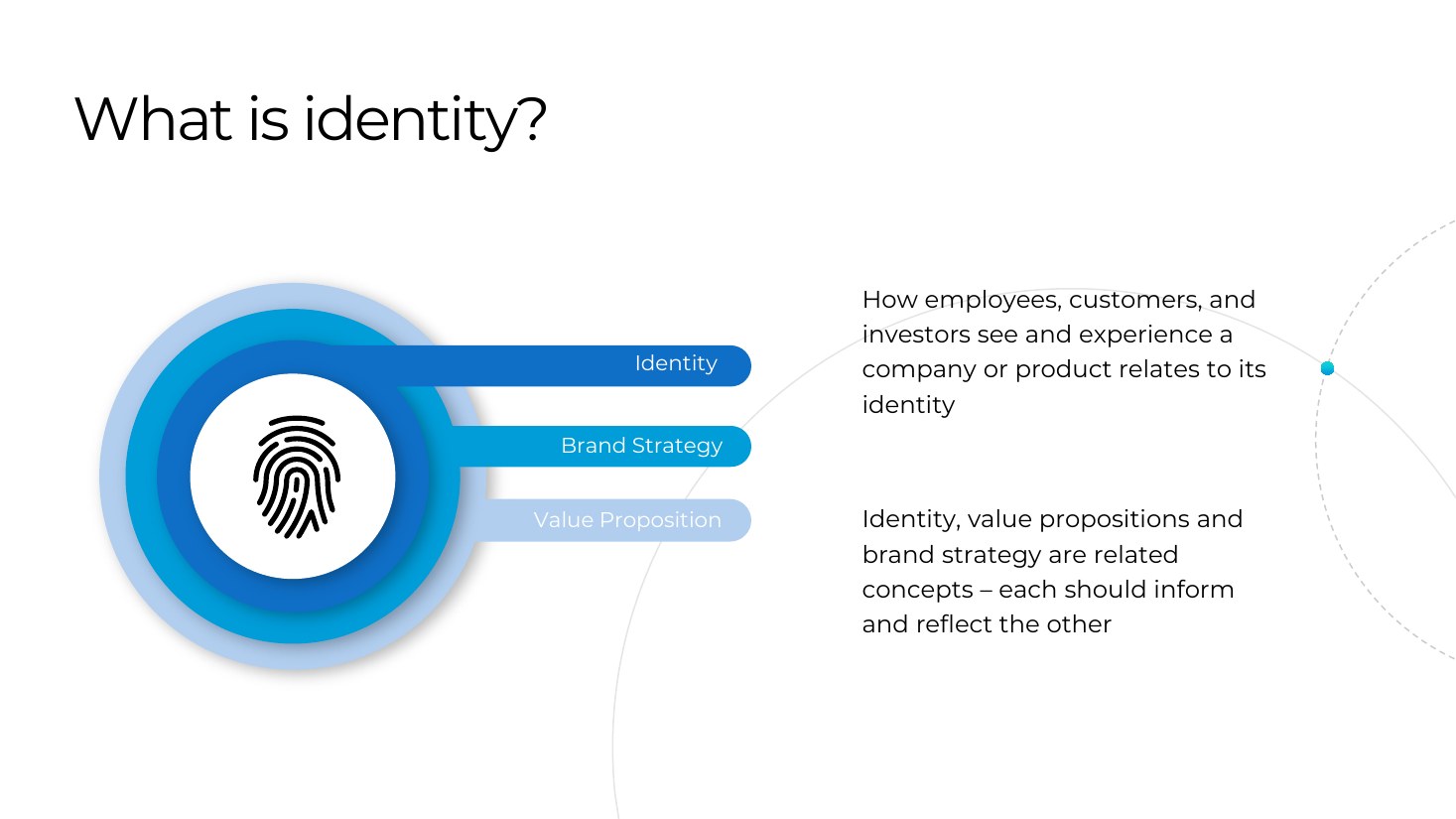
Purpose, mission, vision, values: the terms are confusing, but the book argues they matter. Howard Schultz tied Starbucks’ purpose, brand, and culture together: the equity of the brand has to reflect the culture of the company, 100 percent of the time.
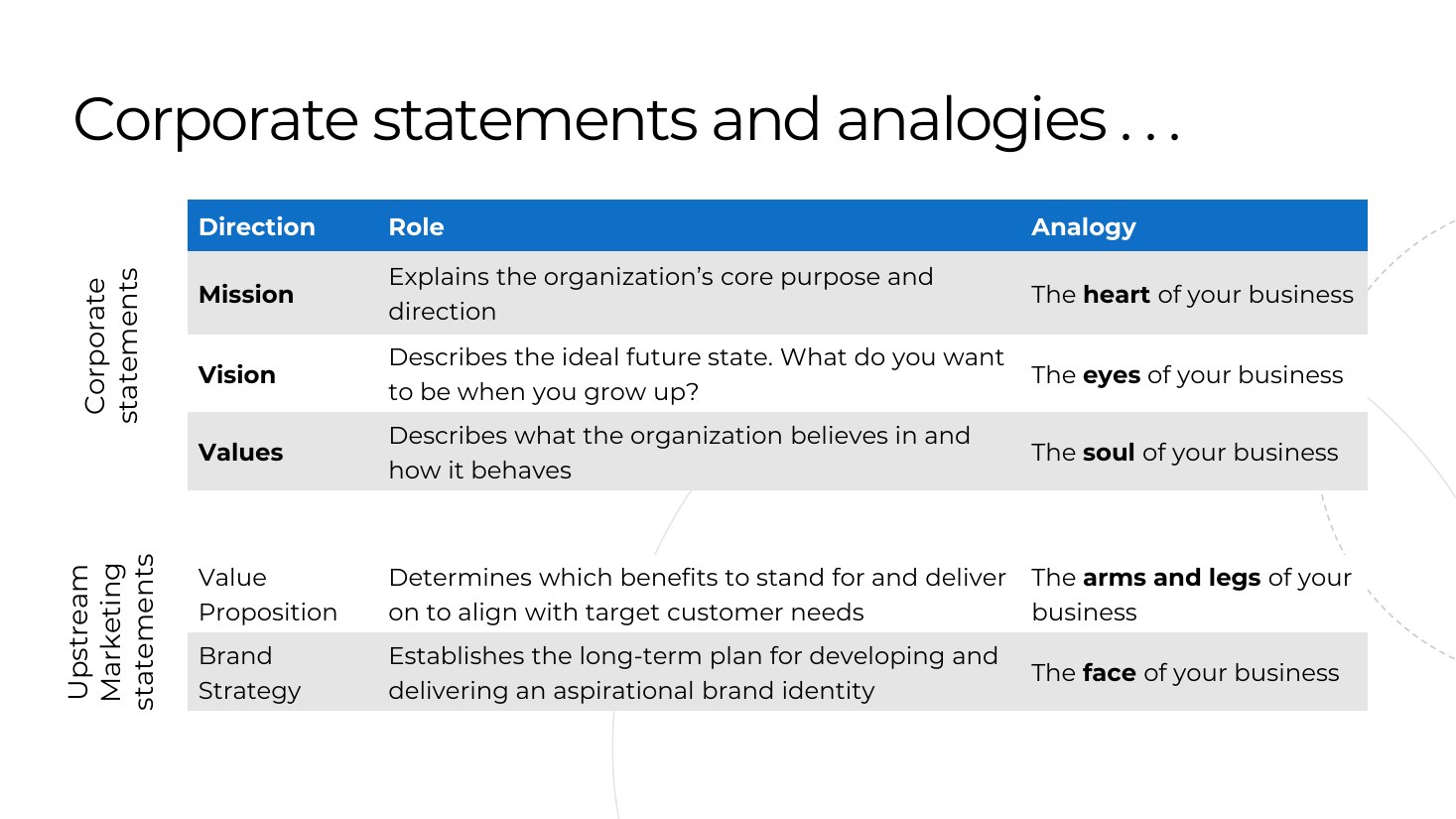
The chapter’s analogy: mission is the heart of the business, vision the eyes, and values the soul. Use them to test decisions. But they have limits. They can be ambiguous (“we have a mission statement . . . now what?”), they tend to be internal rather than customer-driven, they get watered down at the division and product level, and they don’t drive revenue: customers can buy into your values, but they can’t purchase them. Two more identity elements are needed: the value proposition, the arms and legs that determine which benefits to stand for and deliver on, and the brand strategy, the face of the business, covered in Chapter 5.
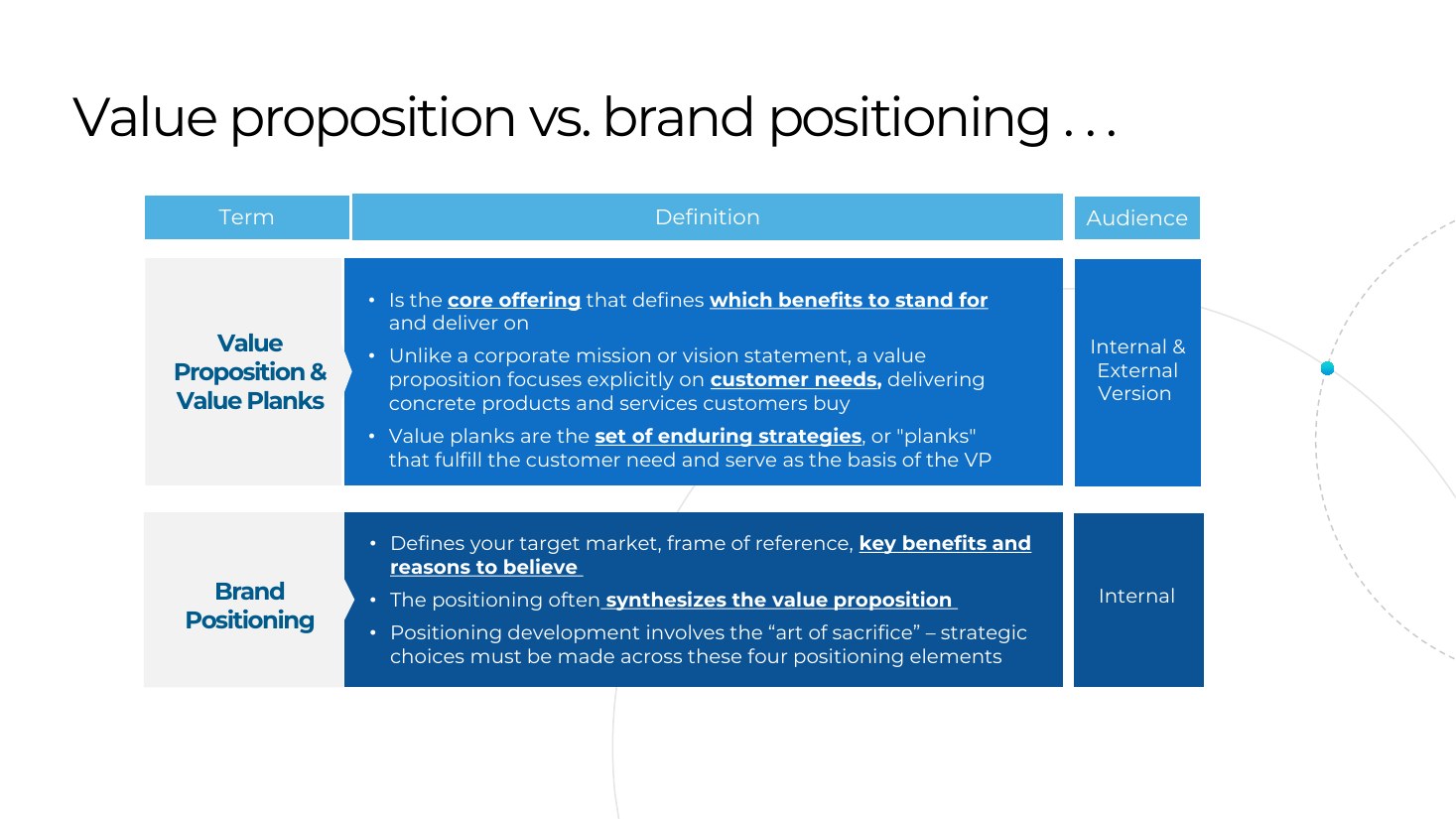
Unlike a mission or vision, a value proposition focuses explicitly on customer needs and the products and services people buy. An organization has one mission but can have many value propositions and positionings across its offerings.
The value proposition framework
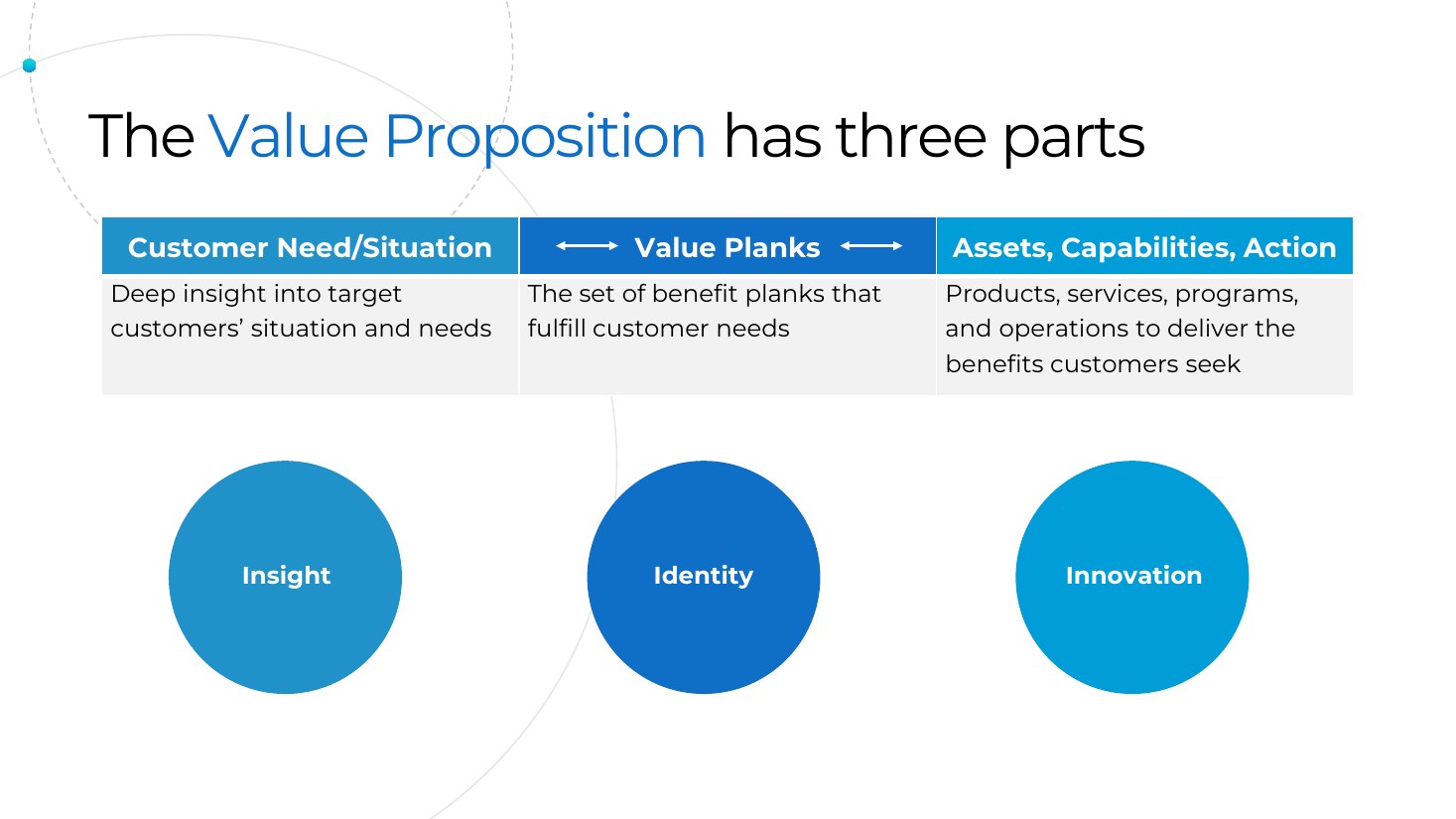
A value proposition defines how to win by linking three things:
- Customer need/situation: the base-level needs of the target audience, drawn from customer insight.
- Value planks: the key benefits delivered, whether functional, emotional, self-expressive, or jobs to be done.
- Value elements: the assets, capabilities, and actions that deliver the benefits and serve as reasons to believe.
The three columns mirror the three principles: insight, identity, and innovation. Individual elements combine into planks, and planks form the total proposition. When they align, one element snaps into another like a magnet.
The Amazon exercise
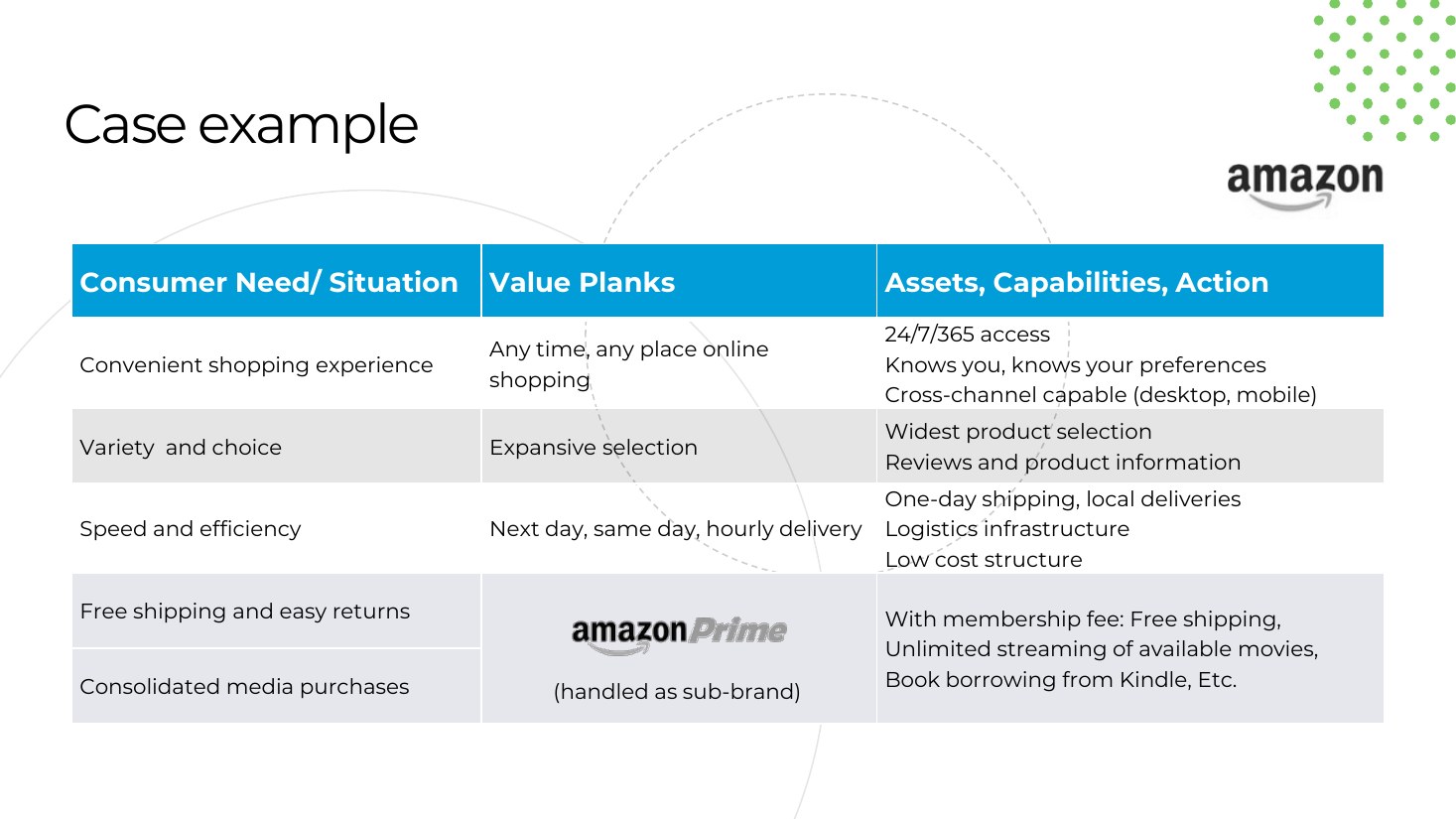
EquiBrand often introduces the concept by having client teams rebuild Amazon’s value proposition on a whiteboard: needs in the first column, benefit planks in the second, value elements in the third, then checking that it reads logically left to right and completely top to bottom. With surprising consistency, teams capture Amazon’s value set on one page. Convenience, variety, and speed are table stakes for online shopping, but Amazon differentiates through elements like 1-Click, reviews, and fast shipping, and Prime, launched in 2005 as free two-day shipping for an initial $79 fee, stacks new value on top of the corporate brand. For the full breakdown, see the Amazon value proposition example.
Southwest, Starbucks, and Nike
The chapter applies the framework to three more profile companies. We cover each in depth elsewhere, so here is the short version:
- Southwest targets a specific customer and aligns its people-first culture and operations behind five planks, from a fun, friendly flying experience to low fares through efficient operations (one plane type, secondary airports) and its “Transfarency” promise. See the Southwest Airlines value proposition.
- Starbucks shows how a “commoditized” product competes on value by stringing together planks: the best-tasting coffee, customer intimacy, local in-store ambiance, the “third place,” and diversity and social impact. See the Starbucks value proposition example.
- Nike evolved from product design, athlete endorsements, and retail distribution to direct-to-consumer, creating Nike Membership as a value proposition below, but aligned with, the corporate one.
For more companies and a side-by-side view, see value proposition examples and what Starbucks learned and Southwest is forgetting.
What is value?
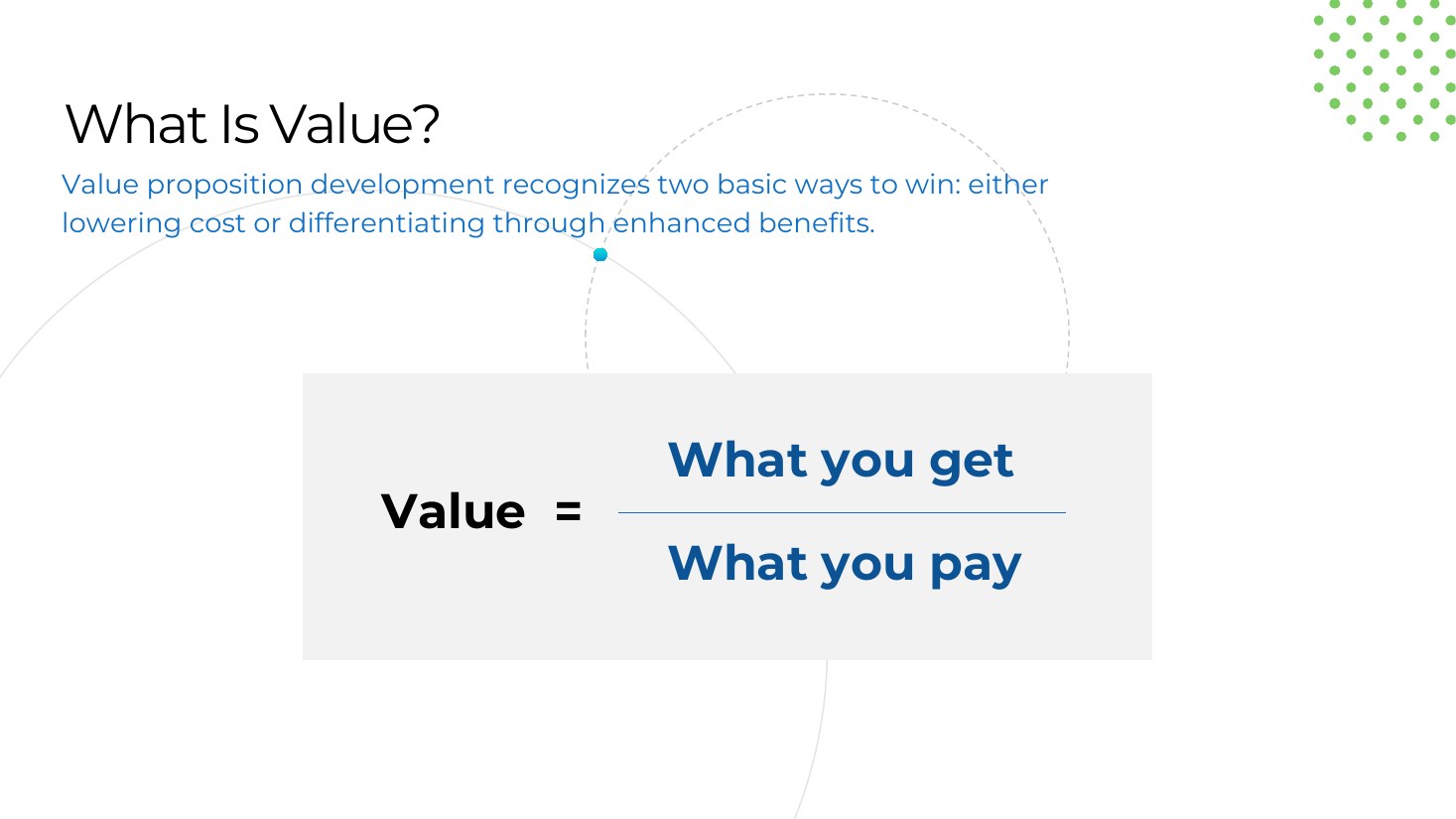
Value equals what you get for what you pay. There are two basic ways to win: lower the cost, or differentiate through enhanced benefits. Unless you are the absolute lowest-cost provider, it usually makes sense to focus on what customers get. Value is judged through the customer’s eyes, rational or emotional, tangible or perceived.
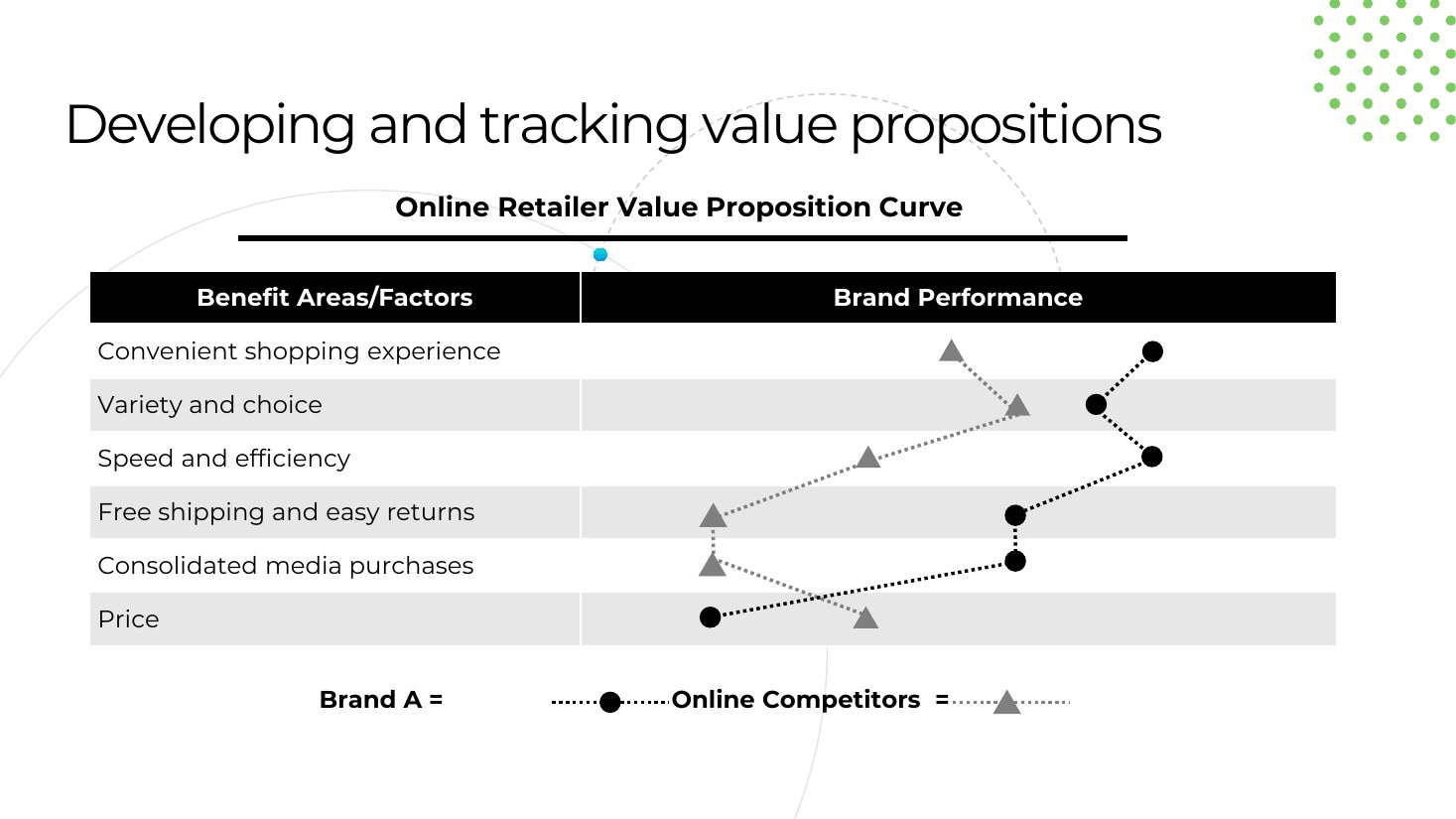
A value proposition canvas tracks performance against competitors across benefit areas. Start with an “as is” canvas, share a strawman “to be” version, then use quantitative research to manage performance over time.
Benefits of a strong value proposition
- It creates a multidimensional definition of brand value. Each plank is a chance to innovate; in general, more benefits mean higher perceived value.
- It surrounds and deepens customer relationships through features, subscriptions, quality cues, and digital integration.
- It drives strategy and action across the organization, getting the team literally on the same page.
- It provides guideposts for innovation, making it easier to say no to initiatives that don’t fit.
Three hurdles
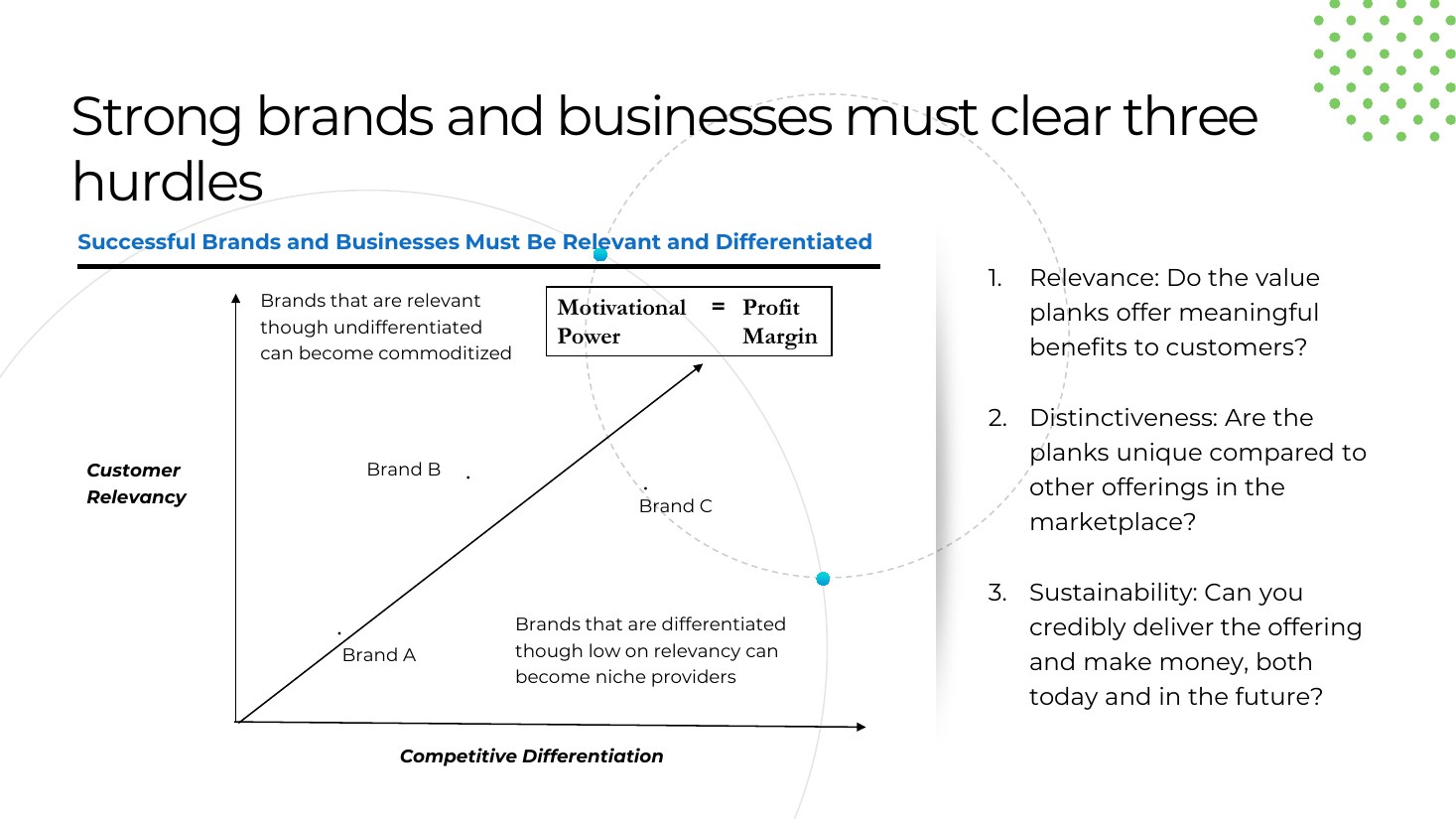
- Relevance: do the planks offer meaningful benefits? If not, distinctiveness doesn’t matter.
- Distinctiveness: not every plank must be unique, but the whole must stand apart from competitors.
- Sustainability: can you credibly deliver it and make money, today and in the future?
How to design and align value propositions
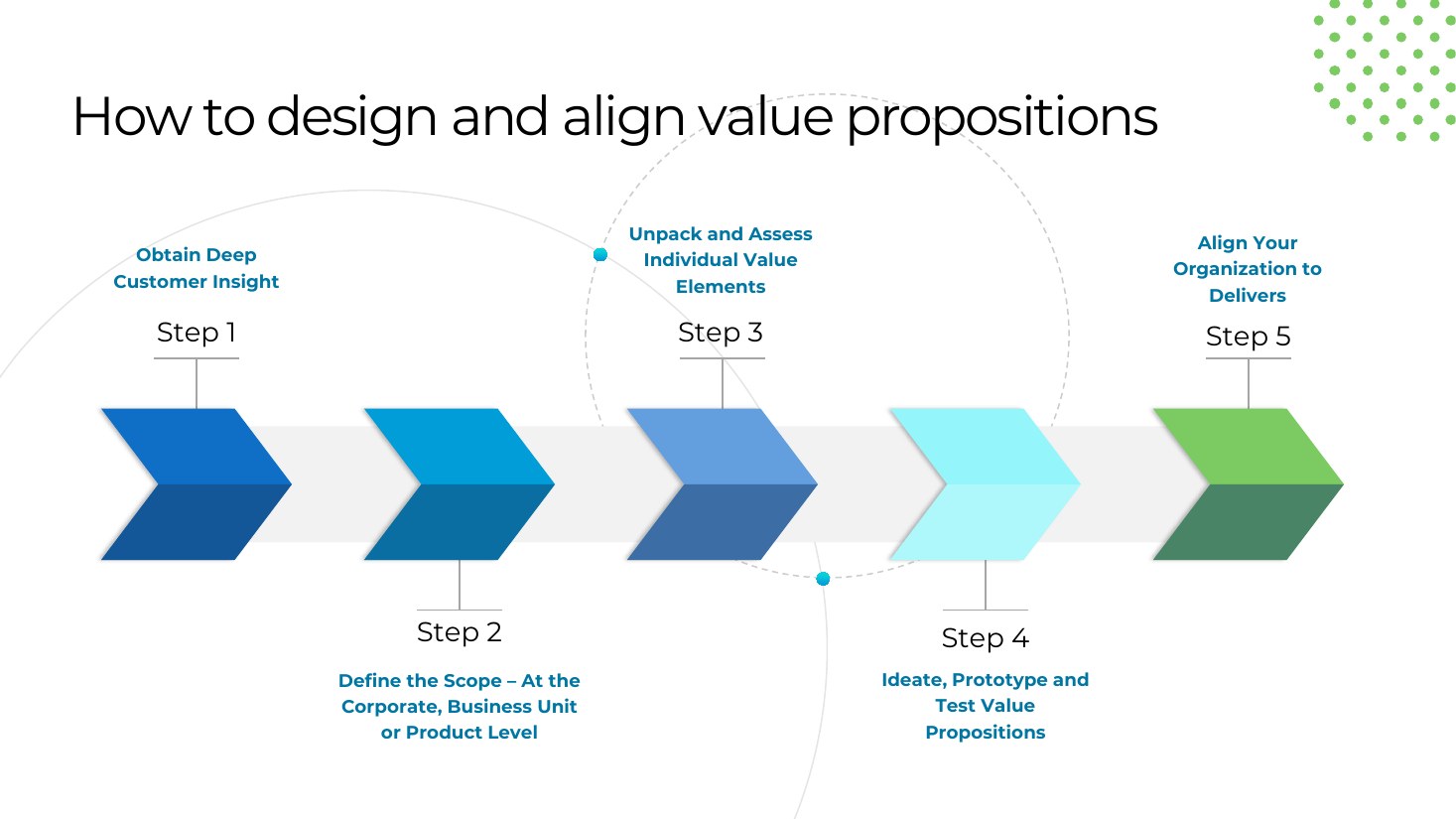
- Obtain deep customer insight, grouping needs with the benefit hierarchy or the ante, driver, reassurance framework from Chapter 2.
- Define the scope: corporate, business unit, or product. Start at the corporate level if you can, so planks cascade down (Amazon and Prime, Nike and Nike Membership, Disney and Disney+).
- Unpack and assess value elements: list competencies, brands, products, services, and programs, then combine them in new ways or build what’s missing.
- Ideate, prototype, and test, first at the plank level, then as a whole, moving from written concepts to mock-ups and prototypes. Design thinking isn’t new: Disney’s team considered dwarfs named Scrappy, Cranky, and Hungry before landing on the seven we know.
- Align your organization to deliver, filling operational gaps and prioritizing initiatives with cross-functional teams.
A mini case shows why alignment must reach beyond customers: a startup’s simple five-button phone for tweens delighted families, but the major carriers, which the book says controlled over 90 percent of the market, had no interest in opening their networks. A value stack has to account for every marketplace factor. See also sales and marketing alignment through value proposition strategy.
Common questions about value planks
- How many planks? Four to six is a good starting point. Fewer, more robust planks beat many competing ones; quantitative research shows where added planks hit diminishing returns.
- Does order matter? Customers buy the whole proposition, but internally, rank the critical planks. Typically one ante benefit outweighs the rest, others differentiate, and one reassures.
- Must each plank differentiate? No. The combination must. Many planks are table stakes; planks outside the core category often create distinctiveness.
- Where’s the cost plank? Usually there isn’t one. Price is how customers evaluate the whole offering, so focus on value first; customers may pay more than you think.
Finally, a strong proposition nobody knows about is a light under a bushel. That is why the brand matters, the subject of Chapter 5.
Key takeaway
Corporate statements guide an organization, but value propositions drive growth. Link customer needs, value planks, and value elements so that insight, identity, and innovation align, and make sure the result is relevant, distinctive, and sustainable.
Questions to consider
- What value propositions are offered today at the corporate, division, and product level?
- Is there alignment across customer needs, brand value planks, and company operations?
- What opportunities exist to increase value by introducing new benefit planks or by surrounding the customer in more meaningful ways?
Put this chapter to work
- See the framework applied: Value proposition examples
- Aligning sales and marketing around value: Sales and marketing alignment
- Testing value proposition concepts: Concept optimization (CORE)
- Next step for leadership teams: Start the Growth Assessment
Frequently asked questions
What is a value proposition?
The core offering that defines which benefits a company stands for and delivers on to meet target customer needs. Unlike a mission or vision statement, it focuses explicitly on customer needs and the products and services people buy.
What are the three parts of a value proposition?
The customer need or situation, the value planks (the benefits delivered), and the value elements (the assets, capabilities, and actions that deliver those benefits). They map to insight, identity, and innovation.
What is the difference between a value proposition and a mission statement?
A mission explains an organization’s core purpose and is largely internal. A value proposition is customer-facing and specific: it links customer needs to benefits and operations, and a company can have several across its businesses and products.
How many value planks should a value proposition have?
The book suggests four to six as a starting point. Fewer, more robust planks are better than many that compete for attention, and the full set, not each plank, needs to differentiate.
Get all nine chapters
Want the whole framework? Enter your name and email and we’ll send you all nine chapters of Upstream Marketing, each with its slide deck, in one email.
"*" indicates required fields
← Chapter 3: Define Your Purpose: To Whom? For What? | All chapters | Chapter 5: Build and Extend the Brand →





Follow EquiBrand