
Chapter 8: The Upstream Marketing 7-Step Approach
From Upstream Marketing: Unlock Growth Using the Combined Principles of Insight, Identity, and Innovation by Tim Koelzer and Kristin Kurth (Greenleaf Book Group Press, 2021)
Chapter summary. Chapter 8 turns the principles and best practices into a process. Upstream marketing doesn’t just happen; it has to be engineered. The chapter lays out EquiBrand’s seven-step approach in two phases, where to play and how to win, and walks through each step using an end-to-end client case: launching a new luxury automotive brand. Along the way it shares sample interview guides, research approaches, ideation output, concepts, and a four-page planning template.
Download the full chapter (PDF) | Download the chapter slides (PDF) | Get all nine chapters
“I just like driving a great car”
At a dinner with luxury car buyers in Orange County, one guest set the consulting team straight: he was a jeans and T-shirt guy, didn’t wear an expensive watch, didn’t live a luxury lifestyle. He just liked driving a great car. That remark helped shape a proprietary customer framework and the launch strategy for a client’s new luxury brand, and the principles and process are now embedded in the client’s organization.
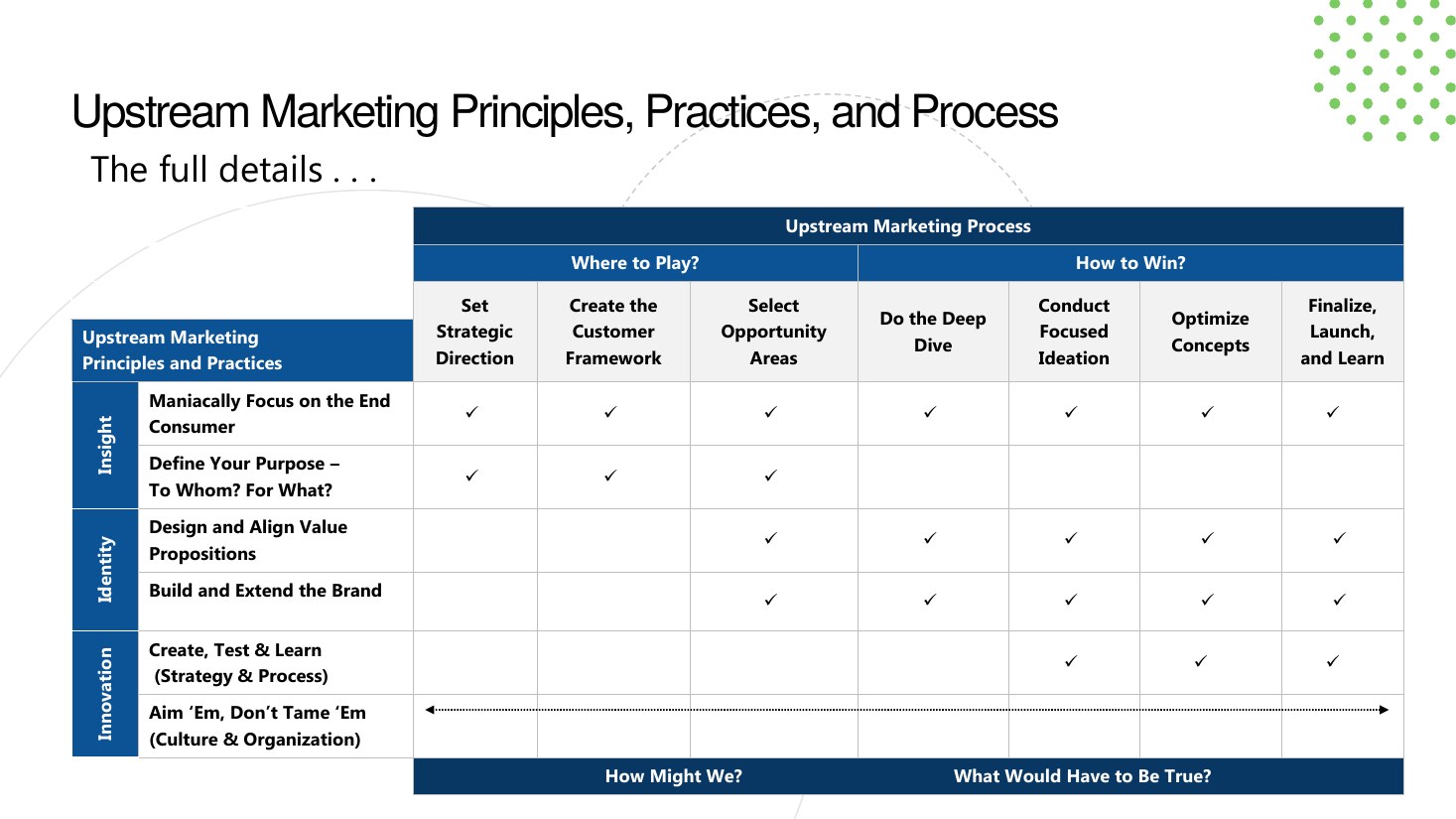
Most organizations have pieces of upstream marketing, glimmers of insight, identity, and innovation, but lack the integrated whole. The seven steps bring them together. The principles hold everywhere, but the steps adapt to the industry, investment horizon, time to market, and resources.
The seven steps in two phases
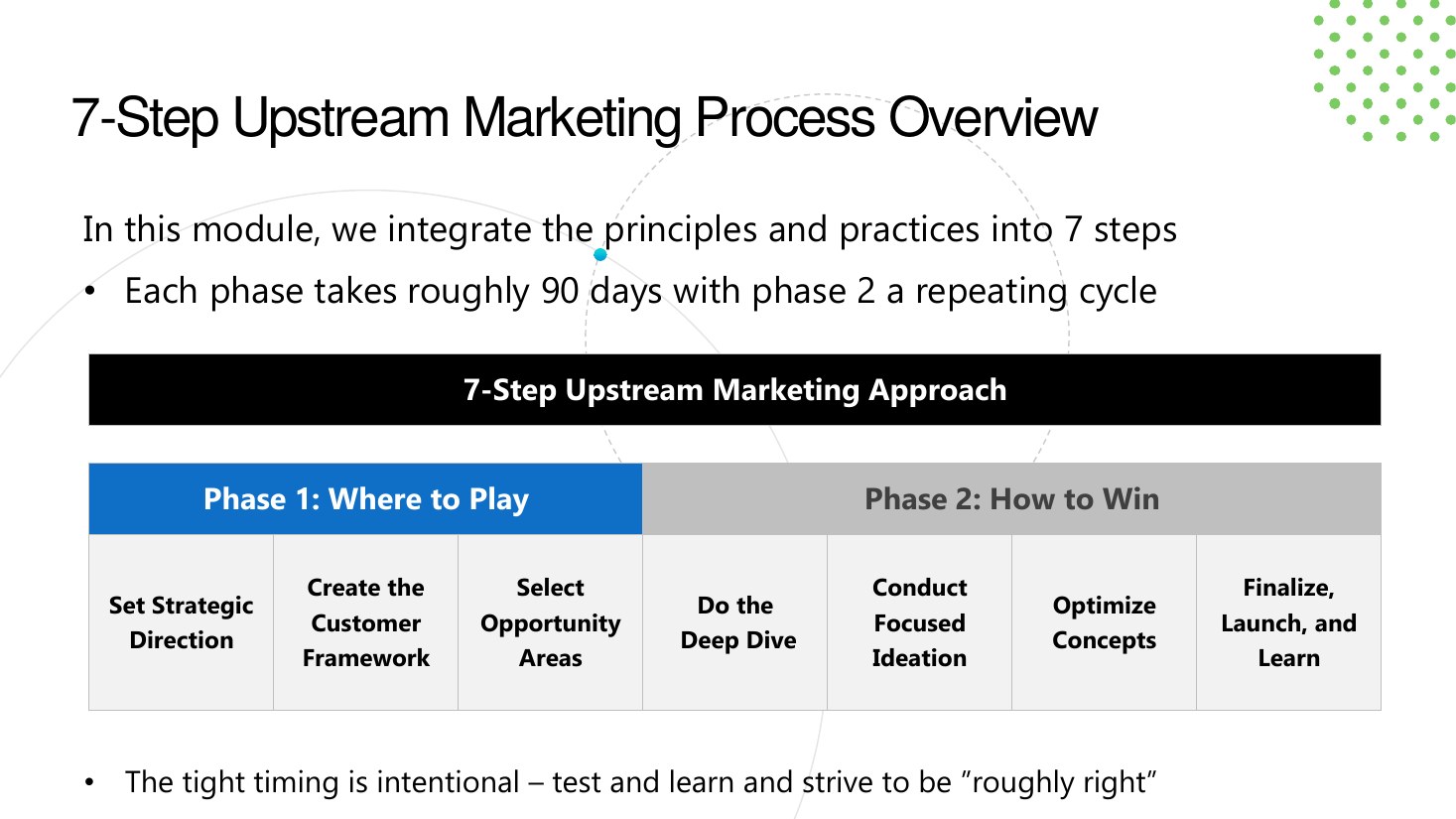
- Phase 1, Where to Play: set strategic direction, create the customer framework, and confirm strategic opportunity areas. It takes roughly ninety days, including quantitative research.
- Phase 2, How to Win: do the deep dive, run focused ideation, optimize concepts, and finalize, launch, and learn. It is a repeating cycle of about ninety days, each focused on a limited set of opportunity areas.
“What would have to be true?” is asked throughout. The tight timing is intentional, drawing on the Pareto 80-20 principle and Parkinson’s law: make decisions with partial information, aim to be roughly right, and favor progress over perfection. If phase one is impractical, start with phase two on qualitative inputs, or run a pilot to learn the process.
The case: launching a luxury automotive brand
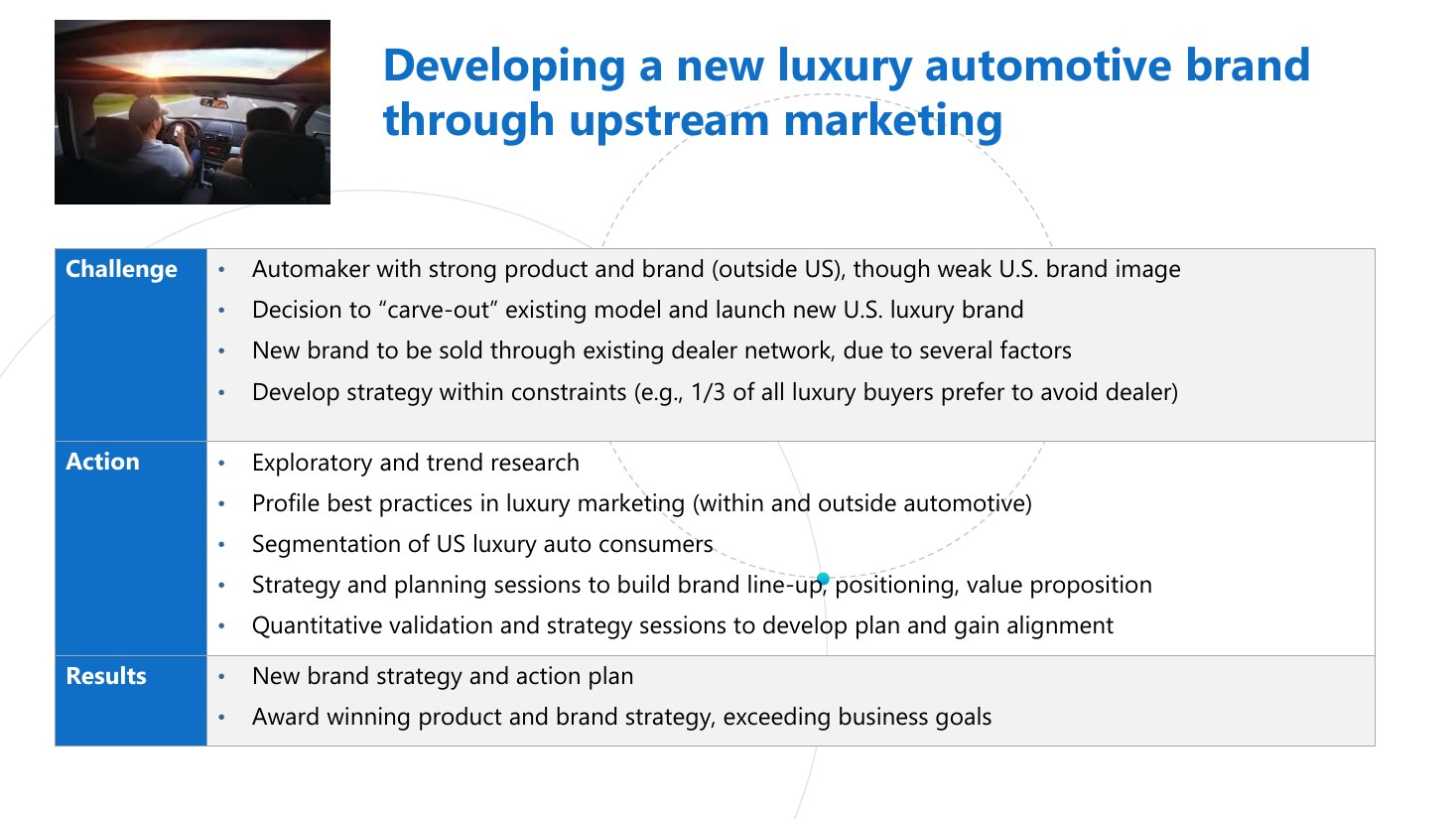
The client was considering a new luxury brand or sub-brand and wanted to know how to launch it for maximum success. Automakers all buy the same industry reports, so the client wanted proprietary insight into the whys behind luxury buyers’ behavior. (Some facts are changed for confidentiality; the steps are real.)
Step 1: Set strategic direction
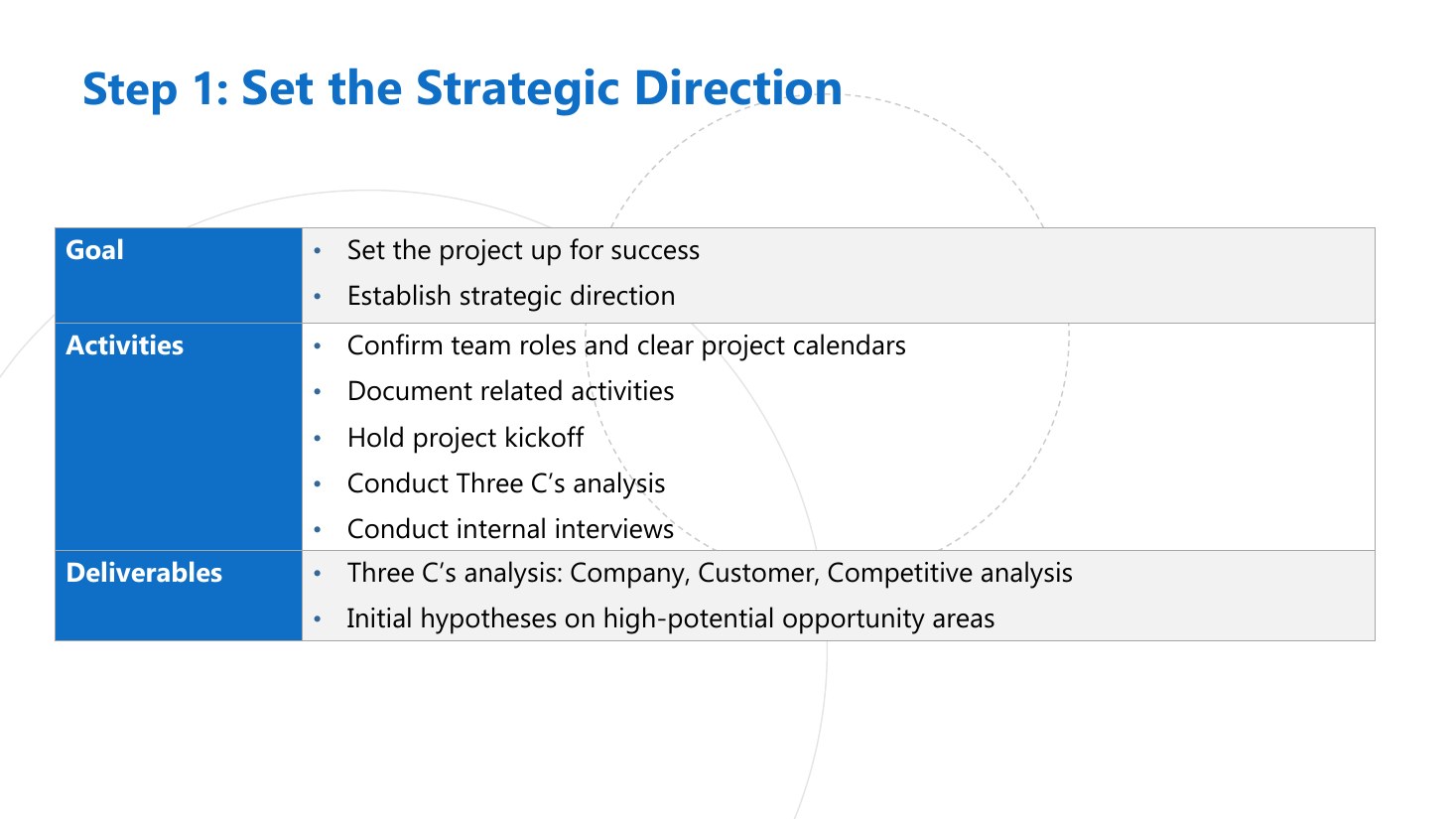
Set the project up for success: confirm roles (team leader, cross-functional members, executive sponsors, outside partners), put redundant initiatives on a “stop doing” list, and publish a master calendar. At kickoff, ask: what do you know about your important customers that your competitors don’t? Then run a three C’s analysis (company, customers, competitors), keeping the competitive work to a week or two, and conduct thirty- to forty-five-minute confidential internal interviews. For the auto client, the interviews surfaced a key constraint: the new brand had to be sold through the existing mainstream dealers. That raised the framing questions for the rest of the project. See set strategic direction.
Step 2: Create the customer framework
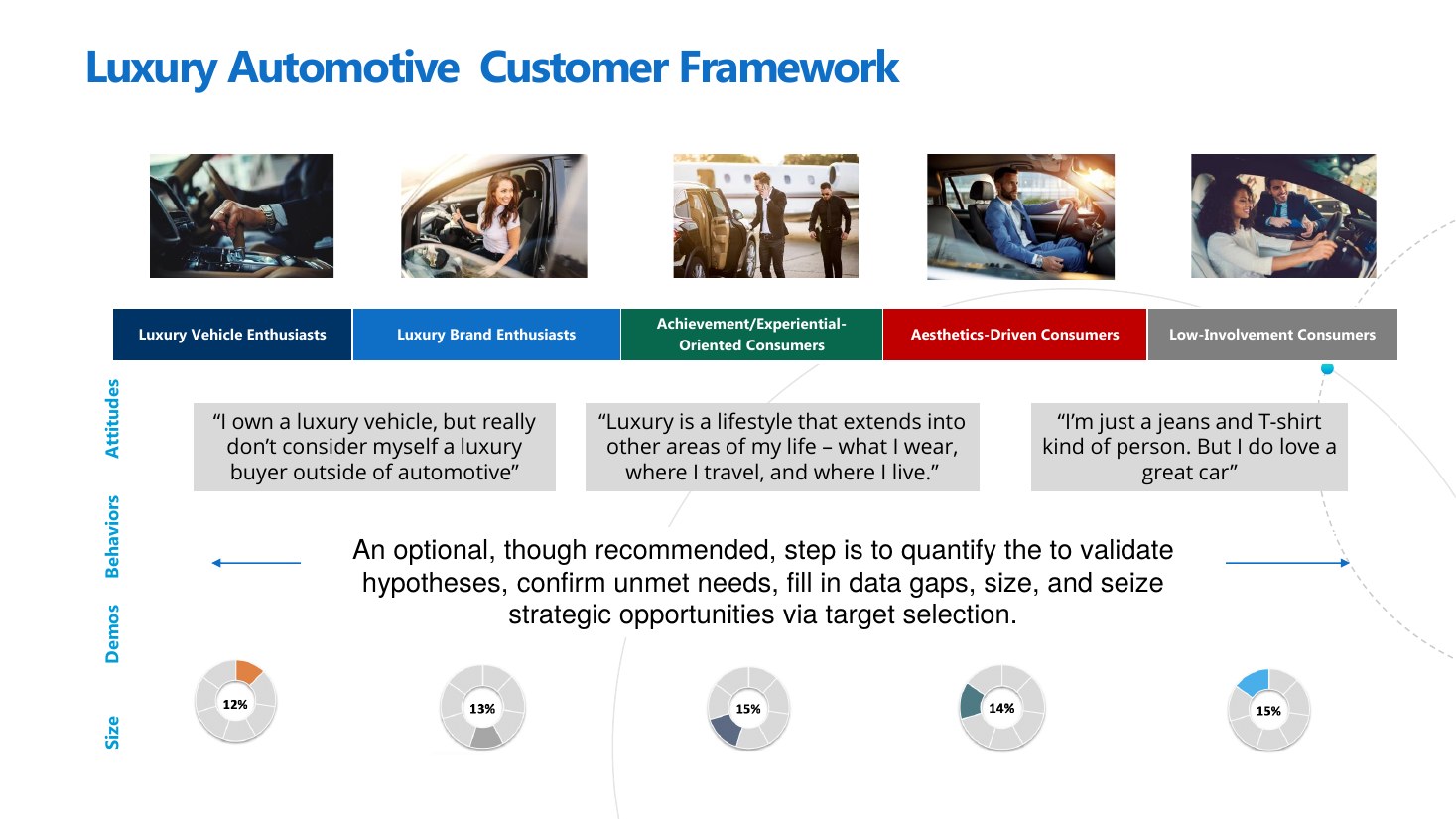
Get out of the office and build a proprietary to-whom, for-what framework. The team interviewed industry experts, luxury influencers, and buyers, including moderated sessions where respondents photographed the luxury brands they owned and their current vehicles. Some buyers saw luxury as a lifestyle; others saw it as just the car and would skip the dealership if they could. An online survey of over 2,000 consumers, rating more than seventy-five statements, confirmed five segments: luxury vehicle enthusiasts, luxury brand enthusiasts, achievement and experience-oriented, aesthetics-driven, and low-involvement consumers. The team narrowed to two marketing targets, treating the others as consumption targets. See customer framework.
Step 3: Confirm strategic opportunity areas
In strategy sessions, confirm where you are now and bring the segments to life, then begin with the end in sight and identify opportunity areas strategically, saving blue-sky brainstorming for later. Write each up on one page (target, insight, need, jobs to be done, sizing) and prioritize with an impact-effort matrix or the four screens. The auto client confirmed two: position the new brand, and build a value proposition that worked within the constraint of two brands, one channel. See confirm strategic opportunity areas.
Step 4: Do the deep dive
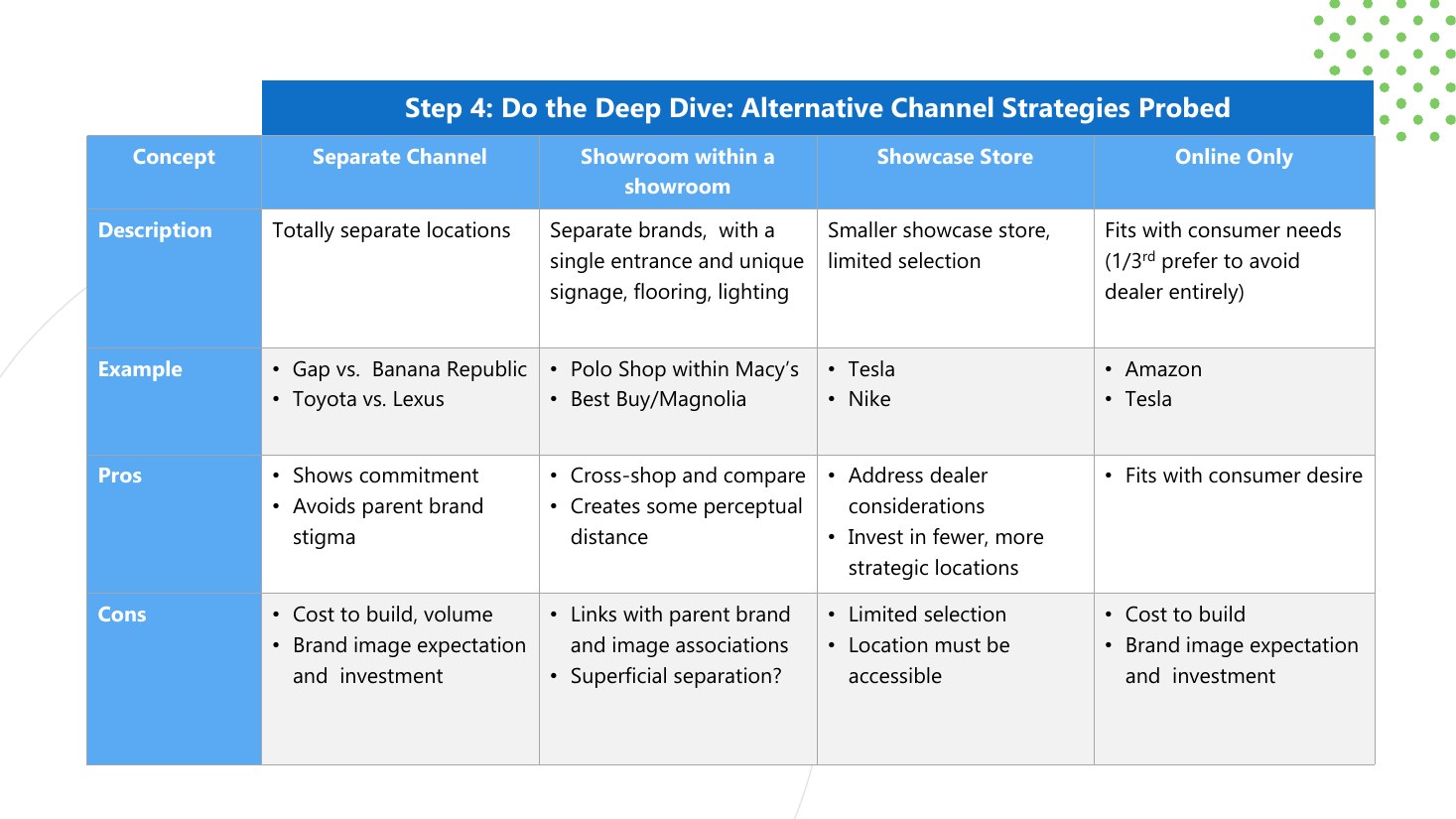
Now talk to target consumers, typically ten to twelve per target. Quantitative research had shown that roughly one-third of consumers would prefer to buy entirely online and never talk to a salesperson. A parallel workstream examined alternative retail formats. Two how-might-we questions framed the work: how might we create a showroom within a showroom, and how might consumers skip the showroom entirely? See do the deep dive.
Step 5: Run a focused ideation
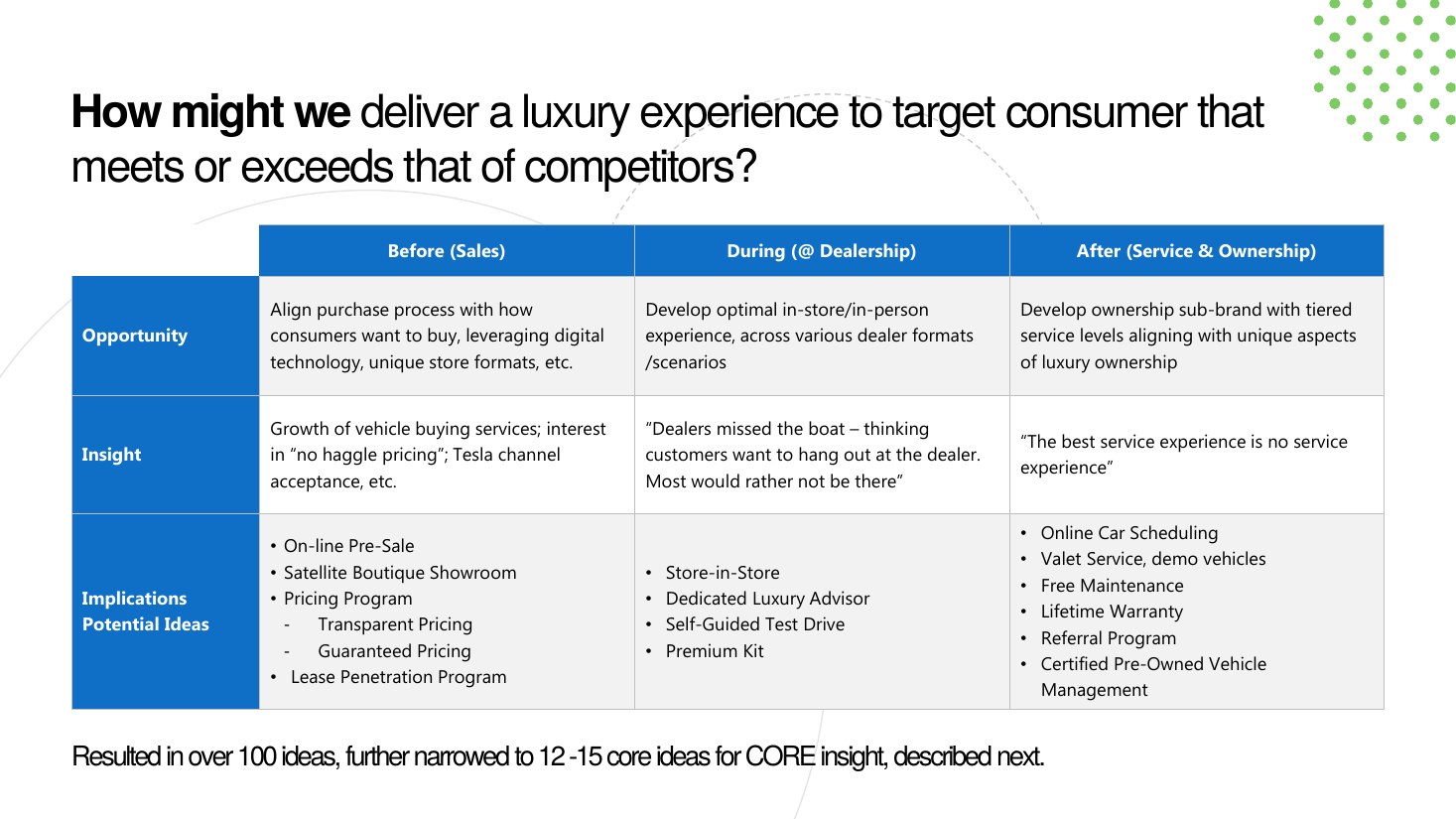
Using the exercises from Chapter 6, the team ideated on positioning and channel concepts, organized by before, during, and after purchase. The session produced over 100 ideas, narrowed to twelve to fifteen core ideas through dot voting and developed into written concepts. See focused ideation.
Step 6: Optimize concepts
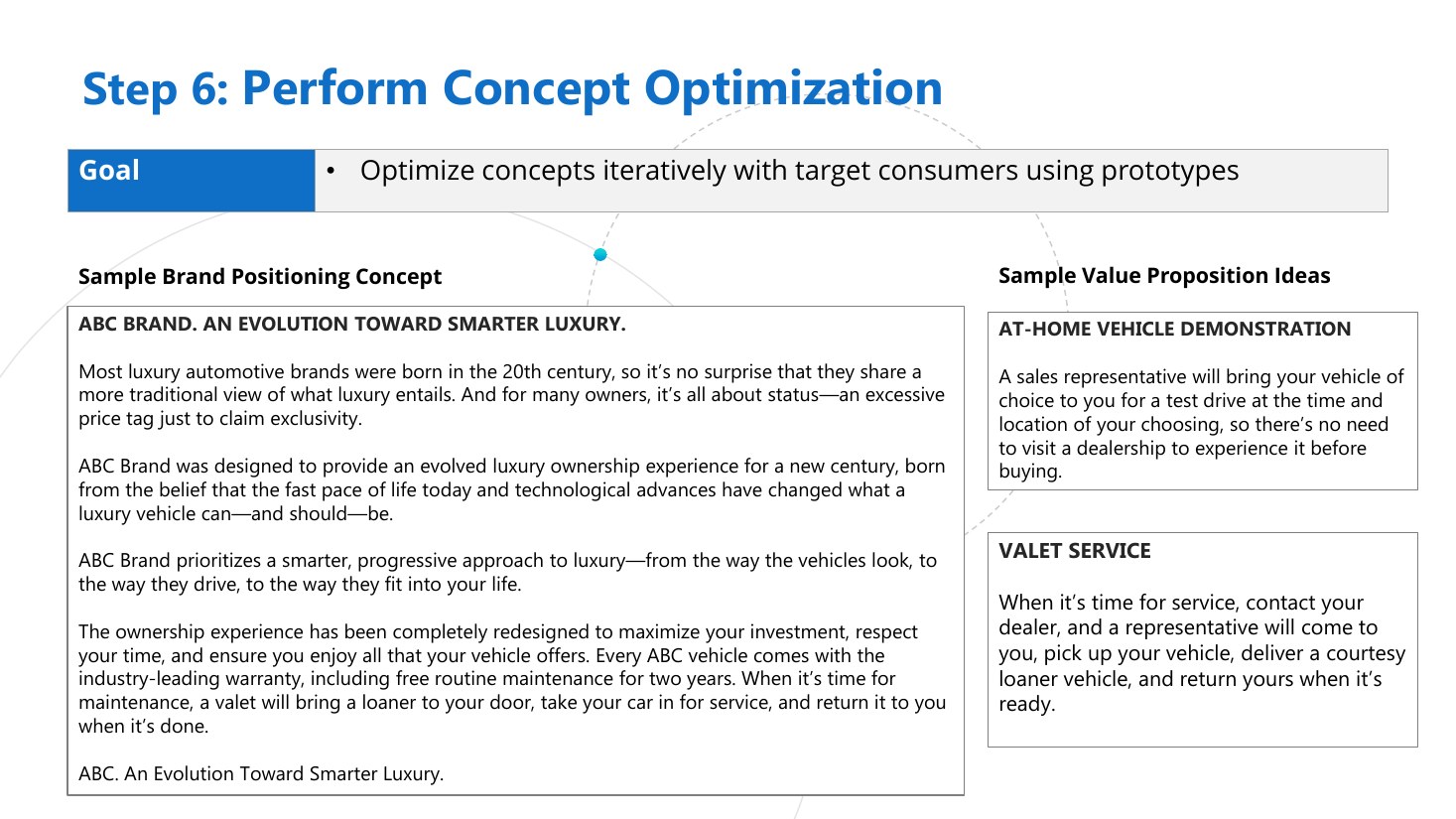
Concepts covered positioning (“ABC Brand. An evolution toward smarter luxury.”) and channel and service ideas such as at-home test drives and valet service. Using the CORE process, the team tested each for appeal, distinctiveness, and credibility, one at a time and then against each other, revising stimuli between sessions with the client in real time. The final concepts were confirmed through quantitative research. See concept optimization.
Step 7: Finalize, launch, and learn
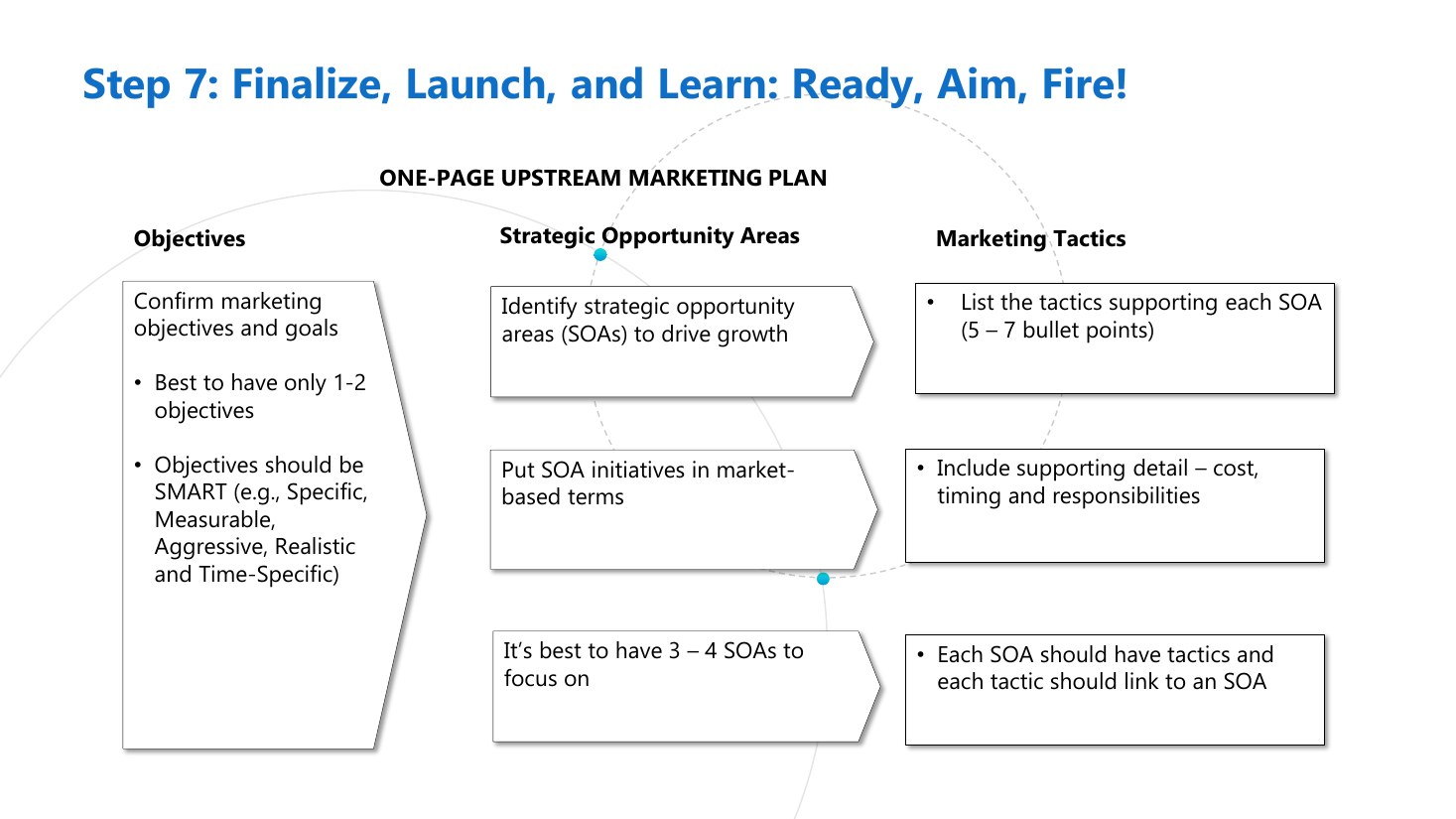
Ditch the 100-page annual plan for a rolling plan reviewed monthly, using a four-page template for each opportunity area: the customer framework and bull’s-eye target; the situation-complication-resolution argument and core concept; objectives, initiatives, and tactics; and who, what, when, and how much. Then replace “ready, aim, fire” with “ready, fire, aim”: launch, learn, and recalibrate. Markets move fast, customers want early access, and most decisions are reversible. The auto client launched the brand with an award-winning product and positioning and continues to refine its go-to-market approach. See finalize, launch, and learn.
Key takeaway
Upstream marketing has to be engineered. Two phases and seven steps, where to play and then how to win, integrate insight, identity, and innovation into a repeatable process, with what would have to be true asked throughout and launch and learn as an ongoing final step.
Questions to consider
- Does your organization have a structured, integrated approach to upstream marketing?
- Does the approach recognize and answer the framing questions: where to play, how to win, how might we, and what would have to be true?
- Is the approach informed by insight, identity, and innovation principles and corresponding best practices?
Put this chapter to work
- The process in practice: EquiBrand’s strategic planning process
- Strategic planning support: Strategic planning consulting
- Where to start: Start the Growth Assessment
Frequently asked questions
What are the seven steps of upstream marketing?
Set strategic direction; create the customer framework; confirm strategic opportunity areas; do the deep dive; run a focused ideation; optimize concepts; and finalize, launch, and learn. The first three answer where to play and the last four answer how to win.
How long does the upstream marketing process take?
The book describes each phase as taking roughly ninety days, with the how-to-win phase repeating as a cycle for each set of opportunity areas. The tight timing is intentional: aim to be roughly right rather than precisely wrong.
What is a four-page upstream marketing plan?
A rolling plan for each strategic opportunity area: page one covers the customer framework and target, page two the argument and core concept, page three objectives, initiatives, and tactics, and page four who, what, when, and how much. It replaces a long annual plan and is reviewed monthly.
What does “ready, fire, aim” mean in upstream marketing?
Once the market is studied and concepts are optimized, launch, then recalibrate based on market learning. Markets move quickly, customers want early access, and most decisions are reversible.
Get all nine chapters
Want the whole framework? Enter your name and email and we’ll send you all nine chapters of Upstream Marketing, each with its slide deck, in one email.
"*" indicates required fields
← Chapter 7: Aim ‘Em, Don’t Tame ‘Em | All chapters | Chapter 9: Upstream Marketing Application →





Follow EquiBrand