
Chapter 6: Create, Test, and Learn (Strategy & Process)
From Upstream Marketing: Unlock Growth Using the Combined Principles of Insight, Identity, and Innovation by Tim Koelzer and Kristin Kurth (Greenleaf Book Group Press, 2021)
Chapter summary. Chapter 6 is the first best practice of the innovation principle, which the book defines as creating and capturing value in a new way. It shows how Disney, Google, Amazon, and Apple build innovation into a disciplined process of ideation, iteration, and screening, and distills five practices the profile companies share: focus on strategic opportunity areas, generate ideas through creative problem solving, develop and optimize concepts iteratively, determine what would have to be true for success, and manage innovation as a portfolio and pipeline. It closes with the counterbalance to process: creativity and culture, the subject of Chapter 7.
Download the full chapter (PDF) | Download the chapter slides (PDF) | Get all nine chapters
“It was all started by a mouse”
Walt Disney’s sketch on a twenty-minute train ride grew into the largest media company in the world. Inspired by Walt’s 1957 growth plans, the chapter shows the logic behind it: the studio’s creative talent at the center, with theme parks, merchandise and licensing, and media extending from it, and value flowing in both directions. Toy Story became Toy Story Mania; Pirates of the Caribbean went the other way, from attraction to film franchise. The pace has also accelerated: Frozen (2013) became a soundtrack, books, costumes, toys, an attraction, and a sequel within six years, compared with a gap of more than fifty years between Mary Poppins and Mary Poppins Returns.
How the profile companies innovate
Disney: the dreamer, the realist, and the spoiler
Disney is one of the most creative companies in the world and also one of the most disciplined. Deciding where to play and how to win is a resource allocation decision, and strategic planners, accountants, and technologists drive much of its success. Where-to-play segmentation shows portfolio gaps: thrill-seeking teens, cruisers, retirees, and corporate groups. When Universal’s thrill rides cut into attendance in the early 1990s, Disney didn’t build a taller, faster roller coaster that would clash with the “Disney Way.” It bet on Tower of Terror, and later acquired Star Wars and Marvel to fill gaps in target appeal.
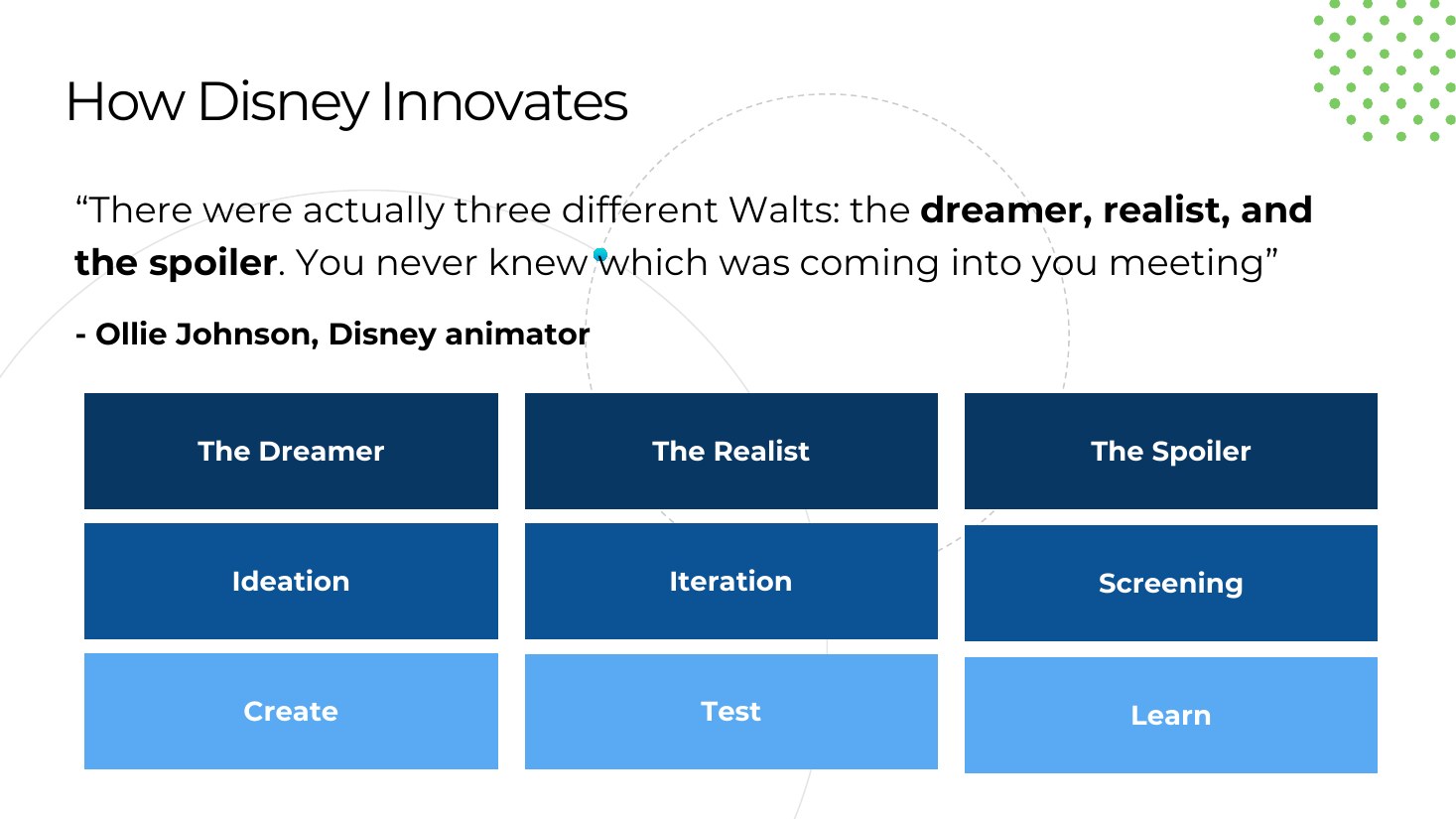
The creative approach comes from Walt himself. As animator Ollie Johnson put it, there were three Walts: the dreamer, the realist, and the spoiler. The dreamer generates ideas without judgment. The realist turns them into prototypes and asks how might we execute this vision. The spoiler shoots holes in them and asks what would have to be true to succeed. Ideation (create), iteration (test), and screening (learn) are common across the profile companies.
Google, Amazon, and Apple
- Google treats innovation as an ongoing process: know the user, think 10x rather than 10 percent, prototype through design sprints, and launch and learn with beta products and soft launches.
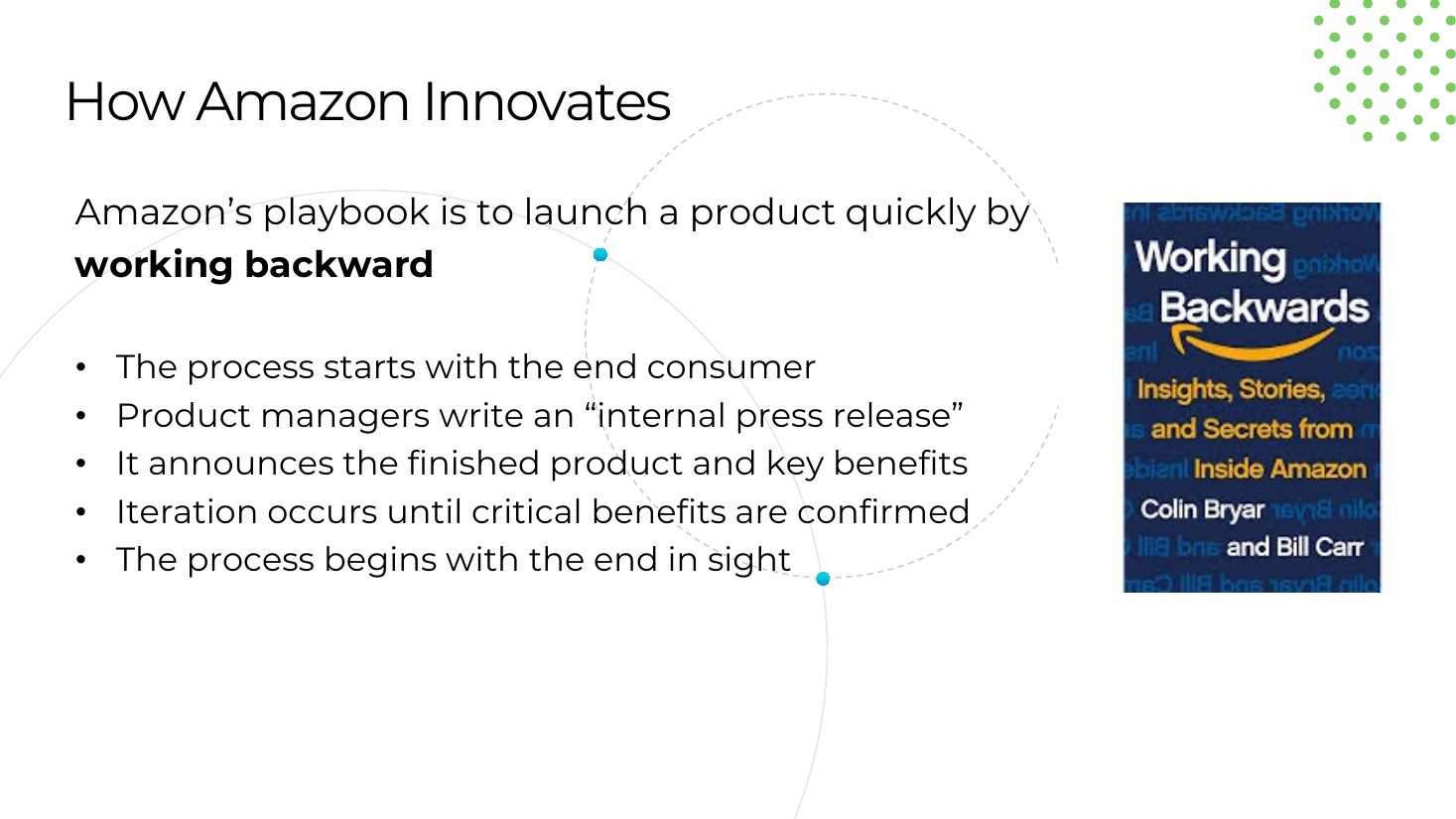
- Amazon launches quickly and spends little on marketing. Its “working backward” process starts with a product manager writing an internal press release announcing the finished product and its customer benefits, then iterating until those benefits are confirmed. Writing the press release first is beginning with the end in sight.
- Apple codifies its approach in the Apple New Product Process, with weekly executive reviews and build-test-review cycles of four to six weeks, run many times over a product’s life. Design teams sit apart from the larger organization and report directly to the executive team.
Five common innovation practices
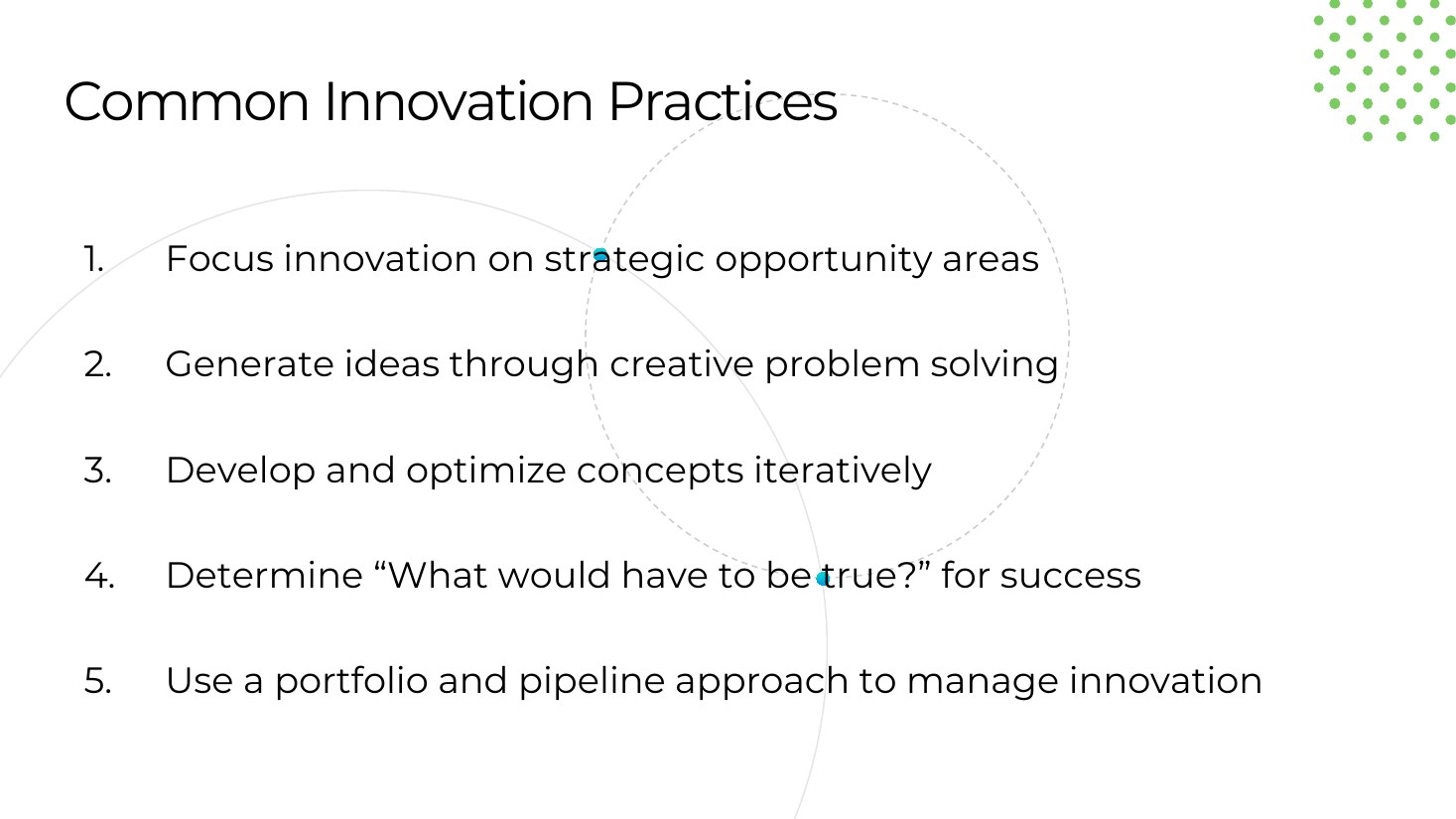
Each profile company has its own process, but across them the book finds five shared, end-in-sight practices.
1. Focus innovation on strategic opportunity areas
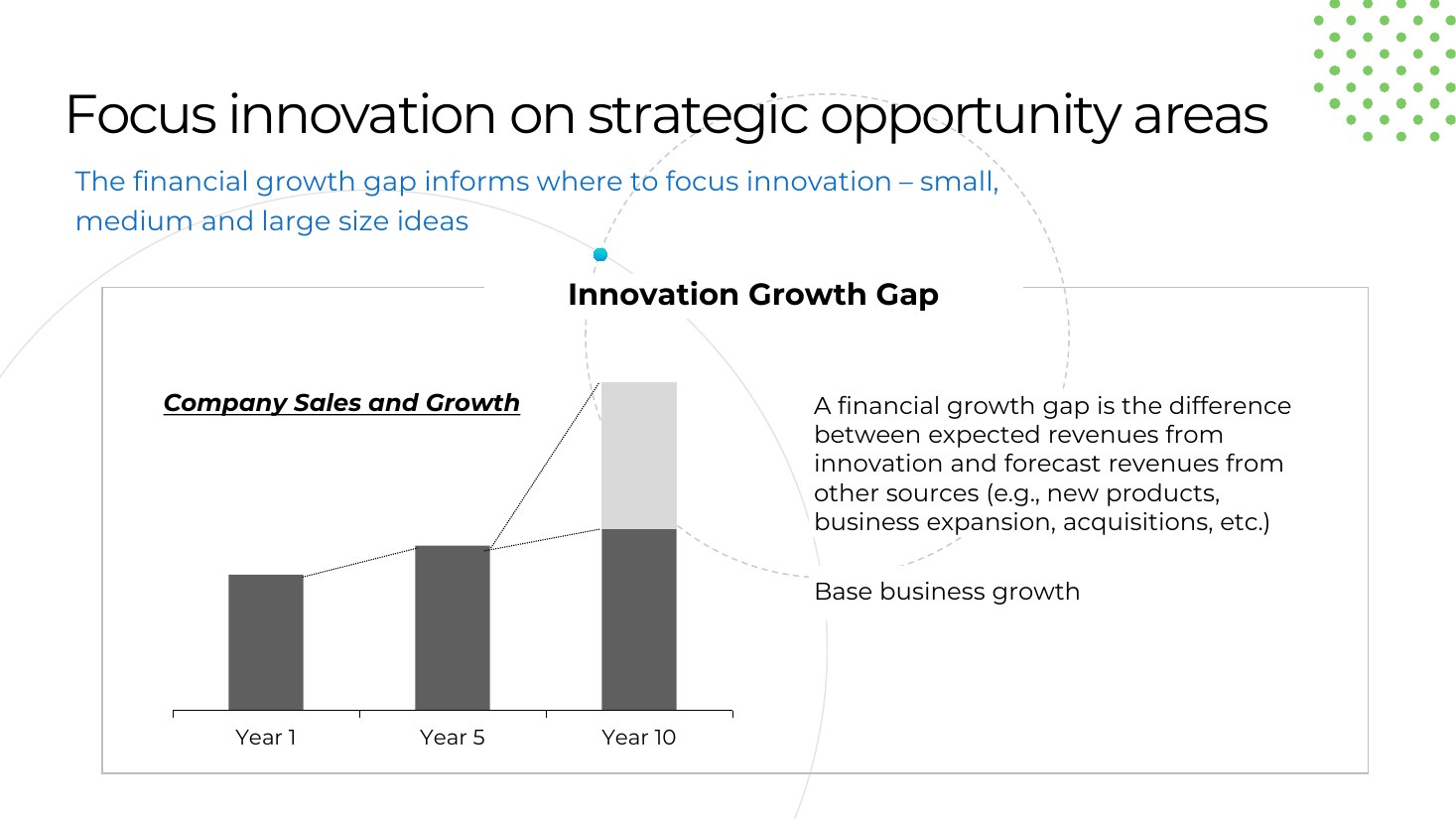
Innovation is more than “I have an idea.” Replace the fuzzy front end with clear direction built from three elements:
- The financial growth gap: how much revenue you need beyond base business growth. Improve 10 percent, 100 percent, or ten times? The larger the gap, the greater the need for innovation. Downstream marketing aligns with the base business; upstream marketing fills the larger gap.
- Strategic opportunity areas: the opportunity areas from Chapter 3 that, rolled up, should begin to fill the gap.
- What would have to be true: the strategic, customer, financial, and operational conditions for success.
Together they belong in an upstream marketing plan and business case. For Disneyland, adviser Harrison “Buzz” Price invented a new set of metrics, from site analysis to attendance targets, that became the language of attraction development.
2. Generate ideas through creative problem solving
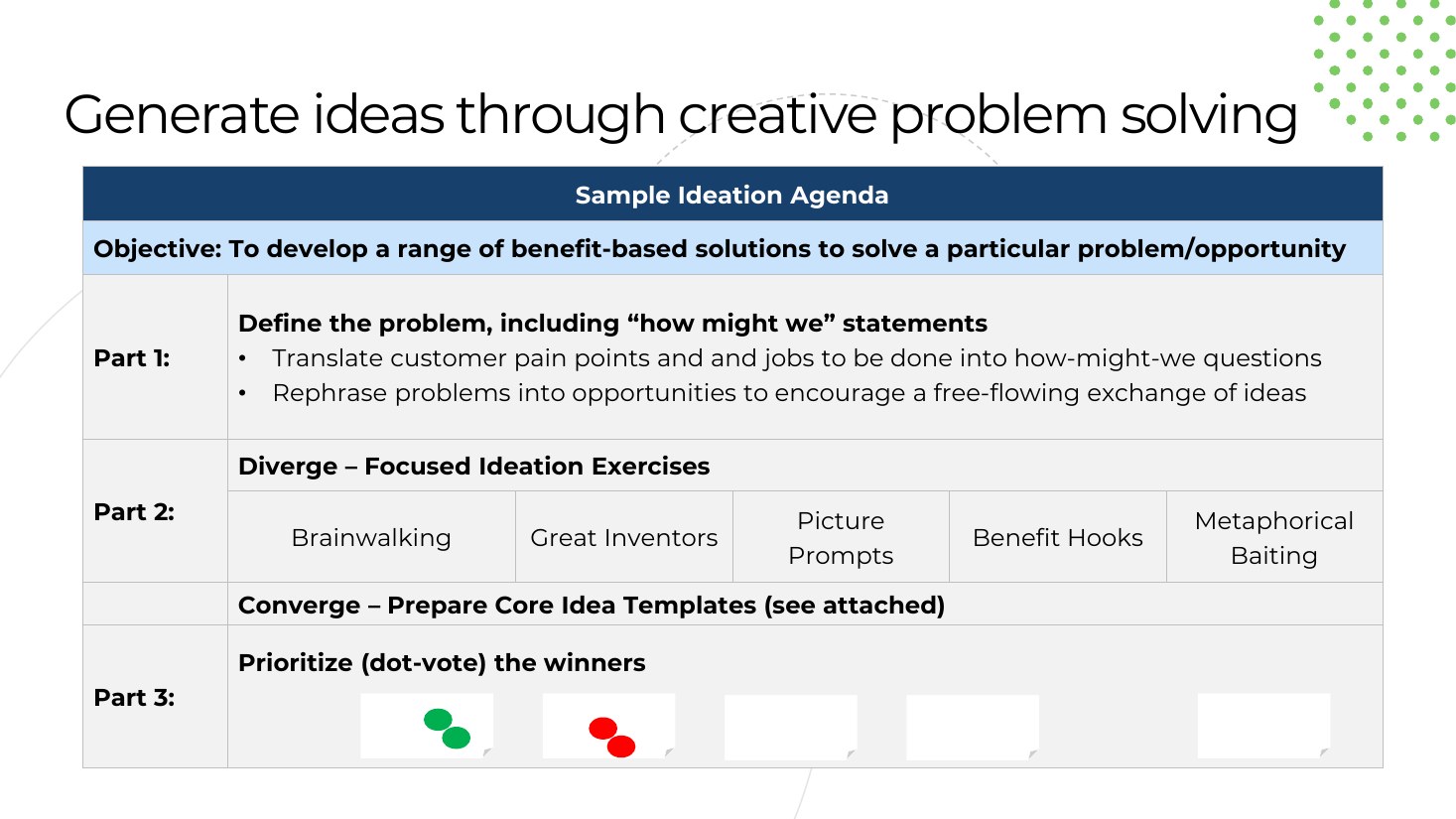
Dedicated problem-solving sessions take two forms. Focused ideation takes a venture capitalist approach, developing a portfolio of concept areas. A design sprint, often five days, takes a startup approach, iterating a single concept. The chapter’s three-part agenda:
- Define the problem. Share customer and market insight, list jobs to be done from the customer’s view, and turn pain points into how-might-we questions. “We’re not selling enough baking mixes” becomes “How might we deliver a specialty bakery experience at home?” Don’t skimp on insight.
- Diverge, then converge. Proven exercises include Brainwalking, Great Inventors, Picture Prompts, Benefit Hooks, and Metaphorical Baiting (“We’re the Uber of…”). Then collect ideas on templates for comparison.
- Prioritize the winners with dot voting and an impact-effort matrix.
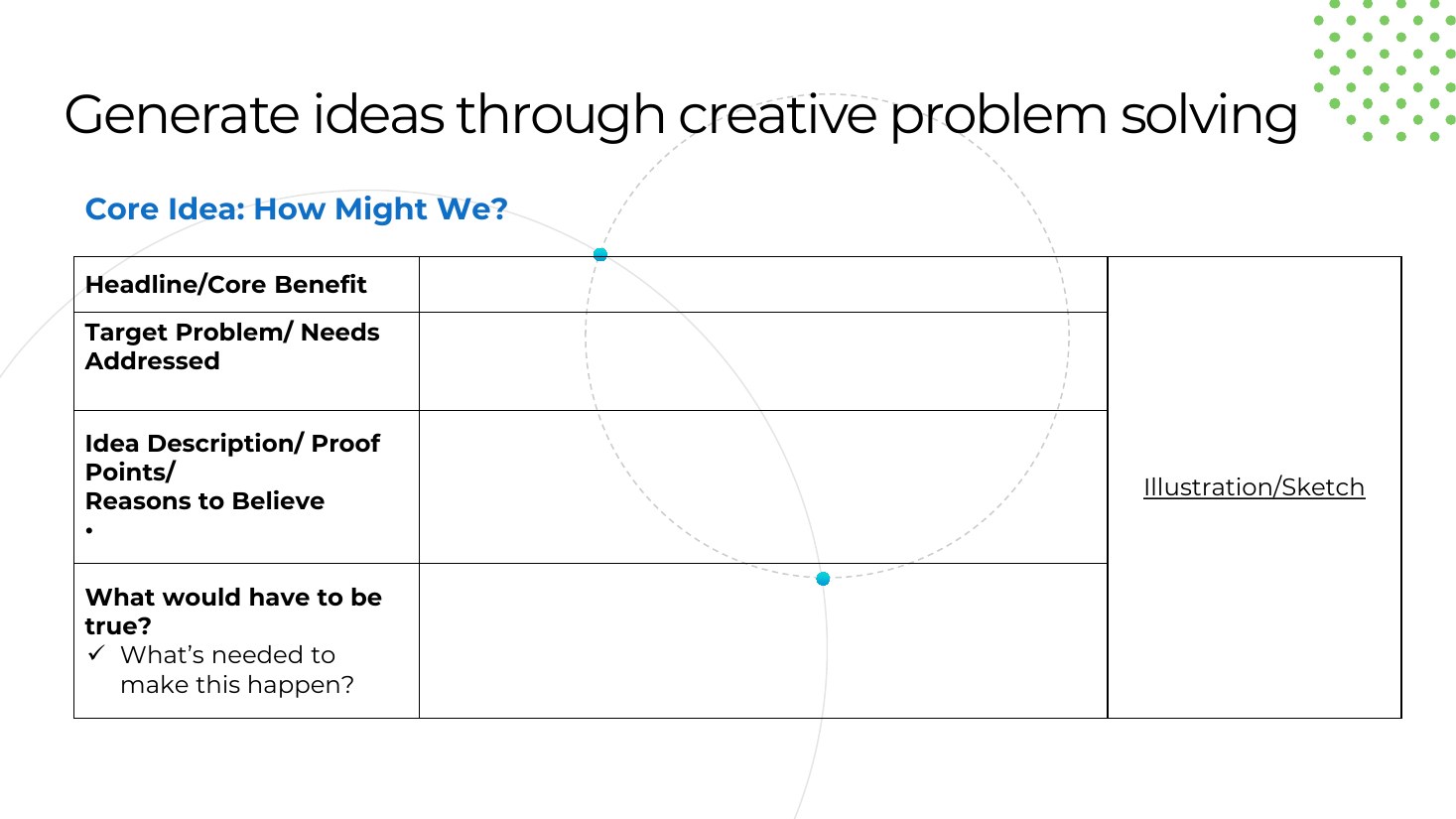
Invite a mix of expansive, knowledgeable, and creative thinkers, and combine individual and team exercises. See focused ideation for how EquiBrand runs these sessions.
3. Develop and optimize concepts iteratively
Put high-potential ideas into tangible, testable concepts and iterate them through several loops of create, test, and learn. Use customer feedback to shape the answer, not just validate it afterward. If a concept is going to fail, have it fail fast. The book lists the benefits: exposing multiple concepts yields more and better solutions; customers can list problems but react more easily to concepts; unfinished concepts invite engagement; and concepts are far cheaper than finished products, which makes bad ideas easier to kill. Stress clarity and benefits over “ad copy.”
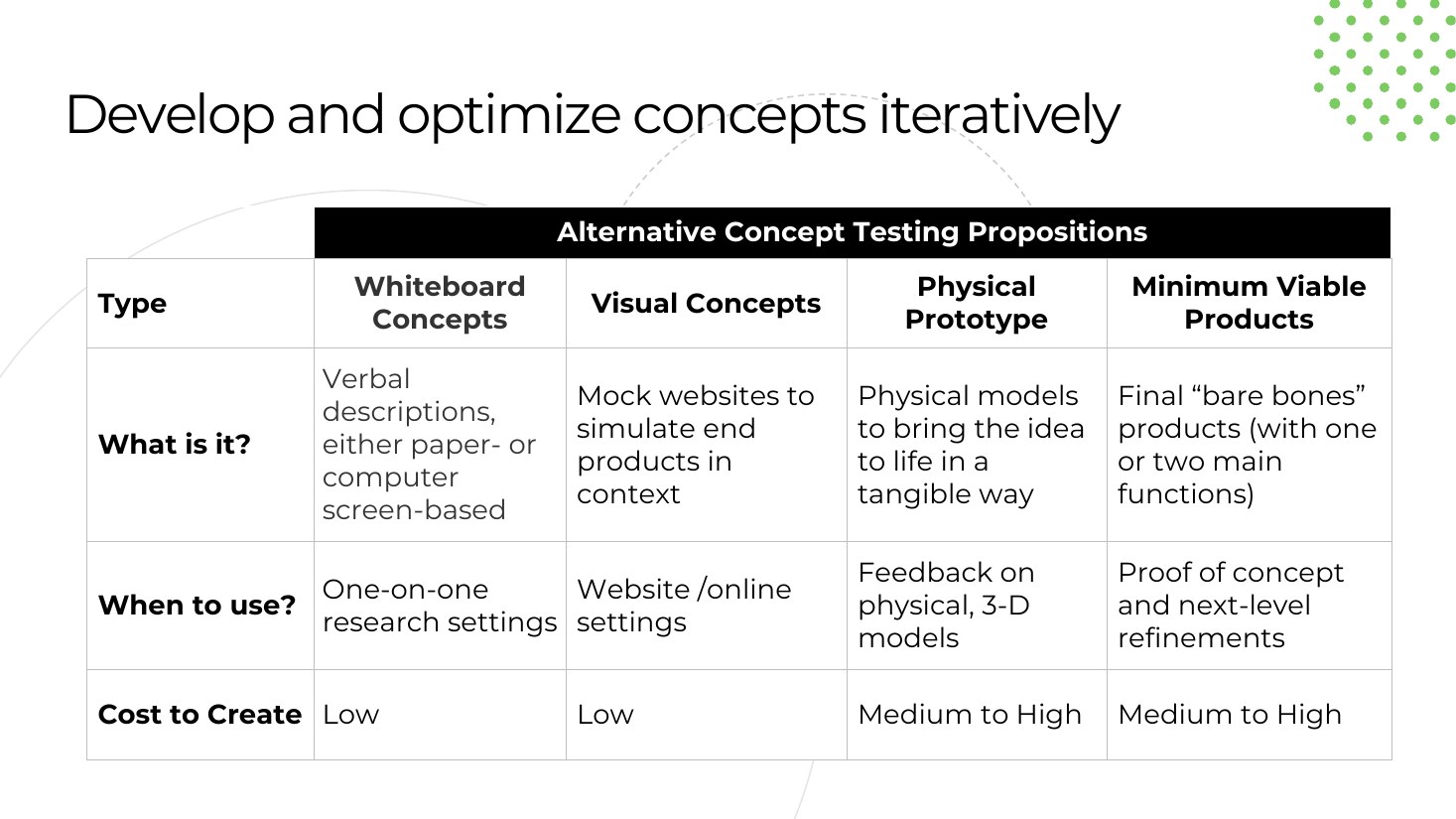
Work from left to right as certainty grows: whiteboard concepts, then visual concepts and physical prototypes, then minimum viable products where iteration is cost-effective. Online A/B testing can automate iteration, but it shows which version wins, not why, so balance it with qualitative insight. EquiBrand used the same approach on the book itself: an early website with a draft of Chapter 1, a book mock-up with a preorder form, Google Alerts and Google Trends, A/B-tested pay-per-click ads to optimize the title and subtitle, and advance reader copies. See concept optimization.
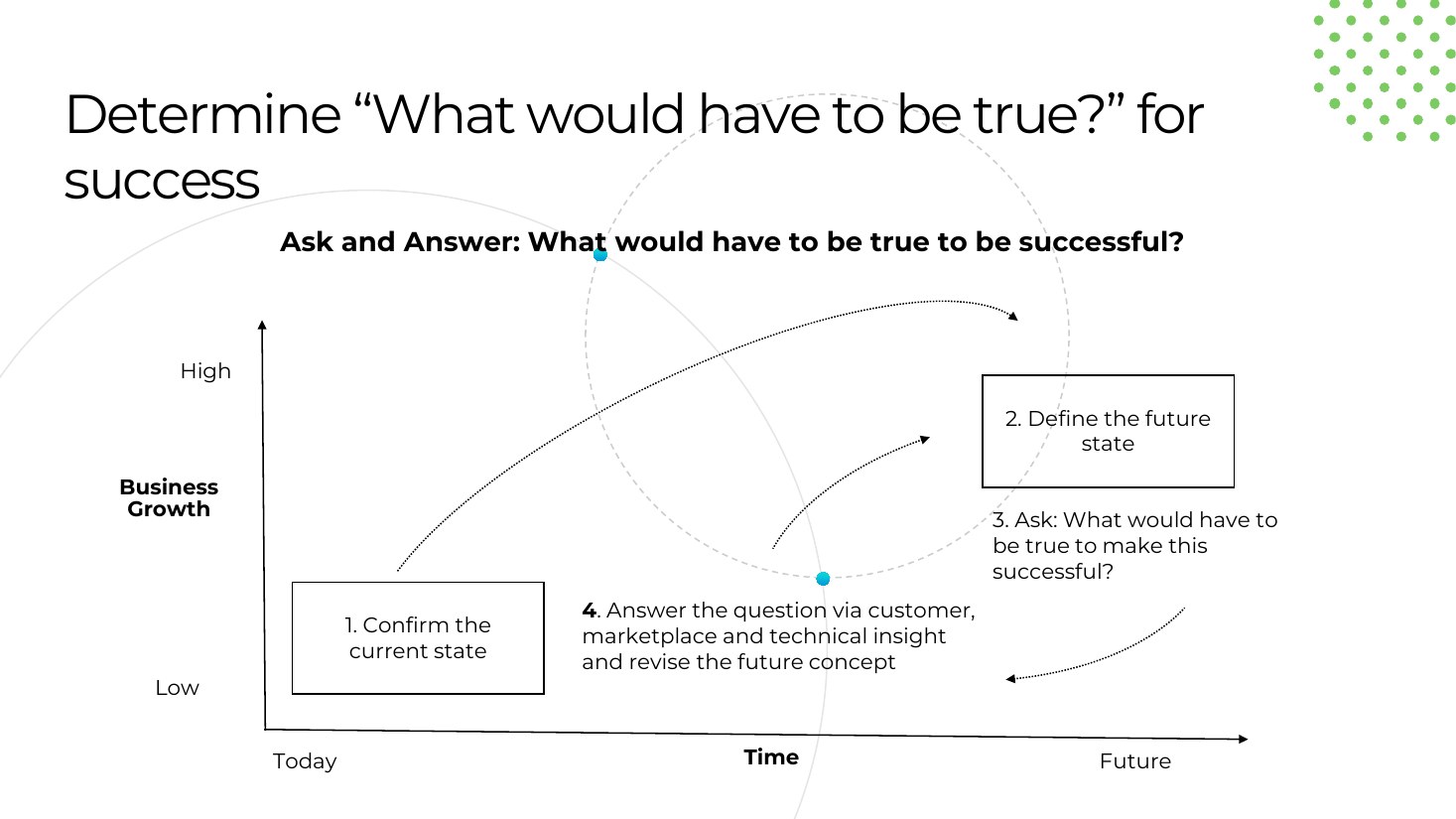
4. Determine “what would have to be true?” for success
In 1984, Nike signed Michael Jordan to a seven-year, $6.3 million contract with zero proof it would pay out. It protected the downside with an out clause if Jordan didn’t sell $4 million in shoes by year three. The book reports that Nike sold $70 million of Air Jordans in the first two months of 1985, and that the Jordan brand hit its first $1 billion quarter in 2019.
The death knell of innovation is “prove it.” Truly new ideas have no historical data, and early forecasts give a false sense of security. In one mini case, a software startup’s market model went from losing money to wildly profitable on paper by changing a single share assumption from 10 to 20 percent. Instead of a wild guess, ask what needs to be proven to proceed, then run mini tests. Screen concepts across four areas: strategic fit, customer need and uniqueness, financial size, and operational complexity, ranking alternatives relative to each other early and quantifying closer to launch. Engage executives early and often rather than seeking buy-in after the deck is polished.
5. Use a portfolio and pipeline approach to manage innovation
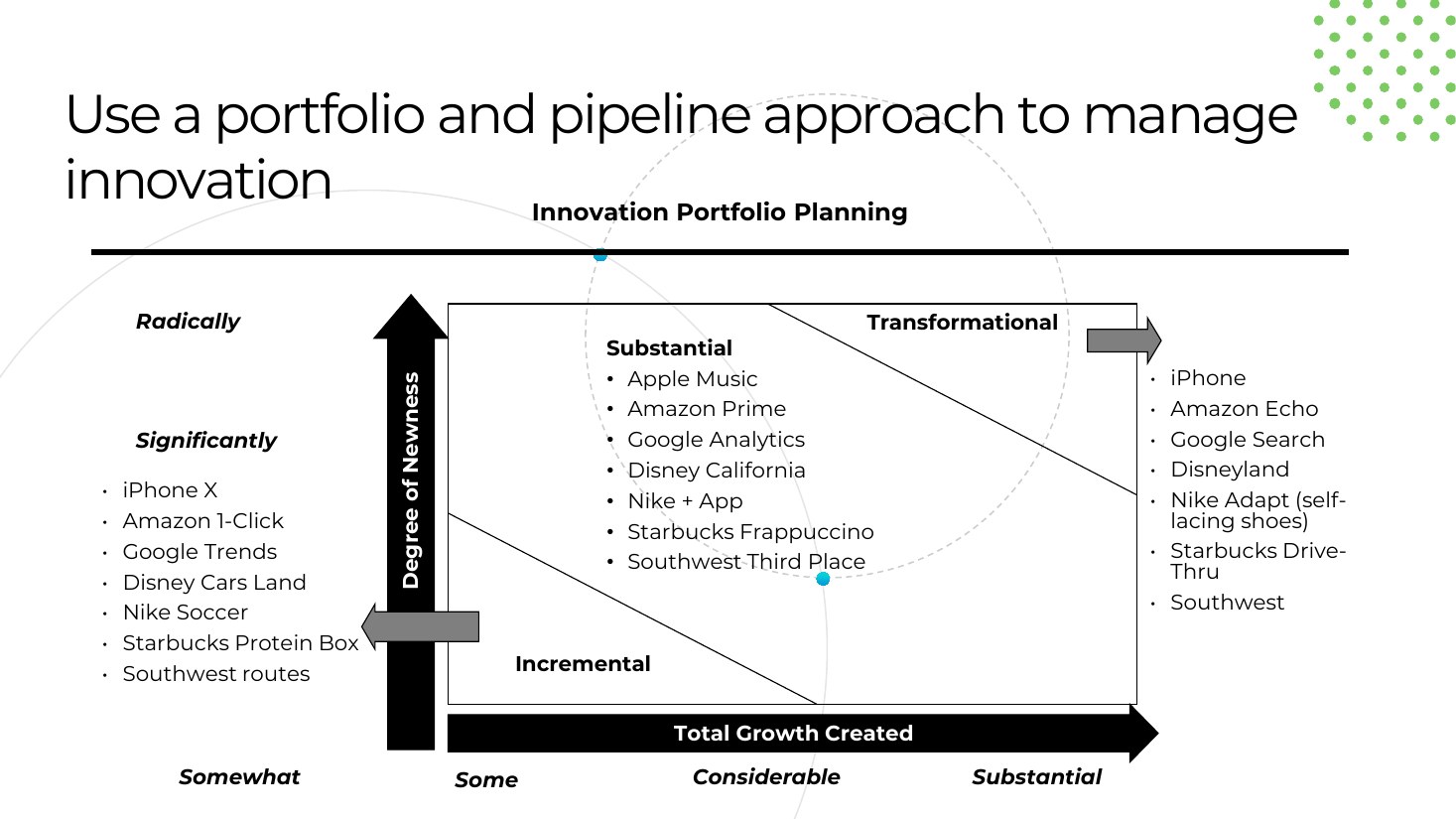
Apple’s real magic is a steady release of products from a planned portfolio and pipeline. Google uses its 70/20/10 model: 70 percent of projects on the core business, 20 percent related, and 10 percent unrelated, the source of future core businesses. Balance three types:
- Incremental: continuous improvement of the core business.
- Substantial: extending the business to new customers, markets, or targets.
- Transformational: new capabilities and new businesses in response to disruption.
Plan top-down and bottom-up, anchor annually, and track opportunity areas monthly. Transformational work needs different tools and goals than the core, which has organizational implications covered in the next chapter. For EquiBrand’s approach, see customer-driven innovation and portfolio strategy.
Process meets culture
Steve Jobs said Apple had great processes, but innovation came from people meeting in hallways or calling each other late at night with a new idea. Jeff Bezos asked whether we own the process or the process owns us. Process makes innovation efficient; creativity and culture are what most distinguish world-class innovators, the subject of Chapter 7.
Key takeaway
Innovation is creating and capturing value in a new way, and it needs both stability and flexibility at once. Aim it at strategic opportunity areas, generate and iterate concepts with customers, screen them against what would have to be true, and manage a balanced portfolio and pipeline over time.
Questions to consider
- Is there an innovation strategy that aligns with the corporate strategy and promotes a continuous stream of new products?
- Does a confirmed list of strategic opportunity areas exist to focus the organization?
- Is there internal commitment to experimentation and concept iteration as ways to achieve growth?
Put this chapter to work
- Innovation grounded in customers: Customer-driven innovation
- New products and services: New product strategy consulting
- Generating ideas: Focused ideation
- Testing concepts: Concept optimization (CORE)
- Next step for leadership teams: Start the Growth Assessment
Frequently asked questions
What are the five common innovation practices in Upstream Marketing?
Focus innovation on strategic opportunity areas; generate ideas through creative problem solving; develop and optimize concepts iteratively; determine what would have to be true for success; and use a portfolio and pipeline approach to manage innovation.
What is Disney’s dreamer, realist, and spoiler approach?
Three roles drawn from Walt Disney’s creative process. The dreamer generates ideas without judgment, the realist turns them into prototypes that can be tested, and the spoiler critiques them by asking what would have to be true. They map to ideation, iteration, and screening: create, test, and learn.
What does “what would have to be true?” mean in innovation?
A framing question that replaces premature financial proof. Define the conditions an idea needs to succeed, such as price, demand, channels, or operations, then use mini tests and screening to prove or disprove them before investing further.
What is the difference between incremental, substantial, and transformational innovation?
Incremental innovation improves the core business, substantial innovation extends it to new customers or markets, and transformational innovation creates new capabilities and businesses. A balanced portfolio of all three spreads risk and sustains growth.
Get all nine chapters
Want the whole framework? Enter your name and email and we’ll send you all nine chapters of Upstream Marketing, each with its slide deck, in one email.
"*" indicates required fields
← Chapter 5: Build and Extend the Brand | All chapters | Chapter 7: Aim ‘Em, Don’t Tame ‘Em →





Follow EquiBrand