
Chapter 3: Define Your Purpose: To Whom? For What?
From Upstream Marketing: Unlock Growth Using the Combined Principles of Insight, Identity, and Innovation by Tim Koelzer and Kristin Kurth (Greenleaf Book Group Press, 2021)
Chapter summary. Chapter 3 completes the book’s principle of insight by connecting internal clarity with customer understanding. It starts with why: an aspirational purpose that guides where a company competes. It then shows how to decide to whom to sell and for what needs, moving through three levels of growth frameworks, from the classic growth strategy matrix to conventional segmentation to a proprietary customer demand framework. The chapter closes with how to choose a marketing target, the targeting paradox, and how to define and prioritize strategic opportunity areas for growth.
Download the full chapter (PDF) | Download the chapter slides (PDF) | Get all nine chapters
Begin with why
The book’s profile companies share an aspirational purpose and a commitment to customer-centricity. Starbucks set out to inspire and nurture the human spirit, one cup at a time. Google set out to organize the world’s information and make it universally accessible. Southwest connects people to what’s important in their lives through friendly, reliable, low-cost air travel. Amazon aims to be earth’s most customer-centric company. Nike seeks to unite the world through sport, and Disney’s mission was simply to make people happy.
These companies begin with why, an idea popularized by Simon Sinek: they use internal clarity to define the organization’s aspiration, then use deep customer insight to chart growth. Purpose inspires employees and builds emotional connections with customers, and its power multiplies when it is linked to clear choices about to whom and for what.
To whom? For what?
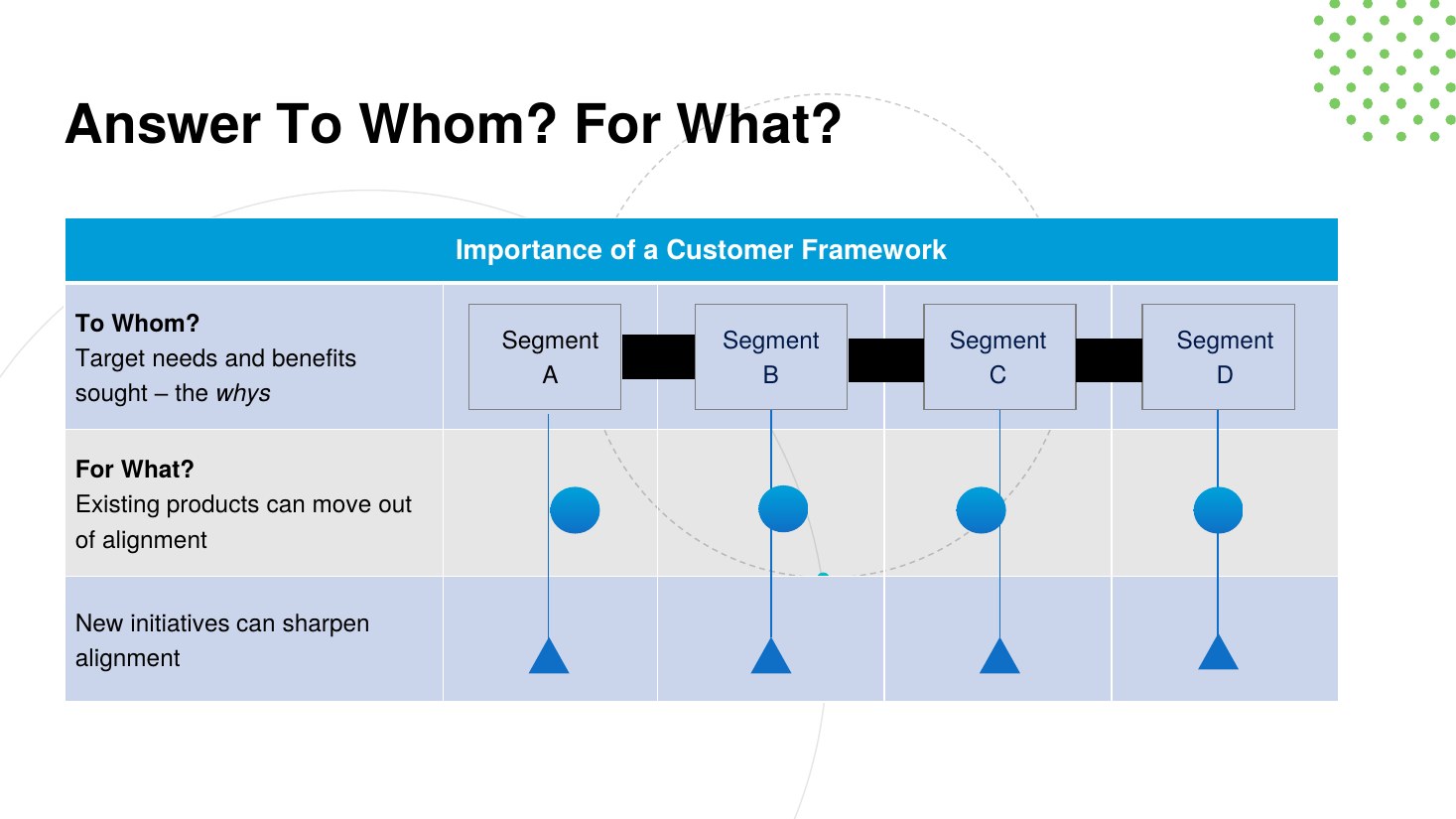
When Steve Jobs returned to Apple, he drew four boxes on a flipchart: consumer and pro across the top, desktop and portable down the side. The job was to make four great products, one for each quadrant. That level of focus is a where-to-play decision, and so is deciding what not to do. Apple left much of the business market to others; Southwest stays close to its airline core; Starbucks keeps returning to its coffee heritage.
Each of these companies decides explicitly to whom its offerings are targeted and for what need. Some take a tight view of their market, others an expansive one. What they share is a deliberate strategy for which customer segments to pursue with which offerings, and which to leave alone, so resources go to the most promising areas. Defining your market space is an exercise in mapping customer segments (to whom) against their needs (for what).
Three levels of growth strategy frameworks
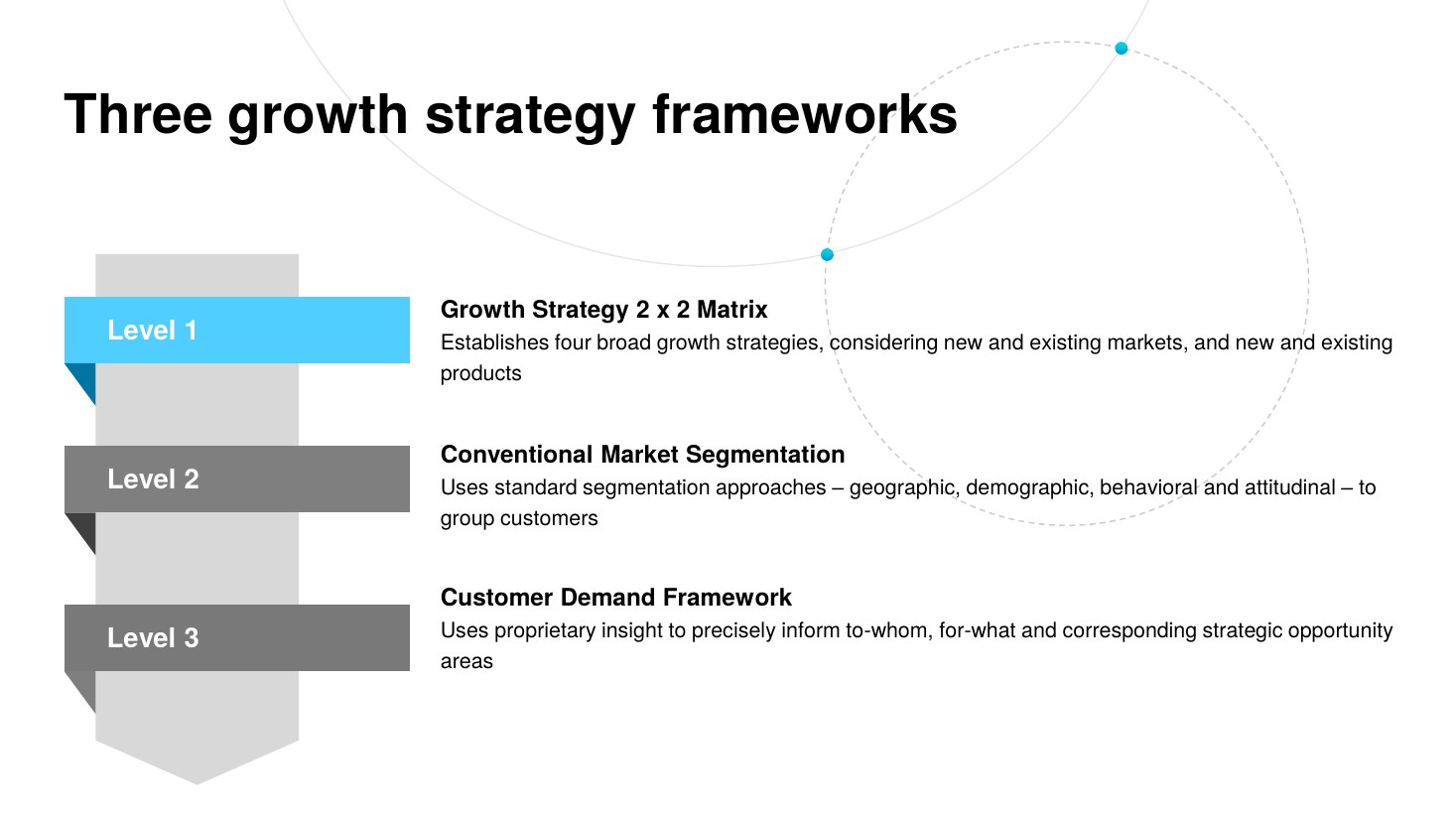
The chapter describes three levels of strategic decision making about where to focus growth:
- Level 1: whether to pursue closer-in or further-out opportunities: the core business, adjacent areas, or diversification.
- Level 2: traditional market segmentation methods (geographic, demographic, behavioral, and attitudinal) to group customers.
- Level 3: the domain of upstream marketing: a proprietary customer demand framework that directs exactly which customers, needs, and offerings to focus on.
Level 1: the growth strategy matrix
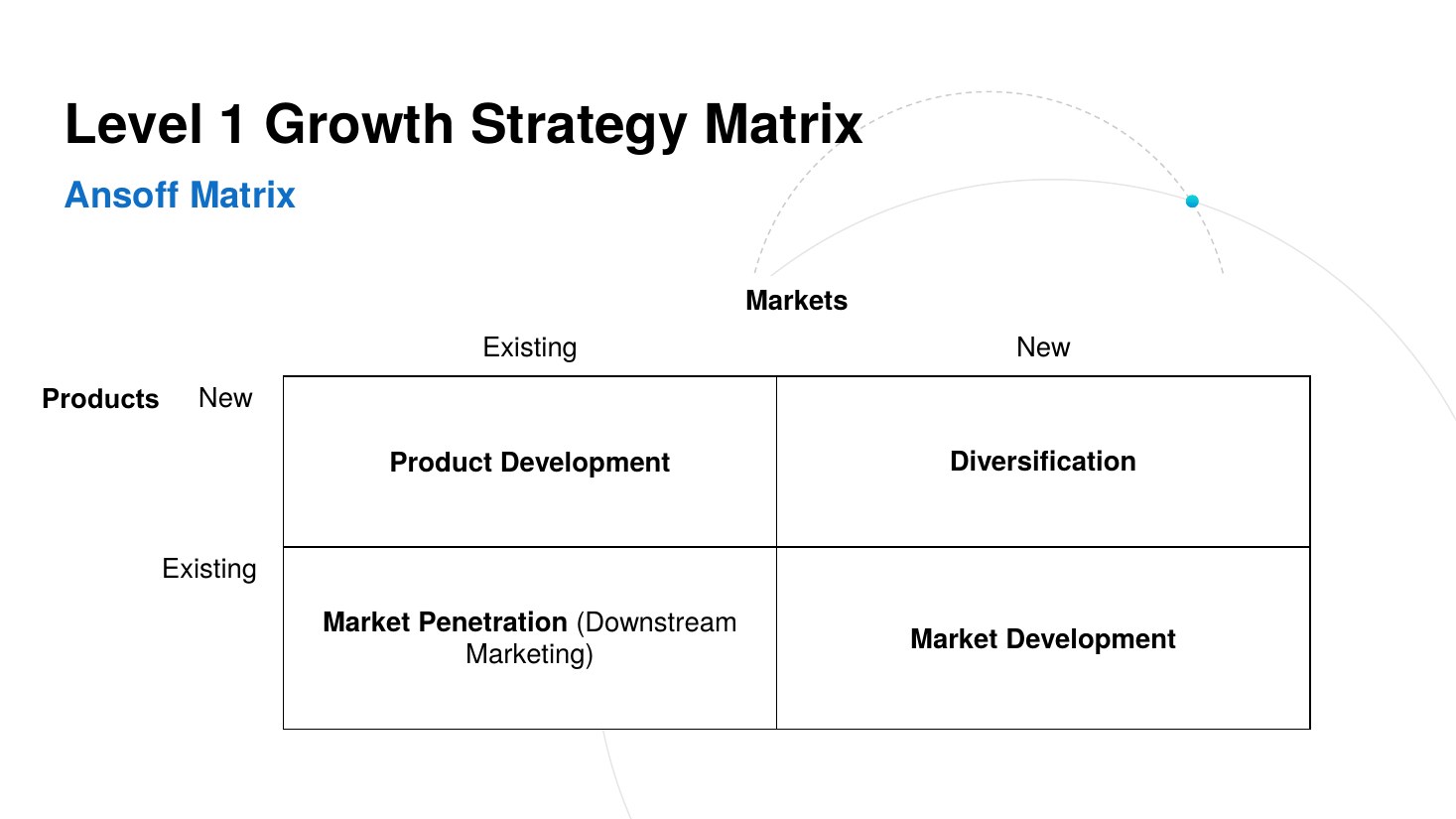
Derived from the Ansoff Matrix, Level 1 lays out four classic growth strategies based on whether markets and products are existing or new. Amazon illustrates all four. Market penetration: establishing itself as an online bookstore. Product development: selling new categories to existing customers and creating its own products, from Kindle to Echo. Market development: taking books to new markets such as textbook rentals for students. Diversification: entering new markets with new offerings at once, as with Kindle Direct Publishing for authors, the highest-upside and highest-risk path.
The matrix is simple and it works, but it is too far removed from end customers to provide rich insight. Many companies stay stuck in the lower-left quadrant, asking how to sell more of the same things to the same people.
Level 2: conventional market segmentation
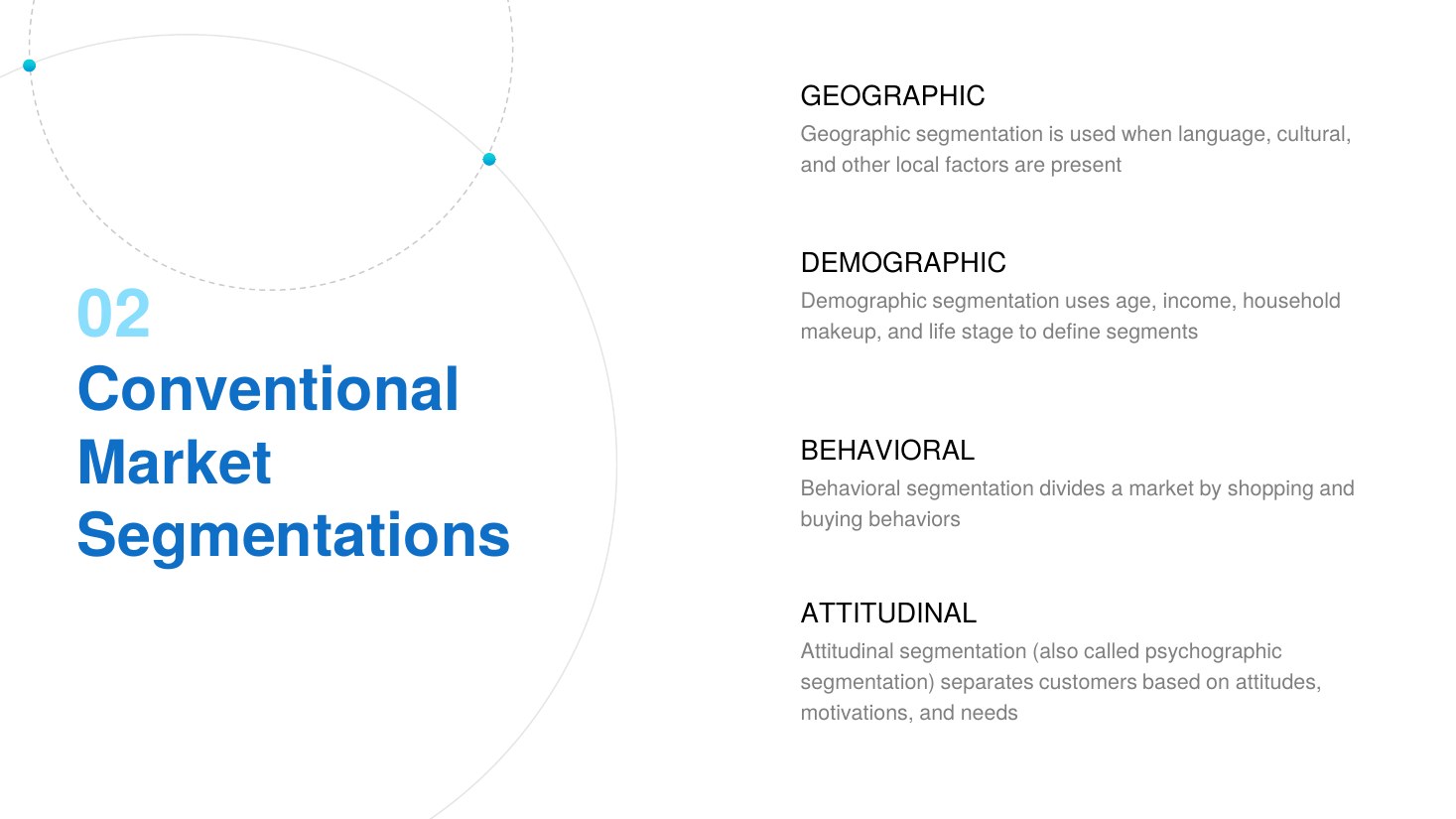
Level 2 uses the familiar segmentation methods, illustrated in the chapter with Disney examples:
- Geographic: parks in California, Florida, Paris, Tokyo, Hong Kong, and Shanghai, with a consistent proposition adapted for local audiences.
- Demographic: resort tiers from Value to Deluxe that deliver the same magic at different price levels.
- Behavioral: ticket pricing and annual passes managed around how guests buy and visit.
- Attitudinal (psychographic): research with highly involved “Disneyphiles” that benefits the whole organization.
Demographics and firmographics are popular because they are easy to find and measure, but they are ill-suited when insight into attitudes, motivations, and needs matters. In one case, a biopharmaceutical company marketing an inhalable insulin product found that patients’ attitudes toward needles and how diligently they managed their condition separated them far more meaningfully than age, gender, or income.
Level 3: the proprietary customer demand framework
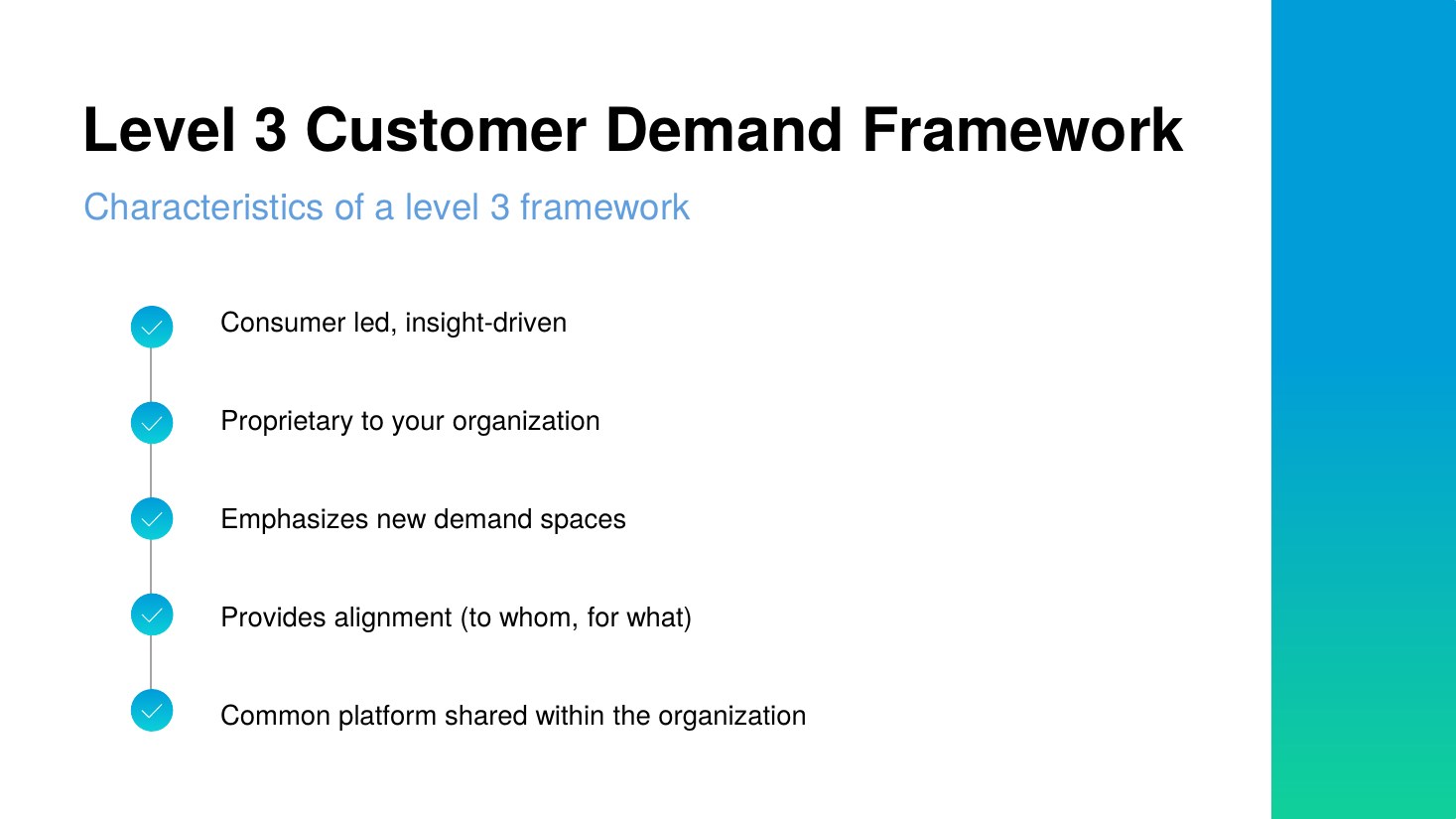
A Level 3 framework profiles customer segments with their attitudes, needs, and behaviors, and begins to identify and size growth opportunity areas. It differs from the first two levels because it is proprietary to your organization, emphasizes new demand spaces, aligns products with the market, and becomes a common platform shared across the company.
The book compares it to a chessboard. Customer groups run across the top; needs, benefits sought, and jobs to be done run down the side. Areas of unmet need are unoccupied white space. The goal is not to divide up existing, often shrinking, demand, but to find and size new market spaces across customers and non-customers.
Frameworks often begin as a whiteboard sketch. Picture 100 potential customers of your category in an auditorium, then split them into five to seven breakout rooms by how they buy, based on attitudes, needs, and behaviors rather than demographics. In auto insurance, one group may value a personal relationship with a local agent, another wants a fully online experience, a third seeks the lowest price, and a fourth worries about qualifying at all. Profile each group, bring them to life visually, then validate and size the segments with quantitative research.
The chapter adds a caution about buyer personas: they are valuable only if they reflect real groups in the market, ideally confirmed through quantitative segmentation, rather than desired or imagined customers.
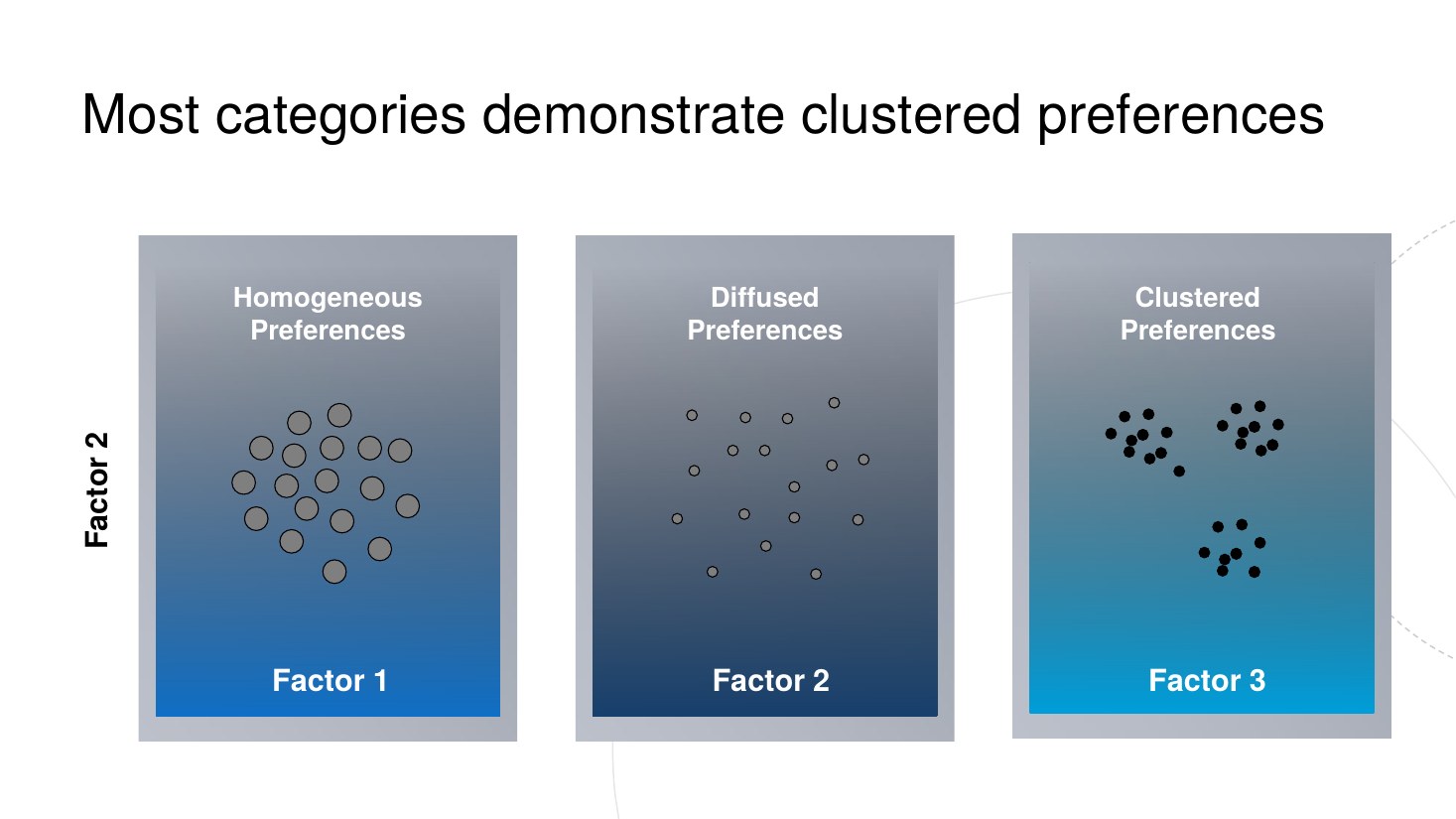
A strong framework reveals clustered preferences. When clear clusters emerge from a needs-based view of the category, new products can be laser-focused, resources can be concentrated instead of spread thin, and unmet needs become visible.
Target marketing and the targeting paradox
Many leaders hesitate to pick a target, fearing they will lose volume, so they define the market too broadly and end up with an average offering that appeals to no one. Others slice the market so finely they chase tiny pockets of demand. One financial services executive, asked who a new product should target, answered, “Anybody with money.” Fuzzy targets don’t get hit.
The chapter distinguishes the marketing target (the center of the bull’s-eye) from the broader consumption market that also finds the offering appealing: speak to the target, but let others listen. That leads to the targeting paradox: often, the tighter the target, the broader the appeal. Nike’s bull’s-eye is performance athletes, yet it sells to weekend warriors and people who simply aspire to “be like Mike.” Apple targets its most loyal consumers and attracts business buyers along the way. Pharmaceutical brands, software companies, and carmakers use the same logic with thought leaders, power users, and enthusiasts.
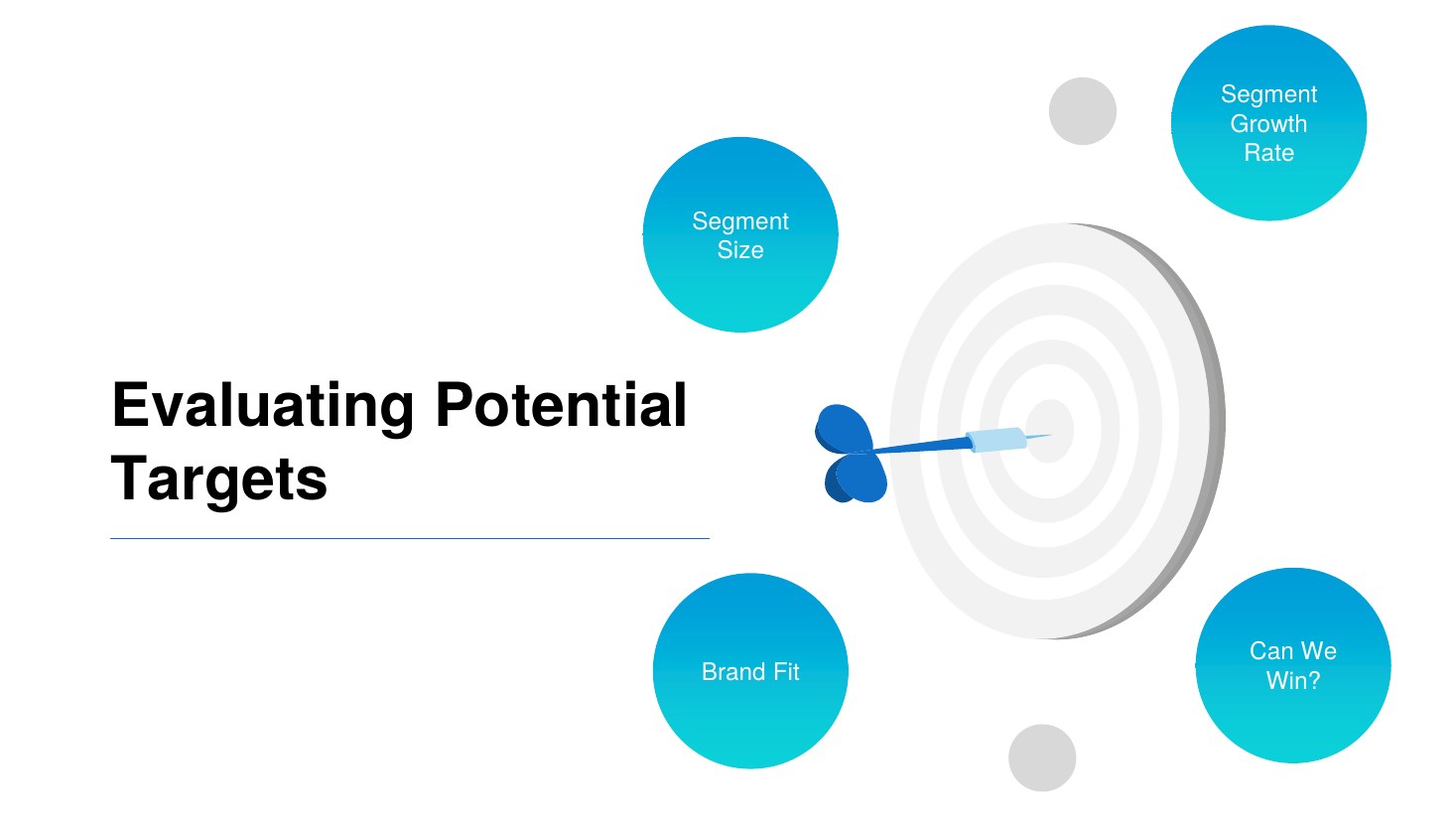
Four criteria help choose a target:
- Segment size: is it large enough, including non-customer prospects?
- Segment growth: is it growing and on trend?
- Brand fit: does it align with the company’s purpose, goals, and brand?
- Can we win: do the segment’s needs match what you can deliver?
It is often easier to start with who not to target. In the insulin case, the team chose not to target non-compliant patients; in other categories, deal-driven buyers unlikely to become loyal were deprioritized. The failure to select a core target is a root cause of murky positioning and failed launches.
Strategic opportunity areas
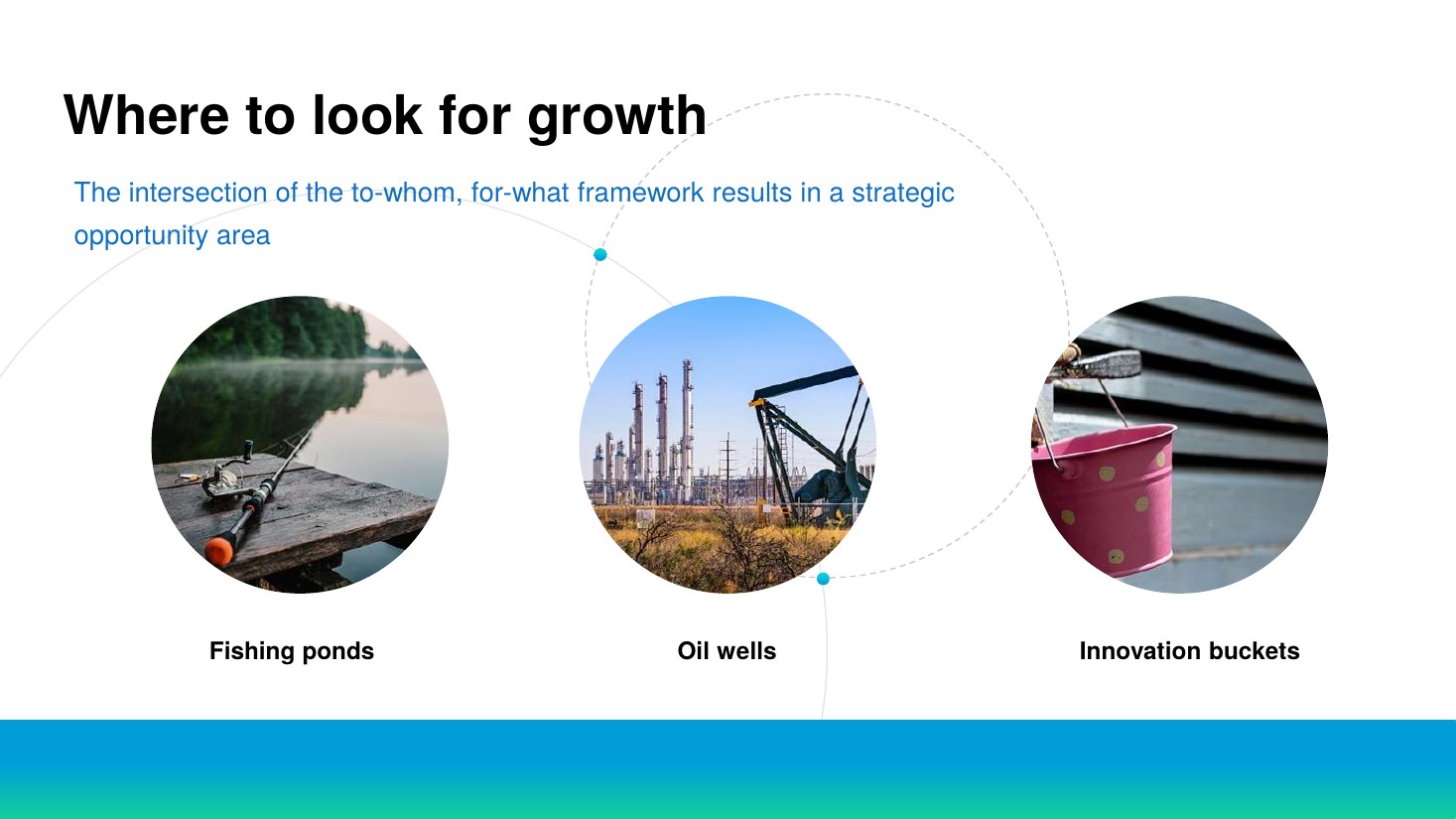
The intersection of to whom and for what produces strategic opportunity areas (SOAs), the “fishing ponds” of the book’s analogy: attractive pockets of unmet demand to fill with new products, services, channels, brand extensions, geographic expansion, or acquisitions. Most companies think about opportunities intuitively but don’t write them down. A consistent template makes them tangible, so they can be evaluated and prioritized.
The chapter frames SOAs as “how might we” questions drawn from EquiBrand client work. For a luxury automaker: how might we design a sales and service experience for the customers who prefer to skip the dealership? For a retail bank: how might we attract segments across cultures and backgrounds through a better customer experience? For a backpack maker: how might we enter the workplace with a pack that combines a briefcase’s professionalism with a backpack’s convenience?
A brainstorm can produce a dozen or more SOAs, too many to pursue. An impact-effort matrix offers a first screen, treating impact as the return and effort as the investment; more rigorous screening follows as customer insight accumulates (covered in Chapter 6). Emerging companies may focus on one square of the chessboard; established companies may extend into adjacent white space.
The chapter ends with a moment on a flight: a frequent flyer upset about losing a free snack, which turned out to symbolize being rewarded for time away from his family. Insight like that is easy to gather and easy to ignore, and it leads into the book’s next principle, identity.
Key takeaway
Growth starts with a clear purpose and a customer demand framework that defines to whom and for what. Choose a focused target, look for clustered preferences, and turn the intersections into written, prioritized strategic opportunity areas. From there, the work moves from where to play to how to win.
Questions to consider
- Why does the organization do what it does? What is its purpose?
- To whom, meaning which customer segment, should you target your growth efforts?
- For what, meaning which high-potential strategic opportunity areas, should you target?
Put this chapter to work
- Market segmentation: Market Segmentation Guide and segmentation consulting
- Growth strategy: Growth Strategy Consulting
- Next step for leadership teams: Start the Growth Assessment
- Related reading: Identify Areas for Business Growth With a Level 3 Customer Demand Framework
Frequently asked questions
What does “to whom, for what” mean?
It is the book’s shorthand for where-to-play decisions: which customer segments to serve (to whom) and which needs or benefits to address (for what). Mapping the two together reveals strategic opportunity areas.
What is a Level 3 customer demand framework?
A proprietary framework that profiles customer segments by attitudes, needs, and behaviors, maps them against needs and jobs to be done, and identifies and sizes new demand spaces. It goes beyond the growth strategy matrix (Level 1) and conventional segmentation (Level 2).
What is the targeting paradox?
Often, the tighter the marketing target, the broader the appeal. Brands that speak clearly to a focused core, such as Nike with performance athletes, attract a much larger consumption market around it.
How do you choose a target segment?
Evaluate segment size, segment growth, brand fit, and whether you can win. It often helps to decide first who not to target.
Get all nine chapters
Want the whole framework? Enter your name and email and we’ll send you all nine chapters of Upstream Marketing, each with its slide deck, in one email.
"*" indicates required fields
← Chapter 2: Maniacally Focus on the End Customer | All chapters | Chapter 4: Design and Align Value Propositions →





Follow EquiBrand