
Chapter 9: Upstream Marketing Application
From Upstream Marketing: Unlock Growth Using the Combined Principles of Insight, Identity, and Innovation by Tim Koelzer and Kristin Kurth (Greenleaf Book Group Press, 2021)
Chapter summary. Chapter 9 answers the question executives ask most: will this work in my industry? It shows how upstream marketing adapts across industries, walks through five client cases spanning media, health care, medical devices, technology, and financial services, and offers twenty diagnostic questions grouped by insight, identity, innovation, and integration. It closes with how EquiBrand has applied upstream marketing to its own business since 2000.
Download the full chapter (PDF) | Download the chapter slides (PDF) | Get all nine chapters
“Will it apply to my industry?”
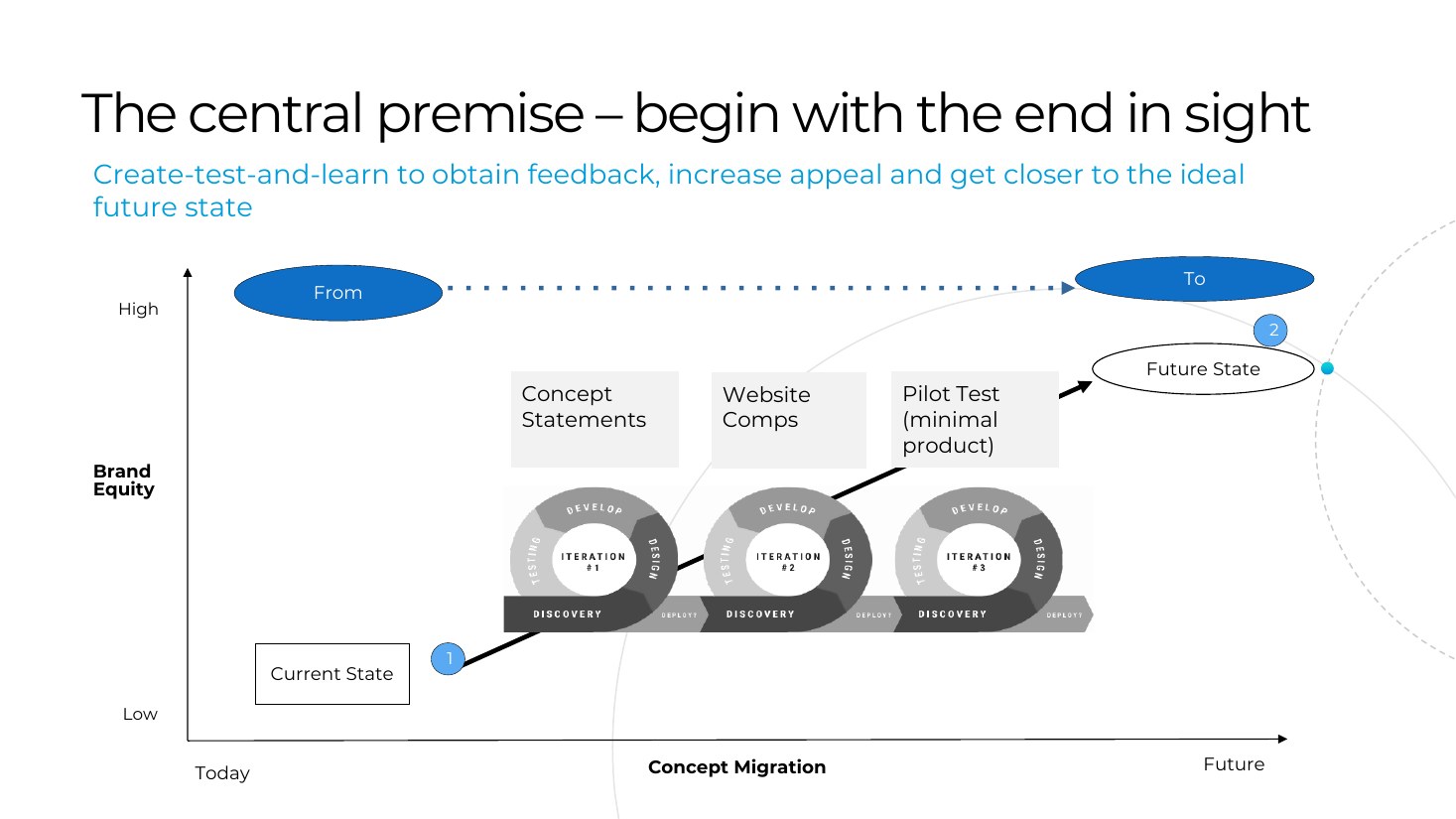
Executives sometimes say their customers buy only on price, that outside forces limit how they compete, or that their category is truly commoditized. The book’s answer: every situation is unique, and upstream marketing still applies. EquiBrand has applied it in consumer products and services, financial services, health care, industrial products, medical devices, technology, and more. What changes is how you create, test, and learn:
- Software: concepts can be mocked up on screen and iterated through betas and minimum viable products, before and after launch.
- Apparel: innovation runs on seasons, and some brands now release fifty-two “micro-seasons” a year, which demands rapid concept iteration.
- Automotive: long development cycles mean forecasting the market five or so years out, using modeling and prototypes.
- Medical devices: idea to market can take half a dozen years or more under FDA requirements, so a minimum viable product is not an option.
- Professional services: new service enhancements can often be piloted quickly before a full rollout.
- Regulated sectors such as financial services, utilities, and health care face extra hurdles in getting market feedback on new concepts.
The framework, in brief
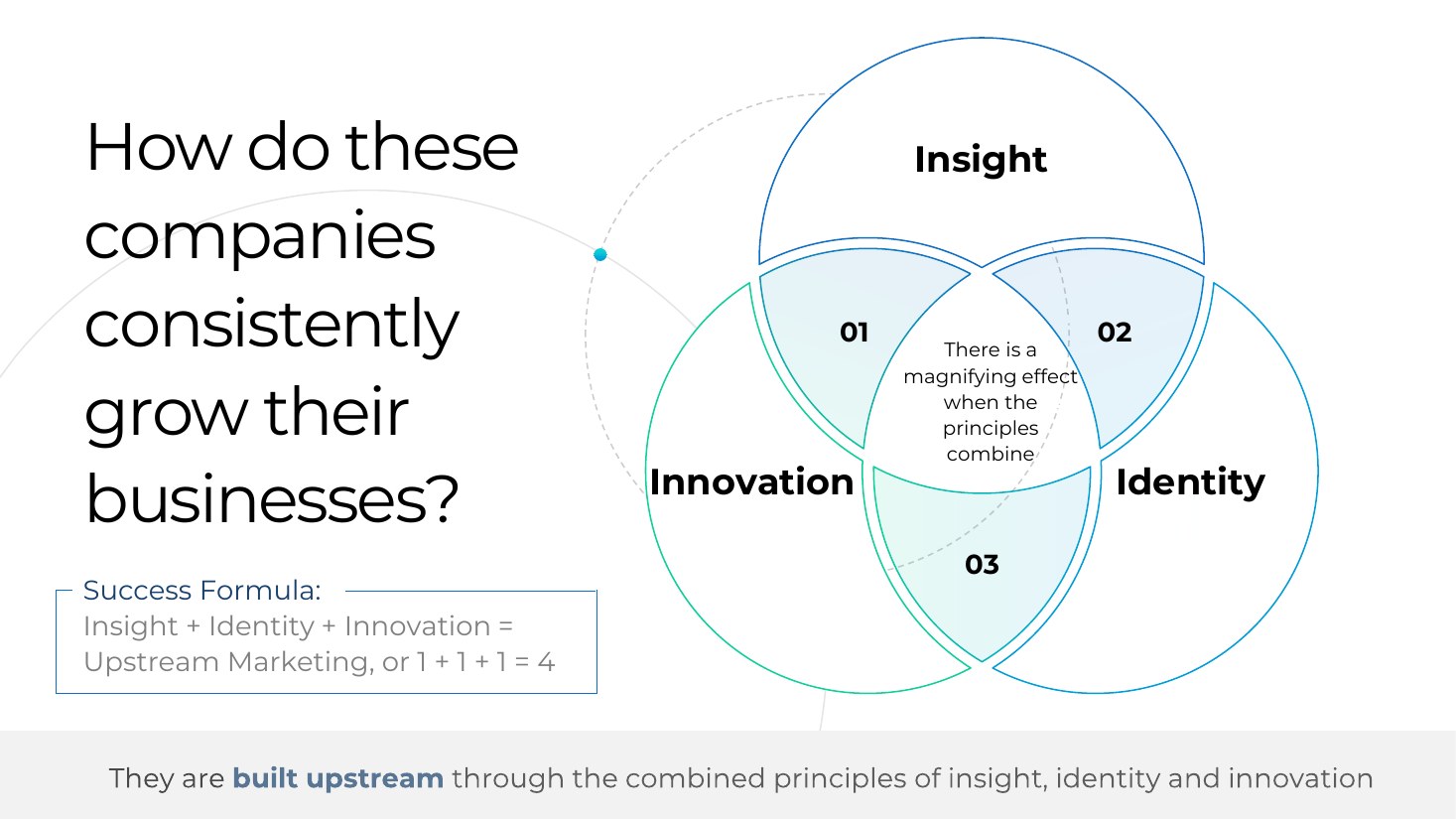
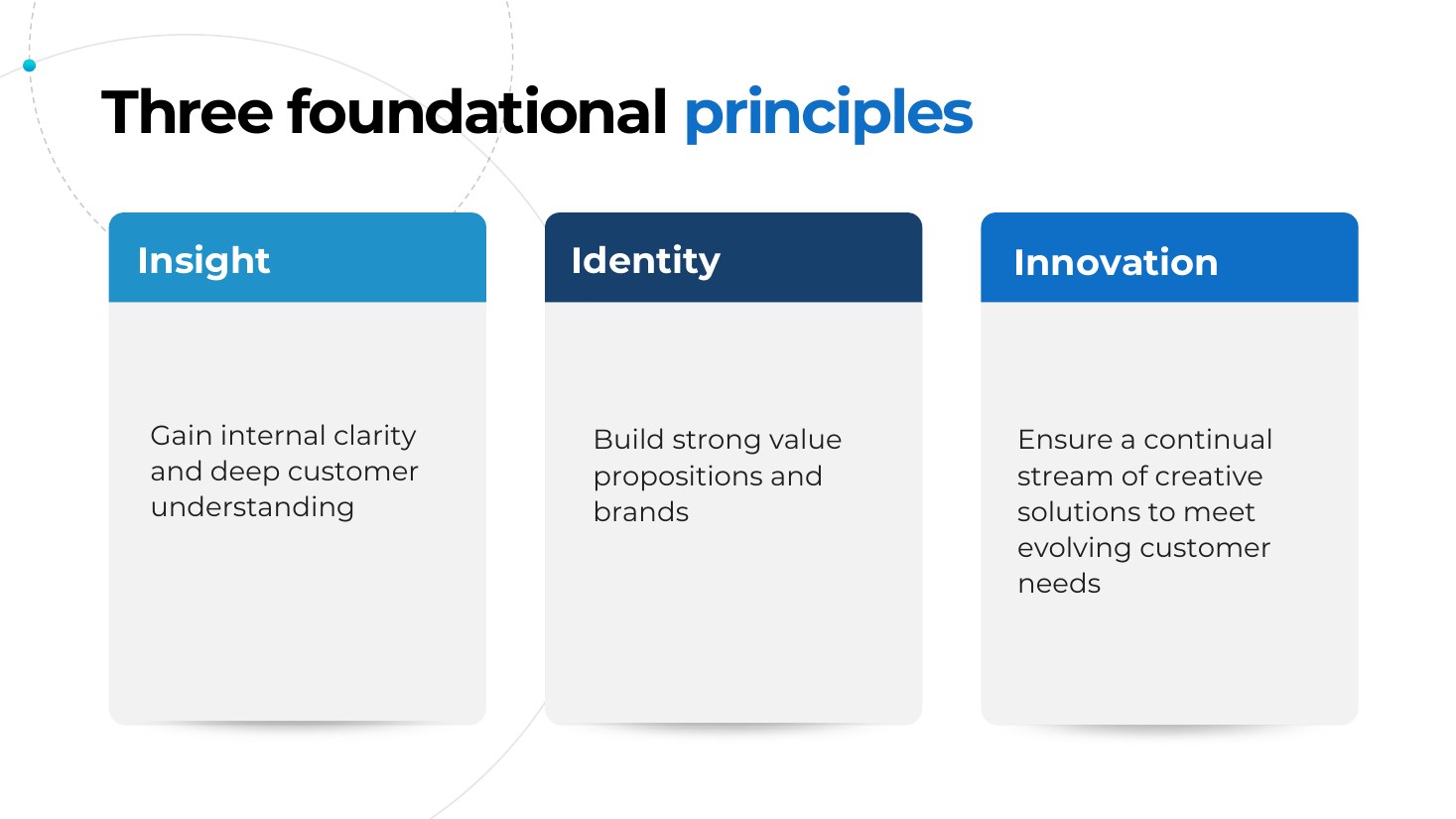
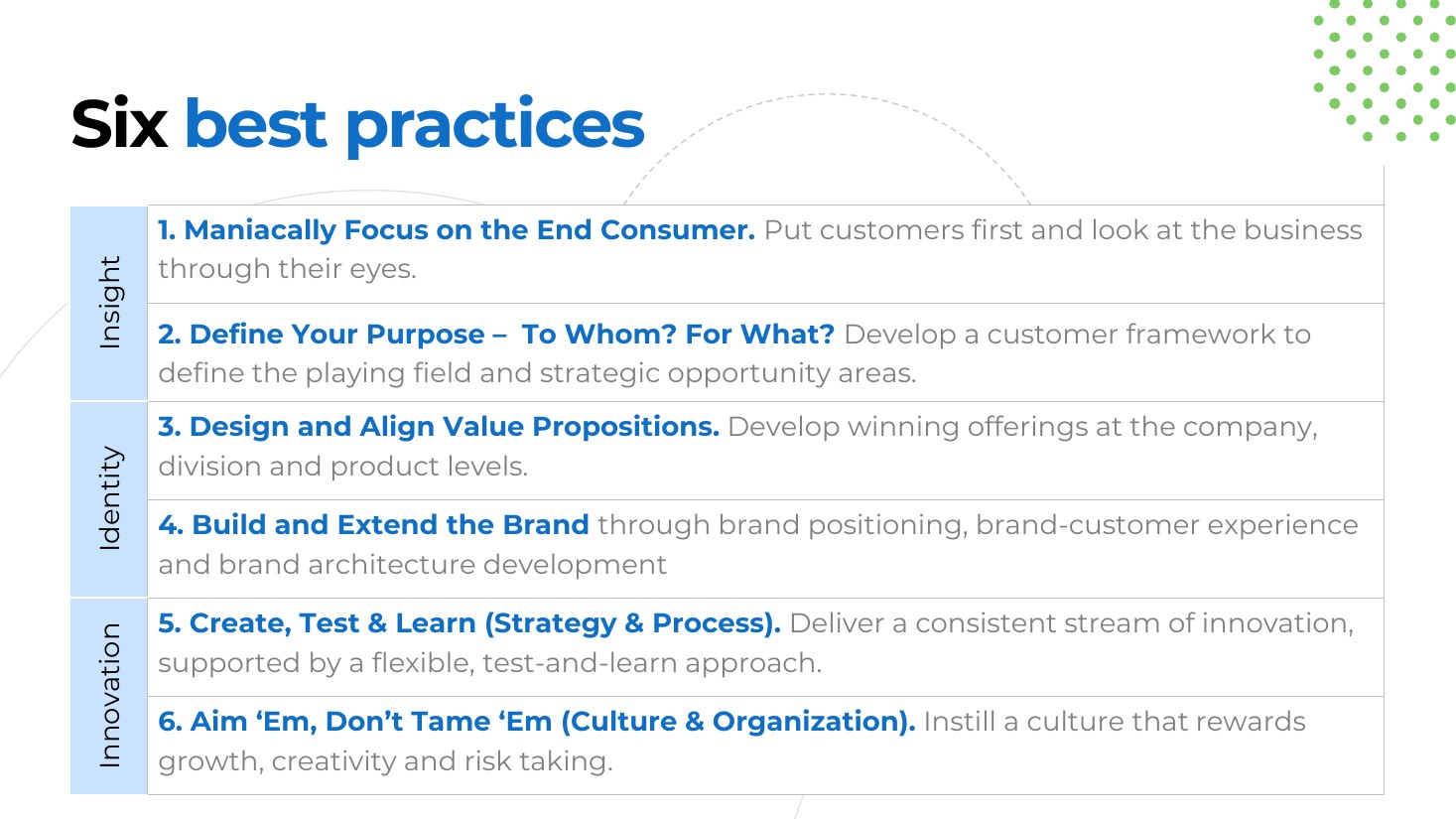
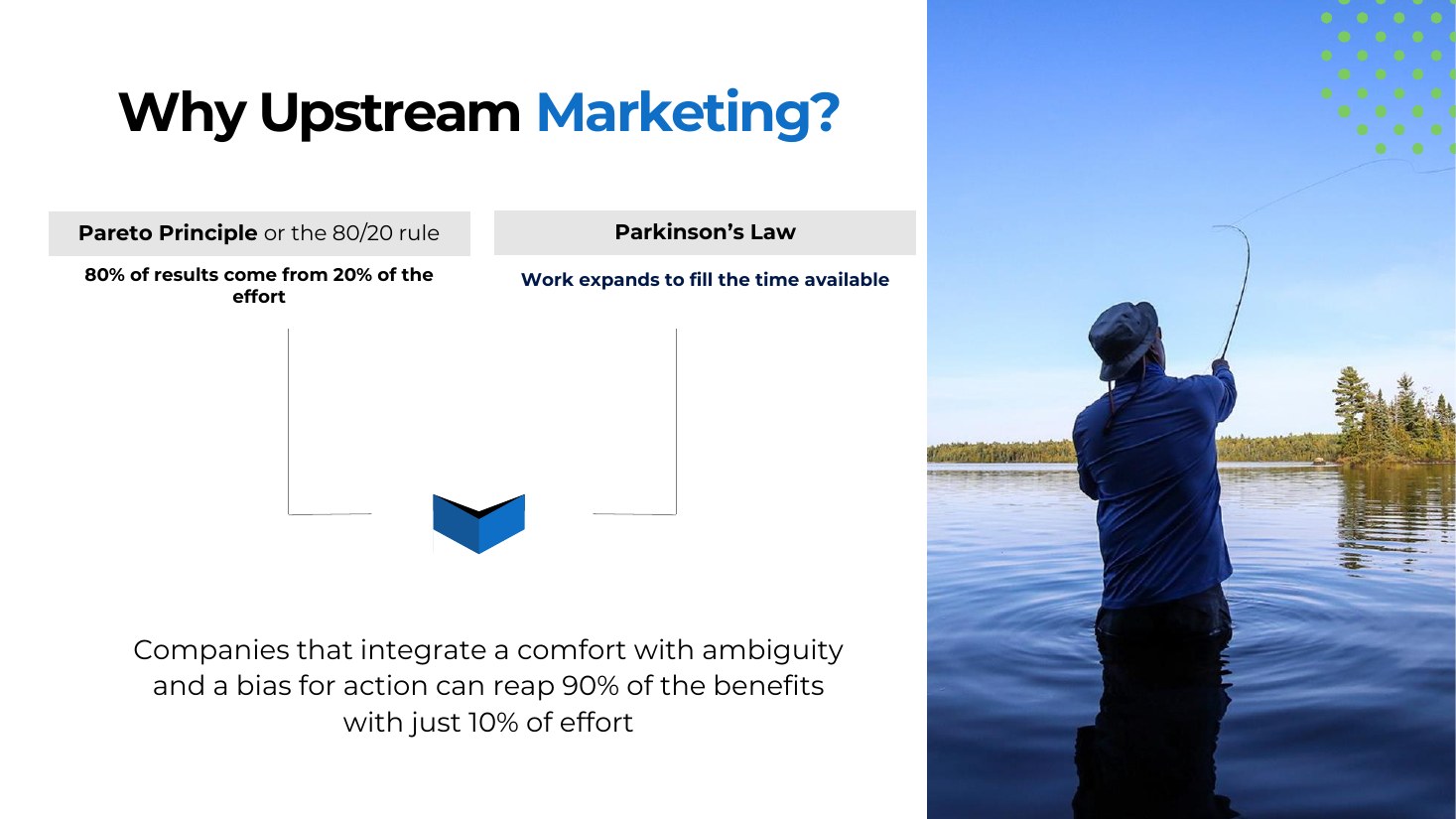
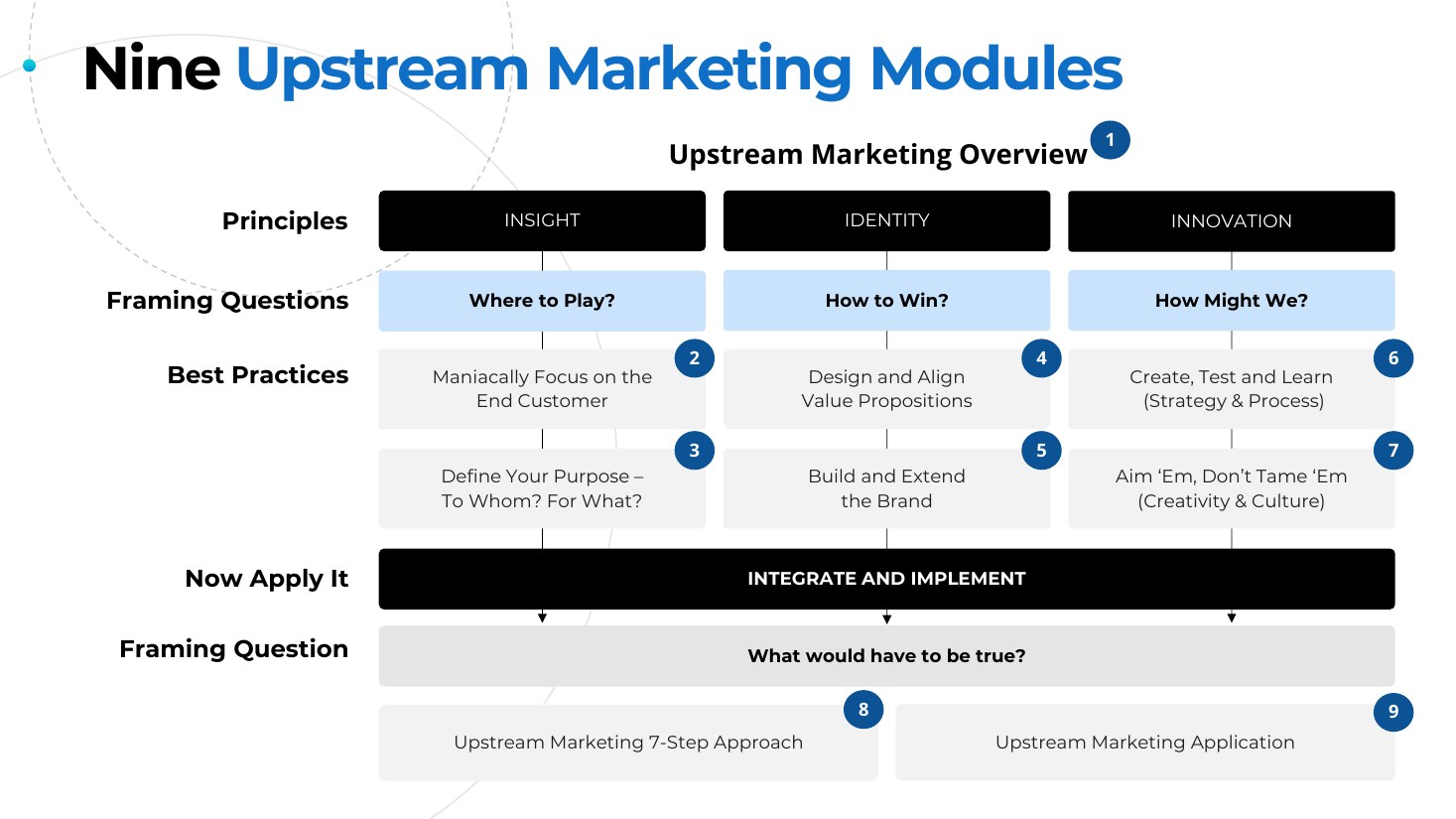
The chapter recaps the whole system: three principles that magnify one another, four framing questions, six best practices, and a seven-step process. Insight + Identity + Innovation = Upstream Marketing, or 1 + 1 + 1 = 4.
Five client cases
Client names and some facts are omitted for confidentiality, but each case shows insight, identity, and innovation working together.
Determining growth opportunity areas
The leading weekly celebrity and human-interest magazine faced lower-priced competitors and the shift to digital. The problem wasn’t a lack of ideas; it was too many brand extension ideas with no value proposition or positioning to guide them. EquiBrand helped solidify a value proposition (a cultural source of celebrity and real-life stories, journalistic integrity, and exclusive access) and used it to screen concepts with a Harvey ball analysis. The result was fewer, stronger growth concepts, and a positioning as a cultural force that helped the brand keep its leadership and premium pricing in print and online.
Growing through improved marketing
A leading medical spa, led by a Stanford-trained plastic surgeon and a Stanford MBA brand marketer, wanted a new brand identity and growth plan. Exploratory research, including a “letters to my body” projective exercise, uncovered rational and emotional drivers. The team mapped the decision journey, confirmed positioning through concept iteration, and built a digital marketing plan. The book reports that the new website doubled traffic and cut cost per lead by 50 percent through improved SEO and pay-per-click planning.
Positioning a new product
A medical device company developed a new-to-the-world heart valve that required new surgical training. Research identified a physician target who was interested but needed reassurance. Concept optimization explored how to frame the new category relative to existing therapies, landing on a “best of both worlds” frame built on a proven platform. The product launched successfully in Europe and the United States after its trials. See medical device launch positioning.
Developing a strategy for a new offering
A leading semiconductor maker and its partners wanted to launch an integrated Internet of Things solution, but no single company could create that future alone and the group lacked a shared vision. Partner interviews and desk research fed strawman deliverables on the demand framework, business model, and positioning, and facilitated workshops produced a joint strategy and plan with prioritized actions, responsibilities, and timing.
Extending a brand to a new category
A leading insurer wanted to stretch beyond auto, home, and life into retirement planning, investment management, and trust services, but its brand meant protection, not growth investing. Unbranded, then branded, concepts showed that many customers saw financial services as intimidating and only for the wealthy. Concepts built on control (“No matter where you’re starting from, you can obtain financial security”) and a tangible financial plan shaped the new value proposition, positioning, and messaging, supported by changes in operations, agent training, and communications.
Twenty questions to diagnose your upstream marketing
The best companies are often the most self-critical. The chapter’s twenty questions are grouped by principle; here they are in brief.
Insight
- How do you define the business in which you compete?
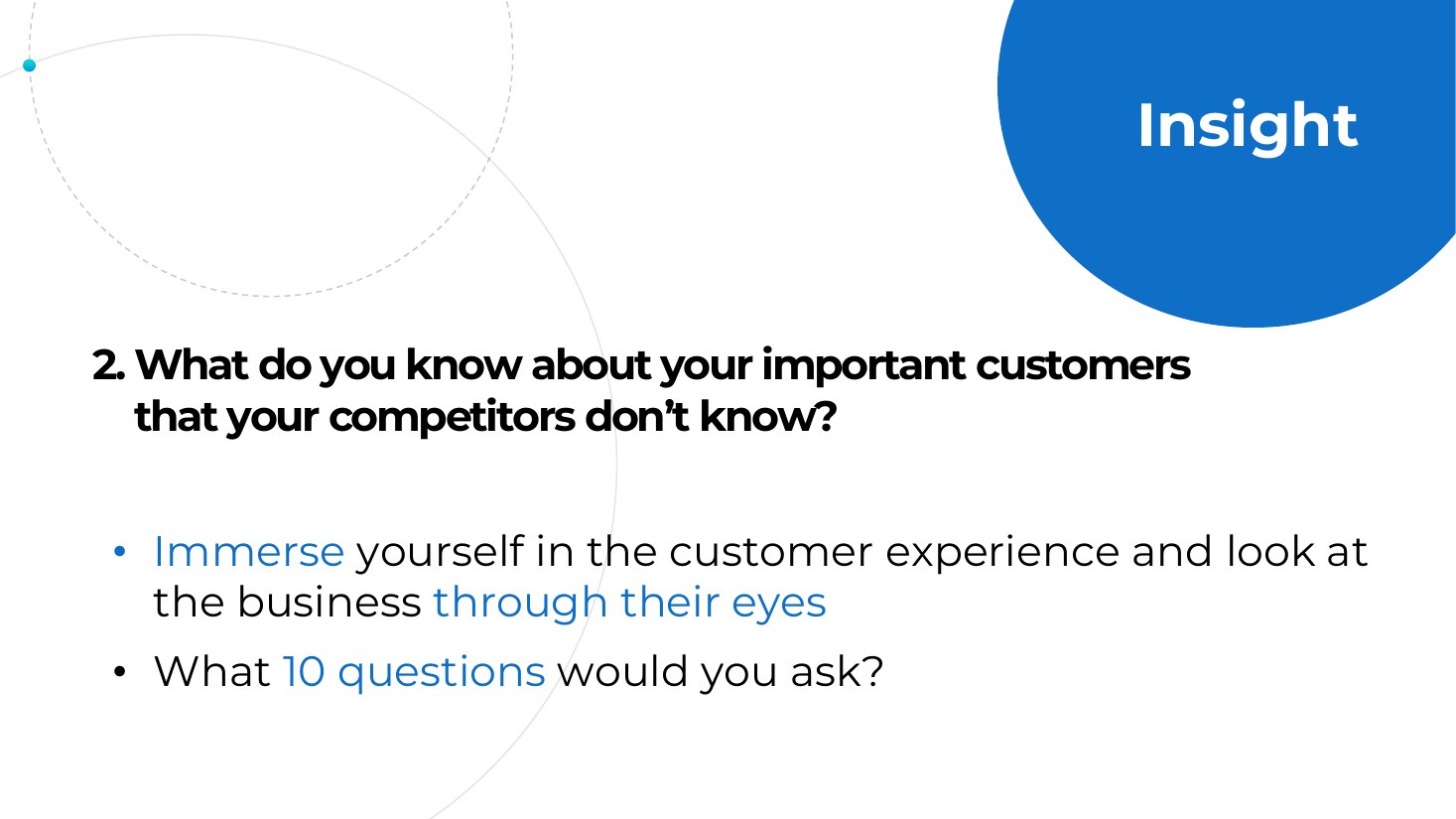
- What do you know about your important customers that your competitors don’t know?
- Are you investing in proprietary insights to unlock growth?
- Do you have a customer demand framework, and how are you segmenting opportunities, if at all?
- Is there a mechanism in place to regularly infuse customer, marketplace, and technical insight into your growth planning?
Identity
- Does your company have an executive-level commitment to the identity principle in driving growth?
- Have you defined your value proposition in terms of the benefits your brand should stand for and deliver on?
- Have you defined your brand strategy, including its positioning, experience, architecture, and extension strategy?
- Are you presenting a compelling brand identity that aligns company aspirations with marketplace requirements?
- Are you getting the word out and aligning your brand touchpoints with the customer experience?
Innovation
- Do you use an iterative approach to innovation to obtain input on how to win and lessen risk?
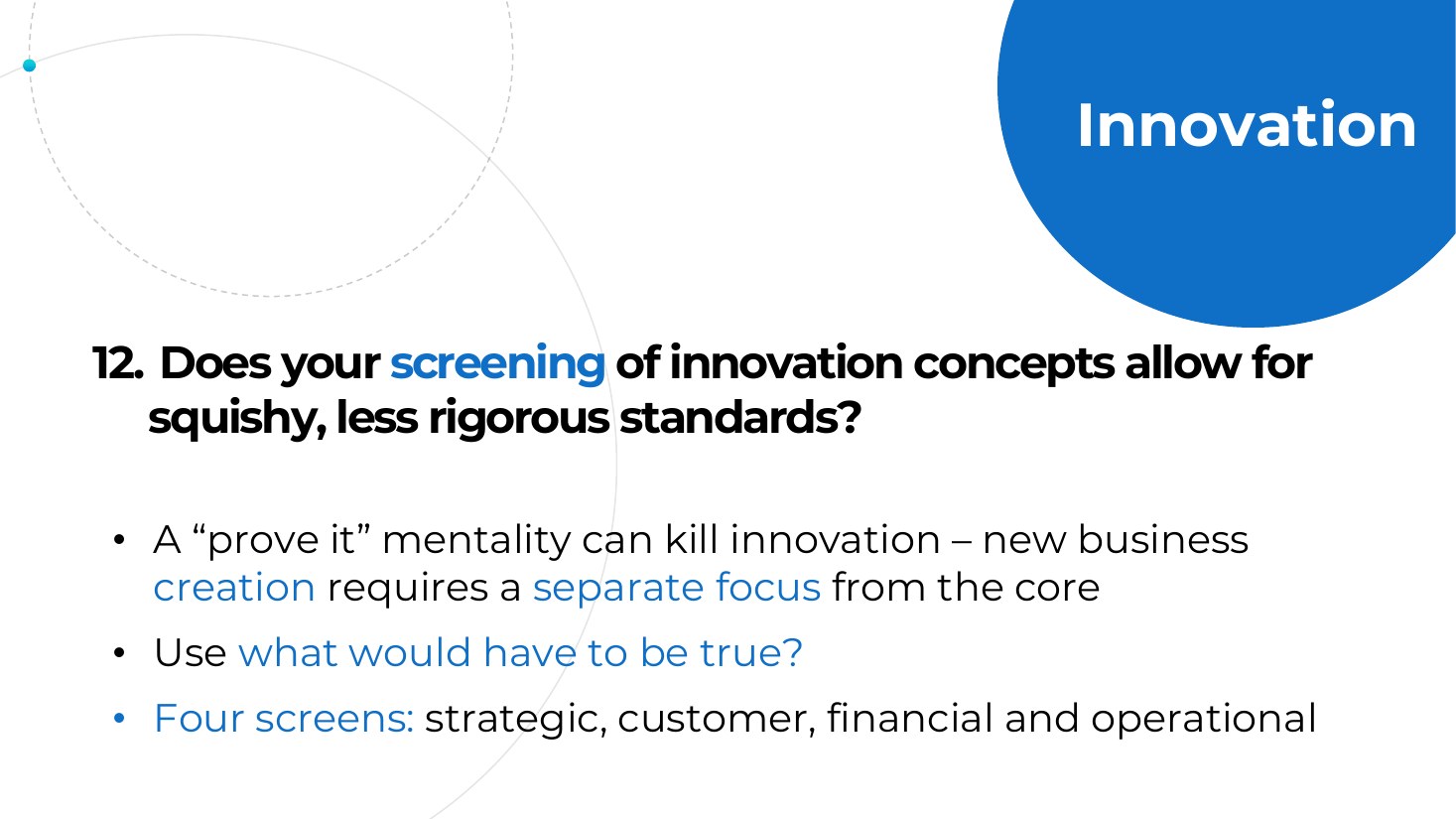
- Does your screening of innovation concepts allow for squishy, less rigorous standards?
- Do you take a pipeline and portfolio approach to manage growth?
- Does your organization support the aim ’em, don’t tame ’em innovation paradox?
- Have you planned your culture to promote innovation and growth?
Integrate and execute
- Do you have a confirmed list of strategic opportunity areas to focus your organization?
- Are you maximizing the value of the entire organization in driving growth?
- When was the last time your organization developed and trademarked a new product or service?
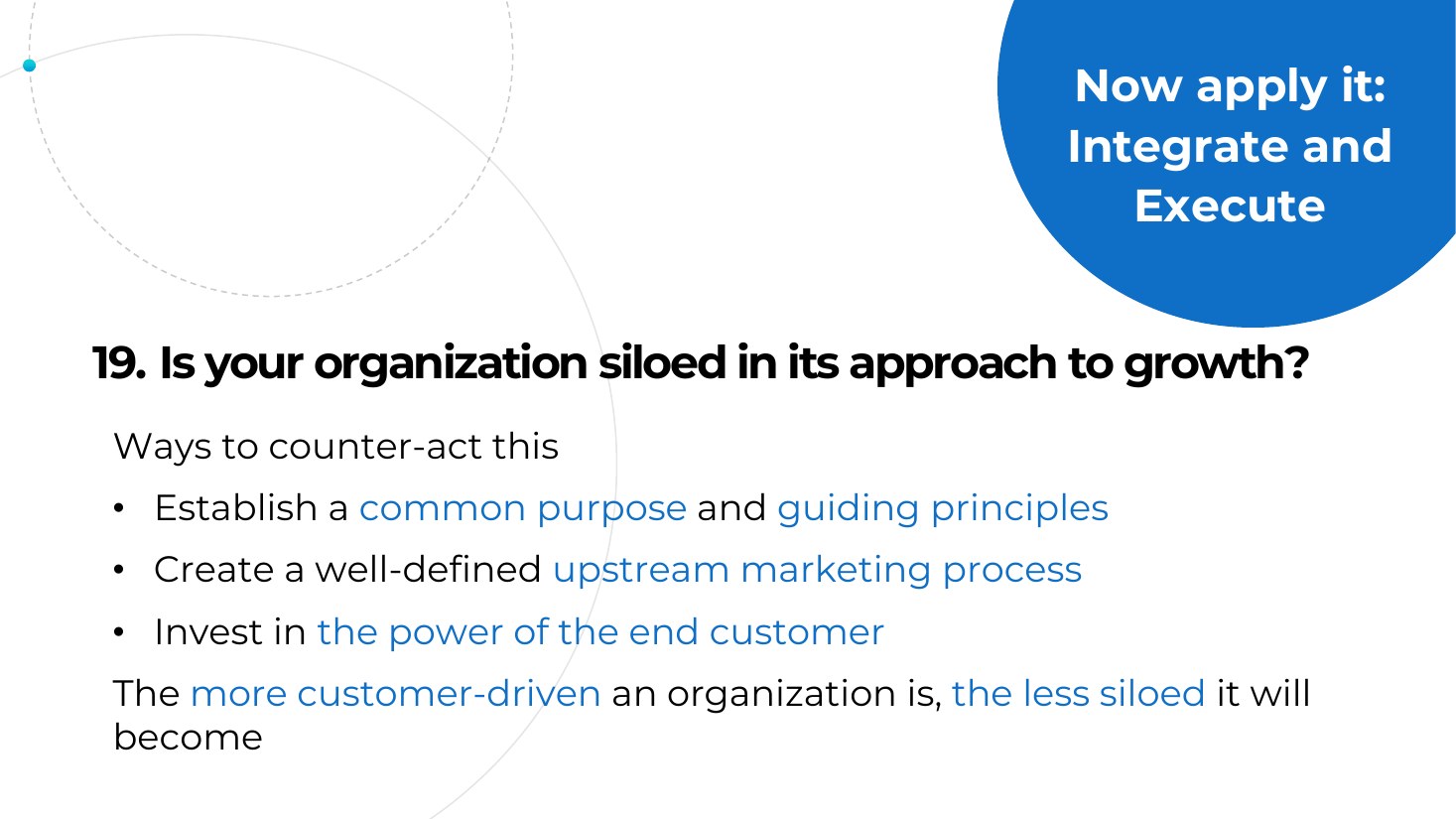
- Is your organization siloed in its approach to growth?
- Are you maximizing the value of upstream marketing by fully integrating insight, identity, and innovation?
The chapter suggests a Monday-morning to-do: review the questions with your team, ask whether you’ve established to whom and for what and confirmed how to win, and pilot upstream marketing on one or two strategic opportunities. Jeff Bezos is known for leaving an empty seat at the table for the most important person in the room, the customer; the more customer-driven an organization is, the less siloed it becomes.
Upstream marketing at EquiBrand
EquiBrand applies the same approach to itself, taking stock each year and charting new strategies. The chapter traces four moves:
- Launch (2000): a basic website with three service areas (marketing strategy, brand strategy, and innovation), a to-whom, for-what model aimed at senior executives, and a deliberate choice to be functional rather than industry specialists. Early investment in Google pay-per-click and SEO leveled the playing field; one of the first inbound leads came from Australia.
- Biobrand (2004): a growing base of pharmaceutical, medical device, and health care clients, plus more active patients and caregivers, led to a dedicated health care sub-brand.
- Digital marketing: after the Great Recession and the shift to digital, EquiBrand added digital marketing services built on what it had learned marketing itself.
- Upstream marketing category creation (from about 2016): as agencies claimed strategy expertise and promoted downstream tactics, EquiBrand doubled down on upstream marketing itself, having secured upstreammarketing.com in 2005.
Learn more about Tim Koelzer.
Key takeaway
The difference between low-growth and high-growth companies is their view of upstream versus downstream marketing. Companies fighting for share on one playing field over-rely on downstream tactics; high-growth companies redefine the field and use insight, identity, and innovation together. The principles work across industries, organizations, and company sizes. Or, as Dory says in Finding Nemo, “Just keep swimming.”
Questions to consider
- Is your leadership team asking and answering the right strategic questions?
- Does your organization understand and embrace insight, identity, and innovation principles?
- Would your organization benefit from developing a deeper understanding of upstream marketing through training, workshops, or other methods?
Put this chapter to work
- Answer the twenty questions with an outside view: Start the Growth Assessment
- The full process: EquiBrand’s strategic planning process
- Brand strategy: Brand consulting
- Health care and life sciences: Healthcare marketing consulting
Frequently asked questions
Does upstream marketing work in every industry?
The principles apply across industries; how you apply them varies. Software can iterate quickly with minimum viable products, while medical devices face long, regulated timelines where an MVP isn’t an option, so testing relies on concepts and research instead.
What are the twenty upstream marketing questions?
A diagnostic set from the book, grouped into insight (five questions), identity (five), innovation (five), and integration and execution (five). They cover how you define your business, customer insight, value propositions, brand strategy, innovation screening, portfolio management, culture, and silos.
How should a company start with upstream marketing?
Review the twenty questions with the leadership team, confirm to whom and for what and how to win, then pilot the approach on one or two strategic opportunity areas and build from there.
How has EquiBrand used upstream marketing itself?
Since its founding in 2000, EquiBrand has used the approach to define its services and target, launch the Biobrand health care sub-brand in 2004, add digital marketing services, and build its position in upstream marketing.
Get all nine chapters
Want the whole framework? Enter your name and email and we’ll send you all nine chapters of Upstream Marketing, each with its slide deck, in one email.
"*" indicates required fields
← Chapter 8: The Upstream Marketing 7-Step Approach | All chapters | Back to Chapter 1





Follow EquiBrand